
How to Identify Weka Feathers
How the shaggy, loosely webbed feather texture and streaky rufous-brown coloring distinguish a Weka feather from other New Zealand rails.
Read the full Weka encyclopedia entry →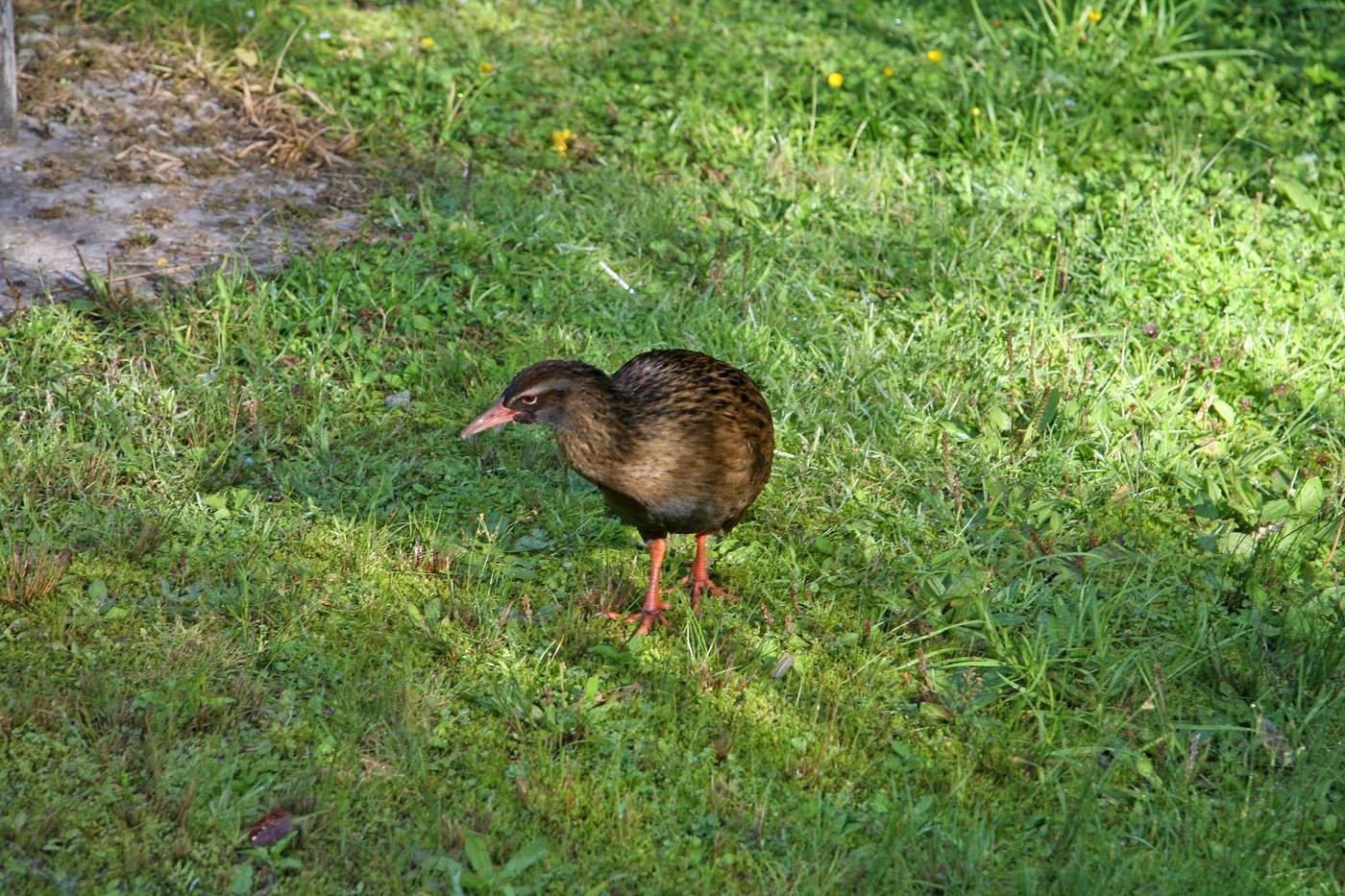
What Weka Feathers Look Like
Weka is a large, essentially flightless New Zealand rail, and its feathers show a distinctly loose, shaggy texture that reflects a bird that has largely given up flying.
- Body/contour feathers: rich chestnut-brown, heavily marked with blackish streaks and bars, giving an overall streaky, mottled look; regional forms vary from buffier to grayer tones.
- Feather texture: notably loose and shaggy, with obviously open, hair-like barbs rather than the neat, tightly zipped structure of a strong-flying bird — a hallmark of flightless or weak-flying rail adaptation.
- Flight feathers: small, rounded, and structurally weak, with a reduced rachis compared to similarly sized flying birds, reflecting Weka's very limited flight ability.
- Face feathers: a pale eyebrow stripe crosses a generally streaky brown face.
- Size: a robust, chicken-sized bird overall, but its wing/flight feathers are surprisingly small and underdeveloped relative to its body size.
- Color variation: North Island birds tend toward buffier tones, while some South Island/western forms run grayer — but the shaggy texture and streaky pattern hold across all forms.
Step-by-Step: Is This Feather From a Weka?
- Check the feather texture first. A noticeably loose, shaggy structure with open, hair-like barbs (rather than a neat, tightly closed vane) strongly suggests a flightless or weak-flying rail like Weka.
- Look at the color pattern. Streaky chestnut-brown and black barring, without bold white markings, fits Weka's typical plumage.
- Assess any wing feather. Small, rounded, structurally weak flight feathers support this species over a strong-flying bird of similar body size.
- Rule out bold black-and-white banding, which would suggest a different, better-flying rail species instead.
- Consider habitat. Feathers found near forest edges, scrub, or coastal areas in New Zealand strongly support this identification, since Weka is endemic to the country.
Similar Species & How to Tell Them Apart
- Buff-banded Rail: smaller, with bold black-and-white barring across the breast and a much neater, tighter feather structure since it retains strong flight ability, unlike Weka's shaggy, weak-flight feathers.
- Pukeko (Australasian Swamphen): much larger with vivid blue-purple plumage, an entirely different color scheme from Weka's streaky brown.
- Domestic chicken feathers: can superficially resemble Weka's size and some brown coloring, but lack the specific streaky chestnut-and-black rail pattern and the particular loose barb texture tied to flightlessness.
- Spotless Crake or other small NZ rails: much smaller overall, with more uniformly dark plumage rather than Weka's bold streaky pattern.
Where & When You'll Find Them
Weka are found in forest edges, scrubland, farmland, and coastal areas across parts of New Zealand, foraging on the ground for invertebrates, fruit, and small animals; being flightless-tending, they rarely move far and their feathers are found close to where the birds live rather than scattered widely by flight. Molt is continuous at a low level rather than concentrated in one sharp season, so feathers can be found on the forest floor or along scrub trails at various times throughout the year.
Frequently asked questions
What's the most distinctive feather trait for Weka?
A loose, shaggy texture with obviously open, hair-like barbs is the most distinctive trait, reflecting the bird's largely flightless adaptation.
How does Weka differ from Buff-banded Rail in feather structure?
Buff-banded Rail retains strong flight and has neat, tightly structured feathers with bold black-and-white barring, while Weka's feathers are shaggy and streaky chestnut-brown.
Why are Weka's flight feathers so small?
Weka is essentially flightless, so its flight feathers are reduced, rounded, and structurally weak compared to those of strong-flying birds of similar body size.
Does feather color vary across New Zealand?
Yes, regional forms range from buffier in the North Island to grayer in some western/South Island populations, though the shaggy texture and streaky pattern remain consistent.
Where are Weka feathers typically found?
Close to where the birds live — forest edges, scrubland, and coastal areas in New Zealand — since flightlessness limits how far feathers can be scattered.