
How to Identify White-backed Vulture Feathers
A guide to identifying White-backed Vulture feathers by their overall blackish-brown color, the diagnostic white lower-back patch, and the downy white neck ruff, distinguishing them from other African Gyps vultures.
Read the full White-backed Vulture encyclopedia entry →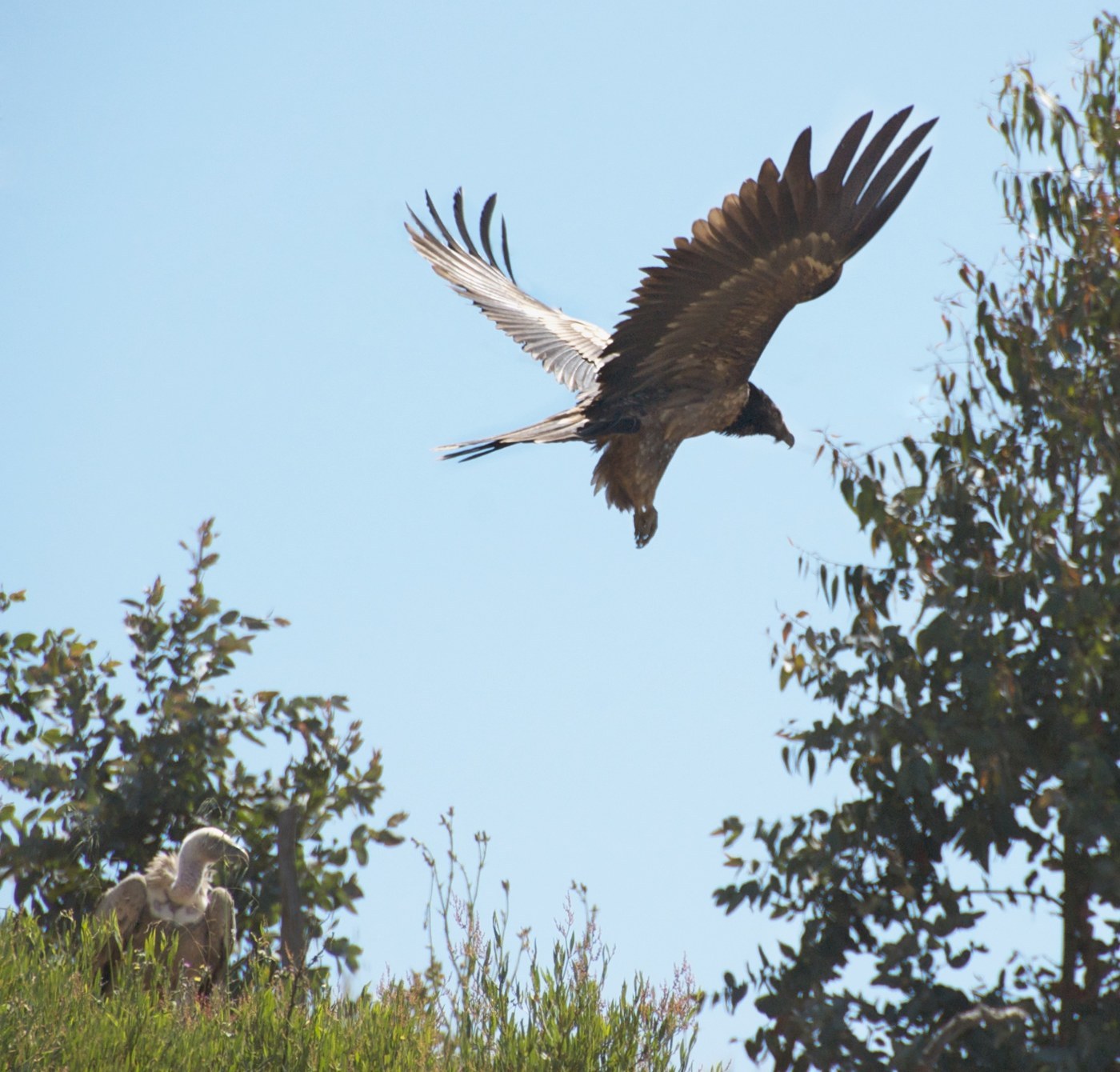
What White-backed Vulture Feathers Look Like
White-backed Vulture is one of Africa's most widespread large vultures, and its feathers are built for long soaring flight over savanna. Flight feathers (primaries and secondaries) are large, broad, and blackish-brown — among the biggest feathers you're likely to find in African vulture habitat, with primaries reaching well over a foot in length on a full-grown adult. Body (contour) feathers are also blackish-brown overall, without barring or spotting, giving the bird a fairly uniform dark look when perched.
The species' name comes from a feature that's easy to miss but diagnostic when found: the lower back and rump feathers are white — this patch is normally hidden by the folded wings when the bird is perched, but is exposed in flight and would be visible on a molted feather from that specific area. A white feather with a broad, soft-vaned structure typical of a back feather (rather than a downy contour feather from elsewhere) is a strong clue for this species.
At the base of the neck, adults have a ruff of white, downy, hair-like feathers — distinctly fluffier and less structured than normal contour feathers, forming a collar around the lower neck.
Step-by-Step: Is This Feather From a White-backed Vulture?
- Check size first. Large flight feathers, often 12+ inches, fit an adult vulture; much smaller feathers are likely a different species entirely.
- Assess overall color. Uniform blackish-brown across most body and flight feathers, without patterning, fits this species (and broadly other Gyps vultures).
- Look for a white back/rump feather. If you find a broad white feather with vulture-type structure (not downy fluff) from among otherwise dark feathers, it strongly suggests the diagnostic white back patch of this species.
- Look for downy white neck-ruff feathers. Fluffy, hair-like white feathers distinct from stiffer contour feathers support the neck ruff of this species.
- Confirm the setting. Open African savanna, especially near large mammal carcasses or known roosting/nesting trees, fits this species' habits well.
Similar Species & How to Tell Them Apart
- Rüppell's Griffon Vulture — overall body feathers show pale scaly edging throughout (a scaled look, not solid dark), and lacks the clean white back patch, instead showing a paler brownish back blending with the body.
- Cape Vulture — larger and paler overall with a pale eye and a creamy-tan back rather than a sharply white one, plus a less fluffy neck ruff.
- Hooded Vulture — much smaller overall with more slender flight feathers and a more uniformly brown body lacking any white back patch or neck ruff.
- Lappet-faced Vulture — larger and bulkier with more variegated white patches on the underwing coverts and thighs, not confined to a clean back patch.
Where & When You'll Find Them
White-backed Vultures range across sub-Saharan African savanna and open woodland, nesting colonially in tall trees and traveling widely in search of carcasses, often gathering with other vulture species at kills. Feathers are most commonly found near nesting colonies, regular roost trees, and around known feeding sites. Like most large vultures, molt is a slow, gradual, continuous process rather than a single concentrated seasonal event — because their large flight feathers are costly to grow and vultures depend on unbroken flight ability to travel long distances for food, individual feathers are replaced a few at a time across the year rather than all at once.
Frequently asked questions
What is the single most diagnostic feather for this species?
A broad white feather from the lower back/rump — this patch is normally hidden by folded wings on a perched bird but gives the species its name and is diagnostic when found.
How is the neck ruff feather different from a normal contour feather?
It's downy and hair-like rather than stiff and structured, forming a fluffy white collar at the base of the neck, distinct from the vulture's otherwise blackish-brown plumage.
How do I tell this apart from Rüppell's Griffon Vulture?
Rüppell's Griffon shows pale scaly edging across its body feathers rather than a solid dark color, and lacks the clean, isolated white back patch of White-backed Vulture.
Why are the flight feathers so large?
White-backed Vultures are large soaring birds built for covering long distances over savanna in search of carcasses, so their primary and secondary feathers are correspondingly large and broad.
Is there a specific molt season to watch for?
Not really — large vultures replace flight feathers gradually and continuously throughout the year rather than in one concentrated molt period, since they can't afford to lose too many flight feathers at once.