
How to Identify Yellow Wagtail Feathers
A step-by-step guide to the long black-and-white tail feathers and vivid yellow underparts that mark a Yellow Wagtail, with guidance for separating it from Grey Wagtail and White Wagtail feathers.
Read the full Yellow Wagtail encyclopedia entry →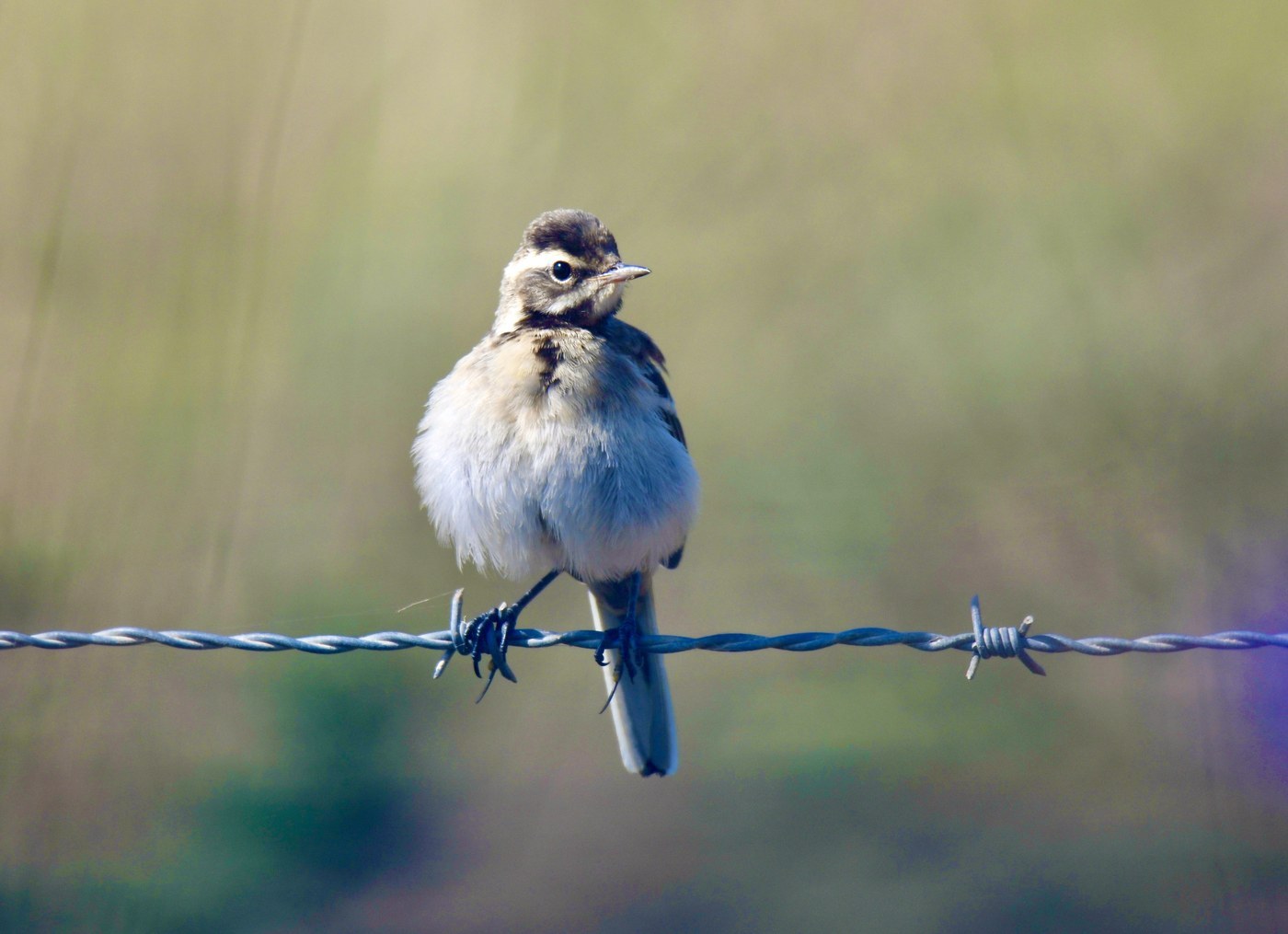
What Yellow Wagtail's Feathers Look Like
Yellow Wagtails are slender, long-tailed ground birds, and their feathers reflect that build. The tail is proportionally very long relative to body size, and individual tail feathers are black with clean white edging on the outermost pair — a pattern that flashes as the bird constantly pumps its tail up and down. Underparts contour feathers are vivid yellow, sometimes with an olive wash, covering the breast and belly. Back and mantle feathers are olive-green, plain and unstreaked. Head feather color varies by subspecies (blue-gray, black, or yellow-olive crown depending on population), so crown feathers are less reliable for identification than the tail and underparts. Flight feathers are dark brown-blackish with pale buff to whitish edging forming faint wingbars. Overall feather size is small to medium, with unusually long tail feathers relative to the rest of the bird.
Step-by-Step: Is This Feather From a Yellow Wagtail?
- Measure the tail feather length relative to body-sized feathers. An unusually long, slender black tail feather with white edging suggests a wagtail rather than a typical songbird.
- Check the underparts color. Vivid yellow contour feathers across the breast/belly, not just the vent, point to this species.
- Look at the back. Plain olive-green, unstreaked mantle feathers fit the pattern.
- Examine wingbars. Faint, pale buff wingbars rather than bold white ones are consistent with this species.
- Rule out an all-gray tail. A very long gray tail feather (rather than black) suggests a different wagtail species.
- Consider habitat context. A feather found in open grassland, wet meadow, or farmland fits this species' preferred foraging habitat.
Similar Species & How to Tell Them Apart
Grey Wagtail is the most likely confusion since it also shows yellow feathering, but in that species the yellow is restricted mainly to the vent and undertail area while the back is gray, not olive, and the tail feathers are proportionally even longer relative to the body. If a feather shows yellow spread broadly across the breast and belly rather than confined to the rear end, Yellow Wagtail is more likely. White Wagtail is simple to rule out because it shows no yellow feathering anywhere — its underparts are white and gray/black. Within the Yellow Wagtail complex itself, subspecies differ subtly in head-feather color, but these differences are generally too fine to reliably judge from an isolated feather, so it's best to identify to the species/complex level rather than the subspecies level from feathers alone.
Where & When You'll Find Them
Yellow Wagtails breed across open grasslands, wet meadows, and agricultural fields spanning Europe, Asia, and parts of Africa, walking along the ground and flushing insects. They are long-distance migrants, with most populations wintering in sub-Saharan Africa or South Asia. Molt typically begins on the breeding grounds in later summer (around August) as a partial pre-migratory molt, followed by a more complete molt on the wintering grounds. This means feathers are most likely to be found in wet pastures, marshy field edges, and agricultural land during the breeding season and at migration stopover sites in spring and late summer, often near livestock or damp ground where the birds forage for insects.
Frequently asked questions
What's the best single clue for this feather?
An unusually long, slender black tail feather with clean white edging on the outer pair, paired with vivid yellow underparts feathers, is the strongest combination of clues.
How is this different from a Grey Wagtail feather?
Grey Wagtail's yellow is mostly limited to the vent area with a gray back, while Yellow Wagtail shows yellow spread across the breast and belly with an olive-green back.
Can I identify the exact subspecies from a single feather?
Not reliably — head-color differences between Yellow Wagtail subspecies are too subtle to judge from an isolated feather, so it's best to stick with species-level identification.
Does White Wagtail cause confusion?
No, White Wagtail has no yellow feathering at all, making it easy to rule out once any yellow is present.
Where should I look for feathers during migration?
Wet pastures, marshy field edges, and agricultural land, especially near livestock or damp foraging ground, are the best spots during migration stopovers.