
How to Identify Agami Heron Feathers
A guide to the elongated plumes and rich chestnut neck feathers of the Agami Heron, one of the most strikingly colored herons of Neotropical swamp forest.
Read the full Agami Heron encyclopedia entry →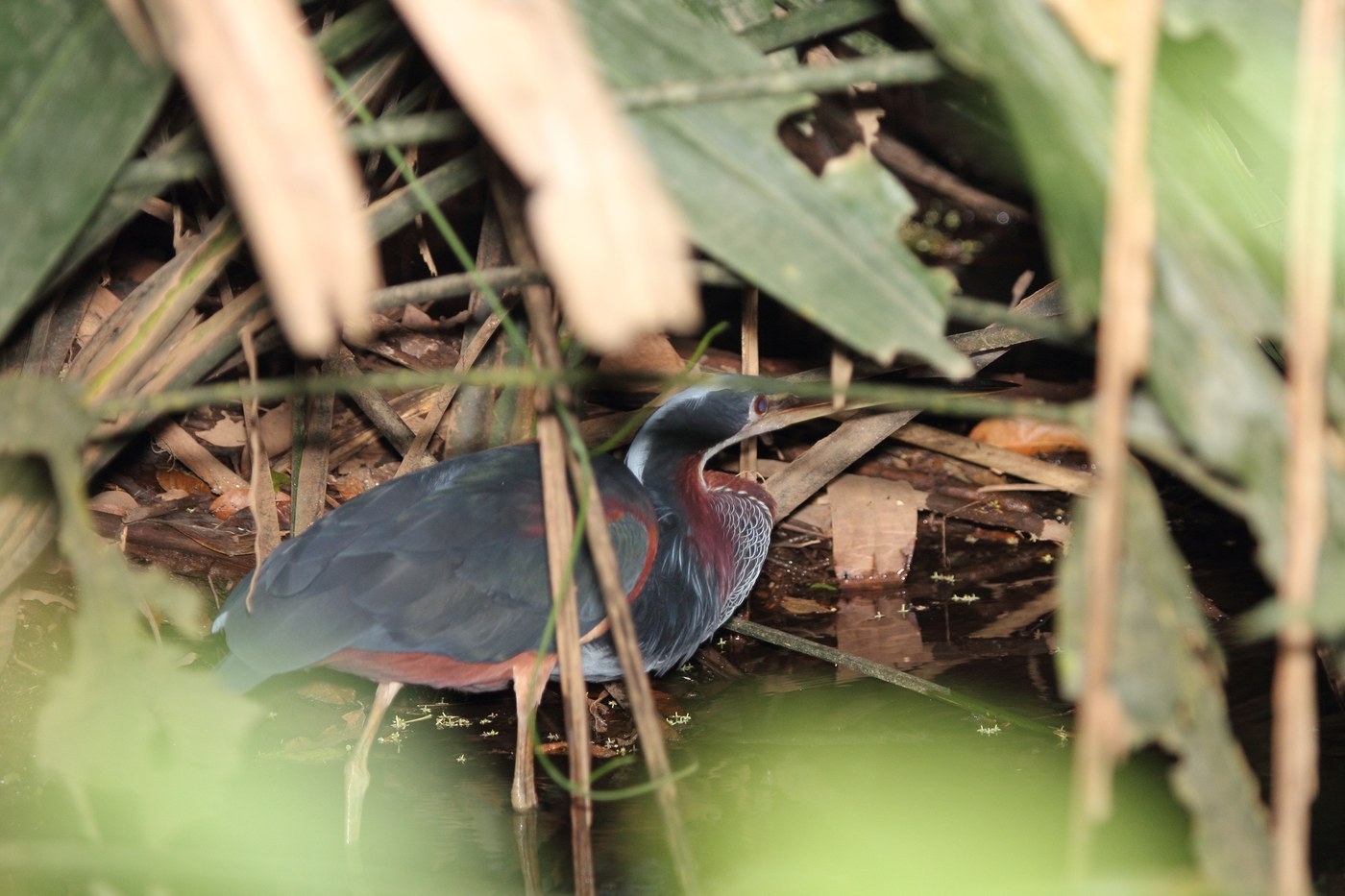
What Agami Heron's Feathers Look Like
Agami Heron is widely considered one of the most beautiful herons in the world, and its feathers reflect that reputation. The neck and breast are covered in rich chestnut-rufous feathers, a deep reddish-brown notably warmer and more saturated than the neck color of most other herons. The back is dark green-black with a subtle gloss. During the breeding season, adults grow dramatically elongated, thin, lance-shaped plume feathers from the head, neck, and scapulars (shoulder area) — these are much longer and narrower than ordinary contour feathers and often show a pale blue-gray tone distinct from the chestnut body. Flight feathers are dark slate-gray, fairly narrow, and consistent with this heron's slender build.
Step-by-Step: Is This Feather From a Agami Heron?
- Check for elongated, lance-shaped plumes. A very long, thin, tapering feather far narrower than a normal contour feather suggests a breeding-condition heron plume — a strong first clue for this group.
- Look at neck/breast color. Deep, rich chestnut-rufous rather than a paler or more orange-toned rufous helps confirm this species over other rufous-necked herons.
- Check back feather gloss. Dark green-black with a subtle sheen, distinct from the plainer brown or gray backs of many other herons.
- Note overall feather slenderness. Agami Heron's feathers, including flight feathers, tend to look narrower than the equivalent feather from a bulkier heron of similar length.
- Consider the setting. A richly colored heron feather found in dense tropical swamp forest, rather than open marsh, fits this species' notably secretive habitat preference.
Similar Species & How to Tell Them Apart
- Purple Heron: Also shows a chestnut-rufous neck, but with a more streaked, striped pattern including black stripes down the neck, and is a considerably larger bird overall with correspondingly larger feathers.
- Green Heron: Also has a chestnut neck and dark cap, but is much smaller, with duller, less glossy green upperpart feathers and no dramatic elongated breeding plumes.
- Boat-billed Heron: Has a blackish cap and gray body without any chestnut coloring, making it easy to rule out once neck color is checked.
Where & When You'll Find Them
Agami Heron is a secretive, uncommon bird of dense, shaded tropical swamp forest and forest streams from southern Mexico through Central America into northern South America, where it stands motionless at the water's edge waiting to strike at small fish. Because it forages alone in heavy cover rather than in open, visible wetlands, feathers are only occasionally encountered, most likely near quiet forest streams, swamp margins, and mangrove-lined channels. Molt timing is tied to the breeding cycle, which varies somewhat by region but often aligns with the local dry season, when water levels drop and prey becomes more concentrated near remaining pools.
Frequently asked questions
What's the single most distinctive feather for this species?
An elongated, thin, lance-shaped breeding plume feather, especially if paired with a rich chestnut-rufous neck feather, is a strong indicator given how few Neotropical herons combine both traits.
How do I tell this apart from a Purple Heron feather?
Check for streaking — Purple Heron's neck feathers show black stripes over the rufous background, while Agami Heron's chestnut neck feathers are more solidly colored without that striped pattern.
Why are Agami Heron feathers rarely found?
This species is notably secretive and forages alone in dense, shaded swamp forest rather than open marshes, so encounters with the bird — and its feathers — are much less frequent than with more visible heron species.
Do non-breeding birds lack the long plumes?
Yes, the dramatically elongated lance-shaped plumes are a breeding-season feature; outside the breeding period, feathers will be shorter and more ordinary in shape, though the chestnut neck color remains a useful clue year-round.