
How to Identify Bell Miner Feathers
A guide to identifying Bell Miner feathers by their soft olive-green tone, dark cap and cheek patch, and lack of streaking or spotting.
Read the full Bell Miner encyclopedia entry →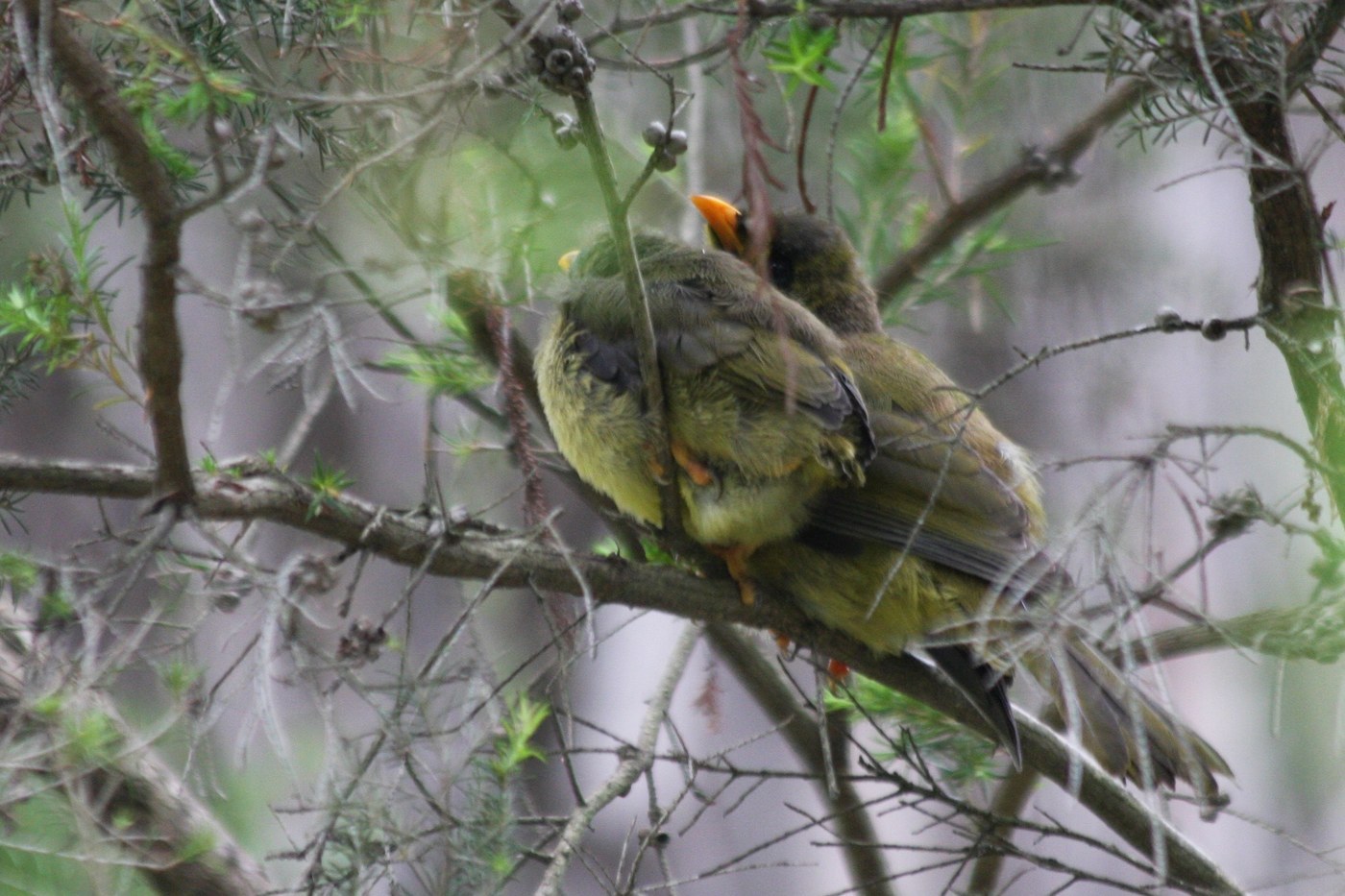
What Bell Miner's Feathers Look Like
The Bell Miner is a colonial Australian honeyeater named for its distinctive bell-like tinkling call, and its feathers show a soft but distinctive combination of colors. Body contour feathers are a muted olive-green, covering the back, wings, and much of the underparts - a soft, slightly yellowish-green rather than a bright or bold tone. The crown and a patch around the eye/ear region are blackish, forming a small dark cap and cheek patch that contrasts gently with the surrounding olive tones. Wing feathers show a subtle yellow-olive panel, brightest along the folded wing edge. Bill, legs, and eye-ring area are orange-yellow in life, and this warm tone is sometimes echoed faintly at the base of nearby facial feathers. Overall the plumage is fairly soft and unpatterned compared to more boldly marked honeyeaters - there's no streaking, spotting, or barring to speak of, just soft color zones blending into one another.
Step-by-Step: Is This Feather From a Bell Miner?
- Check for olive-green base color - a soft, slightly yellow-tinged green over most of the body is the primary clue.
- Look for the dark cap/cheek patch - blackish feathers around the crown and ear region contrasting gently with the olive body.
- Assess wing color - a yellow-olive panel along the wing edge, without bold barring or wingbars.
- Confirm lack of pattern - no streaking or spotting; Bell Miner feathers are notably plain and soft-toned compared to many honeyeaters.
- Consider size - a small-to-medium honeyeater (about 18-20 cm), so feathers are modest in size.
- Factor in colonial habitat - found in dense eucalypt colonies, often with many feathers from a group in one spot given their highly social, territorial colony structure.
Similar Species & How to Tell Them Apart
The Noisy Miner, a close and more widespread relative, is considerably greyer overall with a black cap but a pale grey (not olive-green) body, an easy distinction once you compare base color. Various other honeyeaters sharing eucalypt woodland, such as Yellow-faced Honeyeater, show a more contrasting facial stripe pattern with a distinct black-and-white face marking rather than the Bell Miner's simpler dark cap on plain olive.
Where & When You'll Find Them
Bell Miners live in dense eucalypt forest understory in southeastern Australia, forming large, highly territorial colonies that are famous for suppressing other bird species and correlating with certain insect (lerp/psyllid) outbreaks in the trees they defend. They are largely resident and sedentary within their colony territory. Molt typically follows the breeding season, roughly late spring through summer (Southern Hemisphere), so feathers are most findable in and around active colony territories in dense eucalypt stands during and after this period, often in fairly large numbers given colony density.
Frequently asked questions
What's the key difference between Bell Miner and Noisy Miner feathers?
Overall base color - Bell Miner is olive-green while Noisy Miner is much greyer, making this an easy comparison once you have feathers from both to compare.
Why might I find many feathers in one spot?
Bell Miners live in dense, highly territorial colonies, so feather turnover in an active colony territory can be more concentrated than for solitary-living species.
Is there a bold facial pattern to look for?
Not really - Bell Miner feathers are notably plain, with just a soft dark cap/cheek patch against olive-green, unlike more boldly patterned honeyeaters.
Does this species overlap with Yellow-faced Honeyeater habitat?
Yes, in southeastern Australian eucalypt forest, but Yellow-faced Honeyeater shows a distinct black-and-white facial stripe that Bell Miner lacks.
When is the best time to find feathers?
Late spring through summer, in and around dense eucalypt colony territories where these birds breed and roost communally.