
How to Identify Black-faced Spoonbill Feathers
A step-by-step guide to recognizing the white body plumes, black spatulate bill clues, and yellow breeding tinge of this spoonbill.
Read the full Black-faced Spoonbill encyclopedia entry →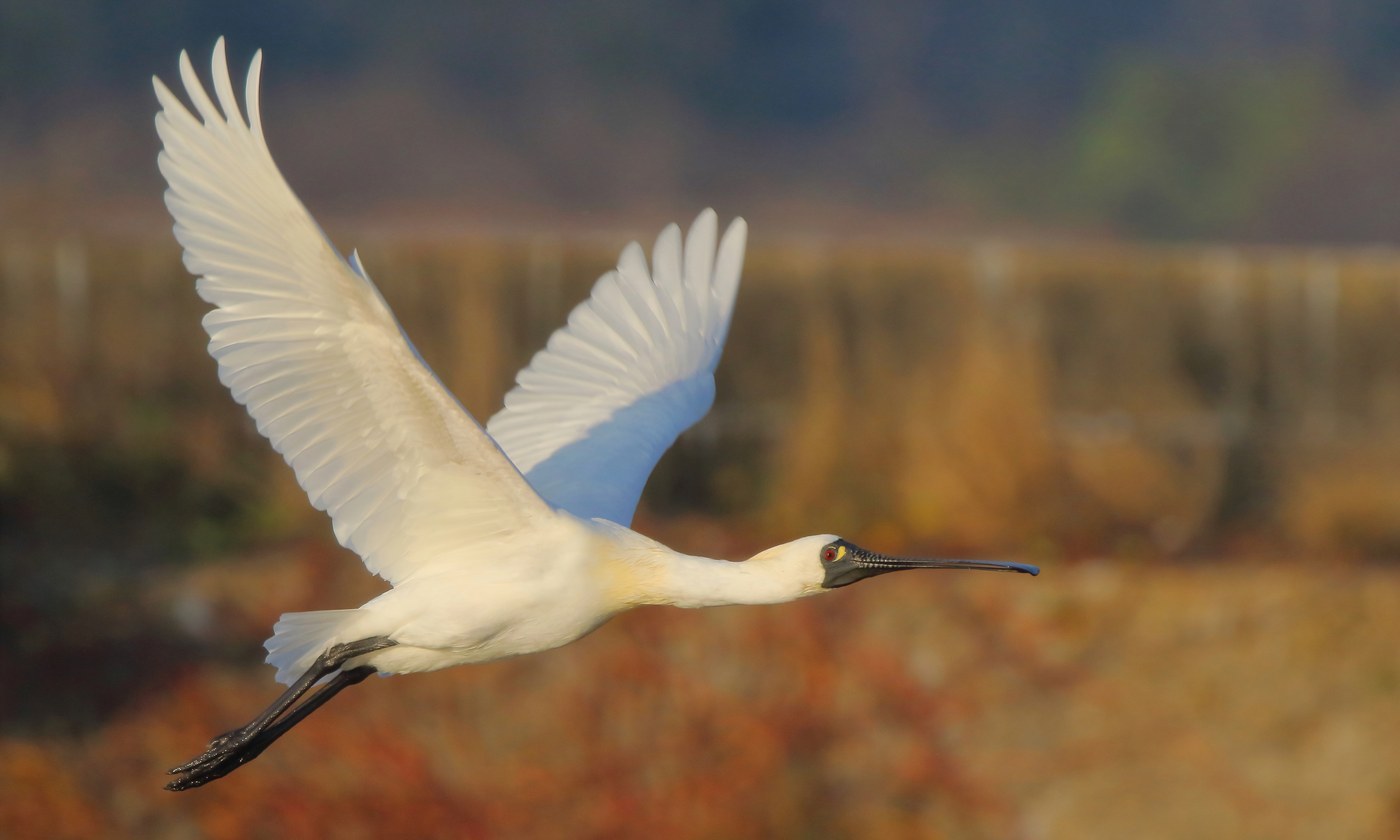
What Black-faced Spoonbill Feathers Look Like
Body and contour feathers are pure white, soft, and fairly long for the bird's size (6-10 cm on the body), with a silky texture typical of large wading birds. In breeding season, adults develop a pale yellow wash on the breast and a shaggy yellowish crest at the back of the head — elongated white feathers tipped or washed with soft yellow, quite different from the plain white feathers found the rest of the year. Non-breeding adults and juveniles show plain white feathers throughout, so the yellow tinge is a seasonal bonus clue, not a year-round one.
Flight feathers (primaries) are long — 20-28 cm — pure white with black shafts and black tips in juveniles (a useful youth marker), while adult flight feathers are typically all white with black only right at the very tip when present, often flying with black wingtips barely visible in the field but less obvious on a single dropped feather. The bill itself is a spoon-shaped black bill (not a feather, but the black facial skin patch around the eye and bill base is a helpful contextual identifier if any skin or bill fragment is found alongside plumage). Overall, feathers are soft, only lightly structured compared to a heron's stiffer plumage.
Step-by-Step: Is This Feather From a Black-faced Spoonbill?
- Confirm pure white color. Any feather with grey, buff, or dark barring is not from this species — it should be clean white throughout except for possible black tips.
- Check for a yellow wash. A soft lemon-yellow tint on an otherwise white plume, especially an elongated crest feather, points to breeding-season adult plumage.
- Look at the primary tips. Black tips on white flight feathers suggest a juvenile or a flight feather from the wing edge; fully white flight feathers suggest an adult body or wing-covert feather.
- Measure length. Body feathers 6-10 cm and flight feathers up to 28 cm fit a mid-sized wading bird, larger than an egret's finest plumes but smaller than a stork's.
- Note softness. The overall texture should feel soft and slightly fluffy at the base, not stiff — spoonbills are gentler-feathered than herons of similar size.
Similar Species & How to Tell Them Apart
The Eurasian Spoonbill, which shares range in parts of East Asia, is nearly identical in feather but is typically slightly larger with less black facial skin, and its breeding crest is often a purer white with only a faint yellow buff at the very base rather than throughout the plume — differences are subtle and this pairing is genuinely hard to separate on feather alone. White egrets (Great Egret, Little Egret) also show pure white plumes, but their breeding aigrettes have fine, lacy, dissociated barbs rather than the more solid, silky vane of a spoonbill feather, and egrets lack any yellow wash. Whooper or other white swans have much larger, stiffer feathers with a different overall proportion.
Where & When You'll Find Them
Black-faced Spoonbills are a species breeding on a small number of islets off the Korean Peninsula and China's coast, then wintering in the coastal wetlands of Taiwan, Hong Kong, Vietnam, and southern China. Feathers are most likely encountered near tidal mudflats, shallow lagoons, and estuarine roost sites during the non-breeding season when birds gather in larger, more accessible flocks. Molt intensifies after breeding, so worn white body feathers turn up around wintering roosts from autumn through early spring, while the yellow-washed crest feathers are only shed near breeding colonies in spring and early summer.
Frequently asked questions
Is a plain white feather enough to identify this species?
Not on its own — plain white feathers are also shared with egrets and other spoonbills, so location and any yellow wash matter for confirmation.
What does the yellow tinge mean?
A soft yellow wash on an elongated crest or breast feather indicates breeding-season adult plumage, present only part of the year.
How can I tell a juvenile feather from an adult one?
Juveniles often show black tips on the white primaries, a mark that is faint or absent in most adult flight feathers.
How does this differ from an egret plume?
Egret breeding plumes are lacy with separated barbs, while spoonbill feathers stay more solid and silky along the vane.
Where should I look for feathers?
Coastal mudflats, estuaries, and shallow lagoon roost sites, especially during the non-breeding season when flocks gather.