
How to Identify Cinereous Vulture Feathers
Confirm a Cinereous Vulture feather by its enormous size, uniformly dark chocolate-brown color with no contrasting pale body, and thick, heavy shaft typical of the largest Old World vulture.
Read the full Cinereous Vulture encyclopedia entry →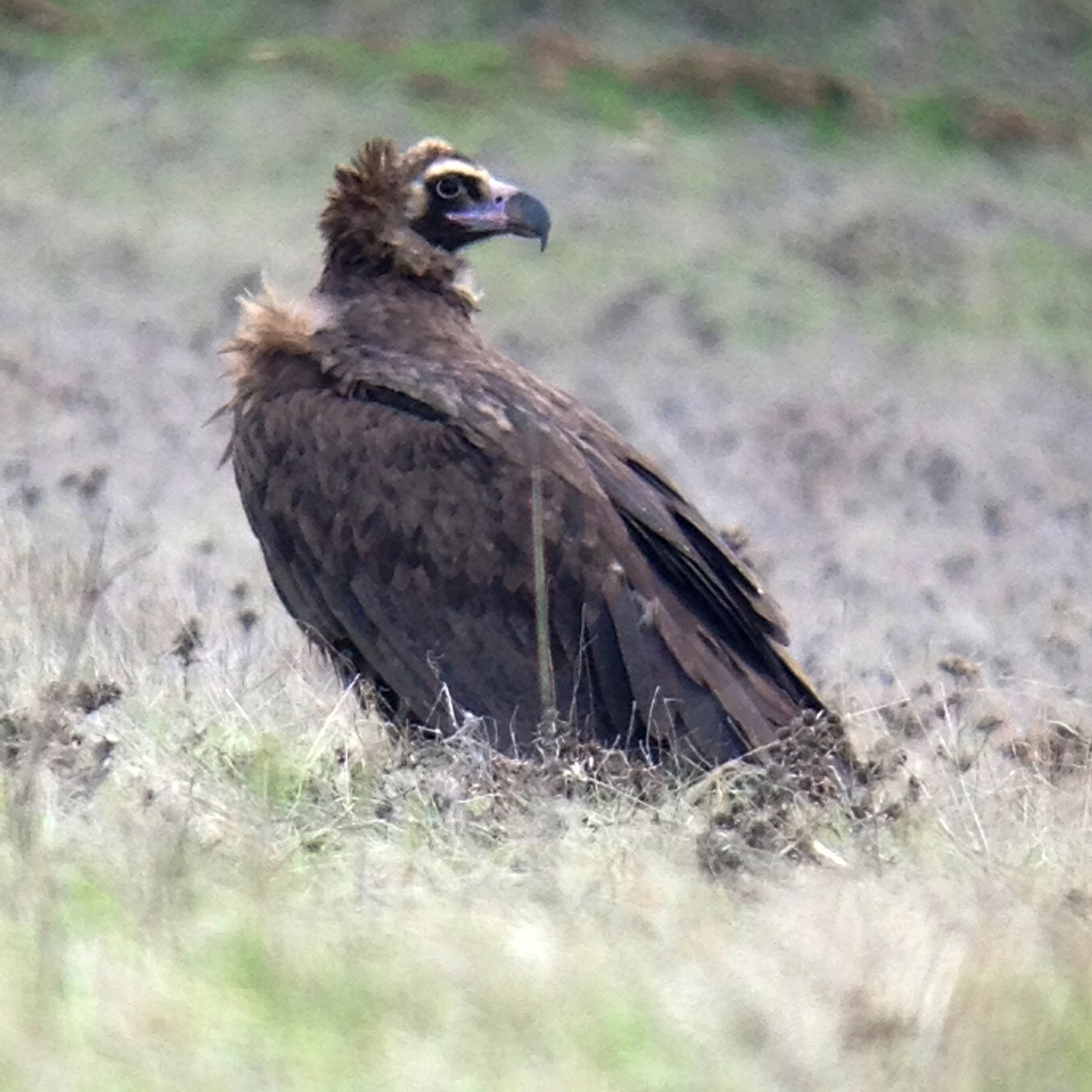
What Cinereous Vulture Feathers Look Like
The Cinereous Vulture is the largest vulture across much of its range in Europe and Asia, and its feathers reflect that scale. Flight feathers (primaries) are exceptionally long and broad, often exceeding 40-50 cm in adults — among the largest flight feathers of any raptor you're likely to find. Overall plumage color is a uniform dark chocolate-brown to blackish-brown, without the strong two-tone contrast seen in some other large vultures.
A distinctive ruff of long, loose, shaggy feathers encircles the base of the neck, usually a slightly paler brown than the body, giving the bird its "monk vulture" nickname (its scientific name, Aegypius monachus, references a monk's cowl). The head and much of the neck are bare skin in life, not feathered, so feathers from that specific area won't be found. The tail is short and wedge-shaped, dark brown, with broad, heavy feathers.
Step-by-Step: Is This Feather From a Cinereous Vulture?
- Check size first: is the flight feather unusually long and broad, potentially 30+ cm? This alone narrows the field to large raptors/vultures.
- Assess color evenness: is the feather a uniform dark chocolate-brown to blackish tone with little to no pale patterning? Cinereous Vulture lacks strong contrast between body and flight feathers.
- Feel the shaft: the rachis should be notably thick and robust, appropriate for a bird with a wingspan approaching 3 meters.
- Look for ruff feathers: long, loose, shaggy, lance-shaped feathers (if found near the neck/shoulder region) support this species.
- Consider location: mountainous, steppe, or open highland terrain in Spain, the Balkans, Central Asia, Mongolia, or China.
Similar Species & How to Tell Them Apart
- Griffon Vulture: shows strong two-tone contrast — pale sandy-buff body and covert feathers against blackish flight feathers — very different from Cinereous Vulture's uniform dark tone throughout.
- Golden Eagle: smaller flight feathers overall, and primaries typically show more defined dark barring or pale mottling rather than the vulture's plain, unmarked dark brown; golden-tawny nape feathers in the eagle also differ from the vulture's uniformly dark ruff.
- Lappet-faced Vulture: mostly a different range (Africa, parts of Middle East), generally has more contrast between dark flight feathers and paler undersides in some plumages, and overlaps little with Cinereous Vulture's core range.
Where & When You'll Find Them
Cinereous Vultures inhabit mountainous and steppe regions, including Spain, the Balkans, Central Asia, Mongolia, and parts of China, nesting on cliffs or in large trees. Most populations are resident or make only local altitudinal movements. Because large raptors molt their flight feathers gradually over multiple years rather than all at once, worn or shed primaries can appear near nesting cliffs or communal feeding sites (carcasses) at any time of year, though finds are somewhat more frequent in summer around active nest sites.
Frequently asked questions
How can I be sure a huge dark feather is from a vulture and not an eagle?
Check for uniform, unmarked dark brown coloring — Cinereous Vulture flight feathers lack the barring or pale mottling typically seen on Golden Eagle primaries, and vulture feathers tend to run even larger and heavier.
Why don't I ever find head or neck feathers from this species?
The head and much of the neck are bare skin in life (an adaptation for feeding inside carcasses), so only the neck ruff and body/flight feathers will ever be found.
What's the easiest way to rule out Griffon Vulture?
Look for contrast: Griffon Vulture shows a pale sandy-buff body against dark flight feathers, while Cinereous Vulture is uniformly dark chocolate-brown throughout with no such contrast.
Is there a season when Cinereous Vulture feathers are more likely to be found?
Molt is slow and spread across the year in this large raptor, so feathers can turn up in any season, though summer near active nesting cliffs tends to yield more finds.