
How to Identify Clark's Nutcracker Feathers
Identify a Clark's Nutcracker feather by its unusually pale silvery-gray body, glossy black wings with a bold white secondary patch, and a black-and-white tail unlike any other western corvid.
Read the full Clark's Nutcracker encyclopedia entry →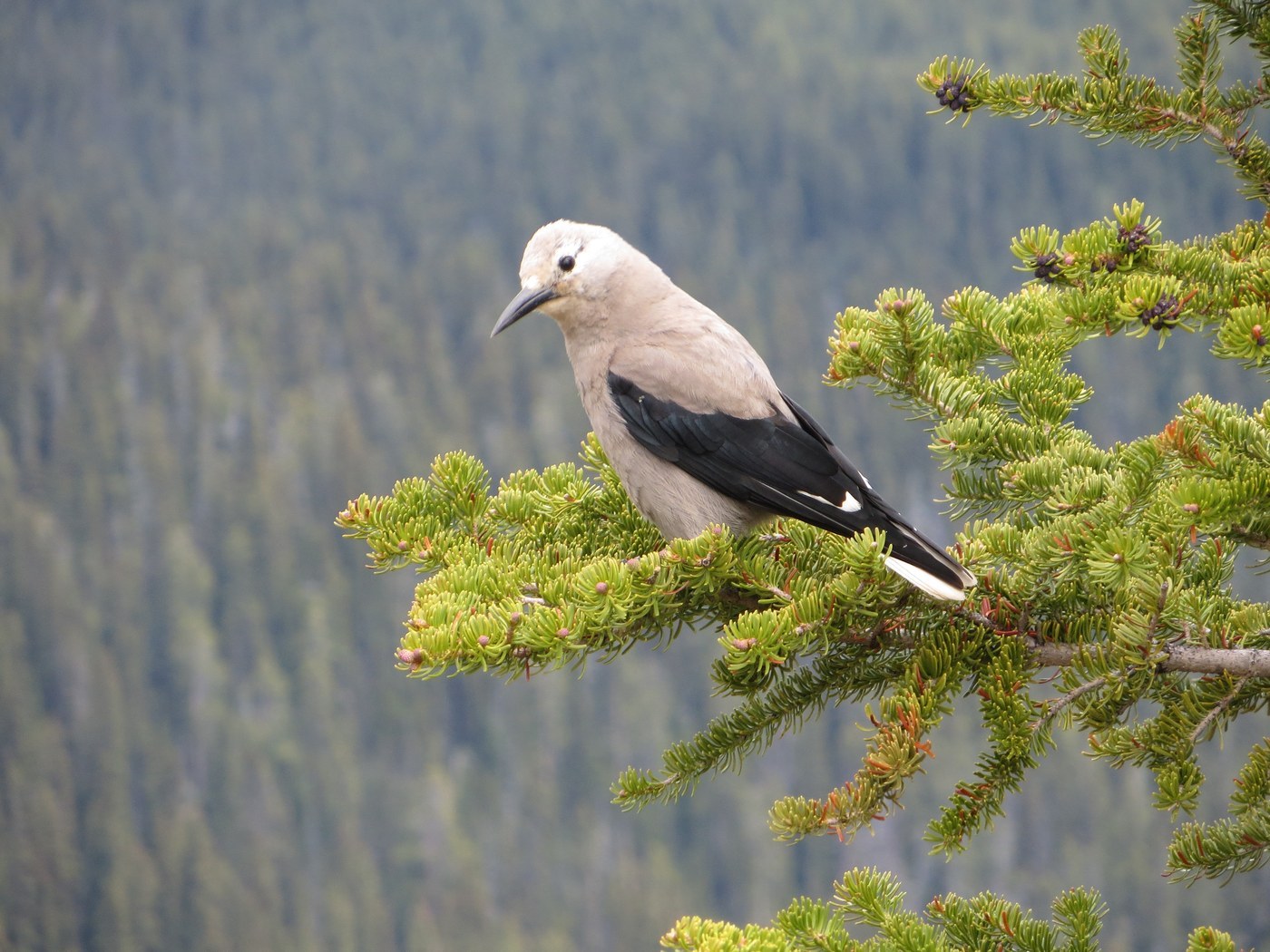
What Clark's Nutcracker Feathers Look Like
Clark's Nutcracker stands out among corvids for its pale, silvery-gray body plumage — most crows and jays run darker or bluer, making this light gray tone on a body/contour feather an immediate clue. The wings, by contrast, are mostly glossy black, except for the secondary feathers, which are pure white, forming a bold wing patch that's very obvious both in flight and on a single loose feather.
The tail shows a similar bold contrast: the central tail feathers are black, while the outer tail feathers are white, creating a black-and-white pattern when the tail is fanned. The bill is long, black, and dagger-like (not feather-related, but a useful confirming detail if found alongside feathers).
Step-by-Step: Is This Feather From a Clark's Nutcracker?
- Check body feather color first: an unusually pale silvery-gray tone is unusual among corvids and a strong starting clue.
- Examine wing feathers: glossy black is expected from primaries/coverts, but a pure white feather from the same bird points to the secondaries — a diagnostic combination.
- Check tail feathers: black in the center, white on the outer edges/corners.
- Consider elevation and habitat: high-elevation coniferous forest (whitebark pine and other pines) in western mountains.
- Compare size: a medium-large corvid, roughly crow-jay intermediate in feather size.
Similar Species & How to Tell Them Apart
- Canada Jay (Gray Jay): also gray-bodied, but has a dark cap, no black wings, and overall fluffier, softer plumage without the bold white secondary patch or black-white tail pattern.
- Pinyon Jay: a nearly uniform dull blue-gray bird with no white wing patch and no black-and-white tail — easily ruled out by the lack of any bold black/white contrast.
- Common Raven / American Crow: entirely glossy black with no gray body feathers or white patches at all, making them straightforward to exclude.
Where & When You'll Find Them
Clark's Nutcrackers live in high-elevation coniferous forests throughout the mountains of western North America, particularly where whitebark pine and other large-seeded pines grow — they're famous for caching thousands of pine seeds each fall. They're largely resident, though birds may shift to lower elevations in years of poor seed crops. Molt occurs after breeding in late summer at these high-elevation sites, so feathers are most often found near subalpine forest, seed-caching territories, and rocky outcrops used as perches.
Because this species ranges widely across steep, rocky alpine and subalpine terrain in search of cone crops, feathers can also turn up well above treeline in late summer and fall, far from any nest site, especially near favored caching areas among boulders and talus slopes. In poor cone-crop years, occasional irruptions can carry birds — and their feathers — to lower-elevation foothills and even into towns at the base of their normal mountain range.
Frequently asked questions
Why is the pale gray body color such a useful clue?
Most western corvids run darker, bluer, or browner overall, so a light silvery-gray contour feather is unusual and points strongly toward Clark's Nutcracker among the corvid family.
What's the easiest way to tell this apart from a Canada Jay feather?
Look for glossy black wing feathers with a bold white patch and a black-and-white tail pattern — Canada Jay lacks both features, having plain gray wings and a softer, fluffier overall look.
Are Clark's Nutcracker feathers likely to be found at low elevations?
Less commonly — the species prefers high-elevation pine forest, though it may descend to lower elevations in years when the pine seed crop fails.
When is molt most likely to produce fresh feather finds?
Late summer, after the breeding season, at high-elevation coniferous forest sites where the birds nest and cache pine seeds.