
Clark's Nutcracker
Nucifraga columbiana
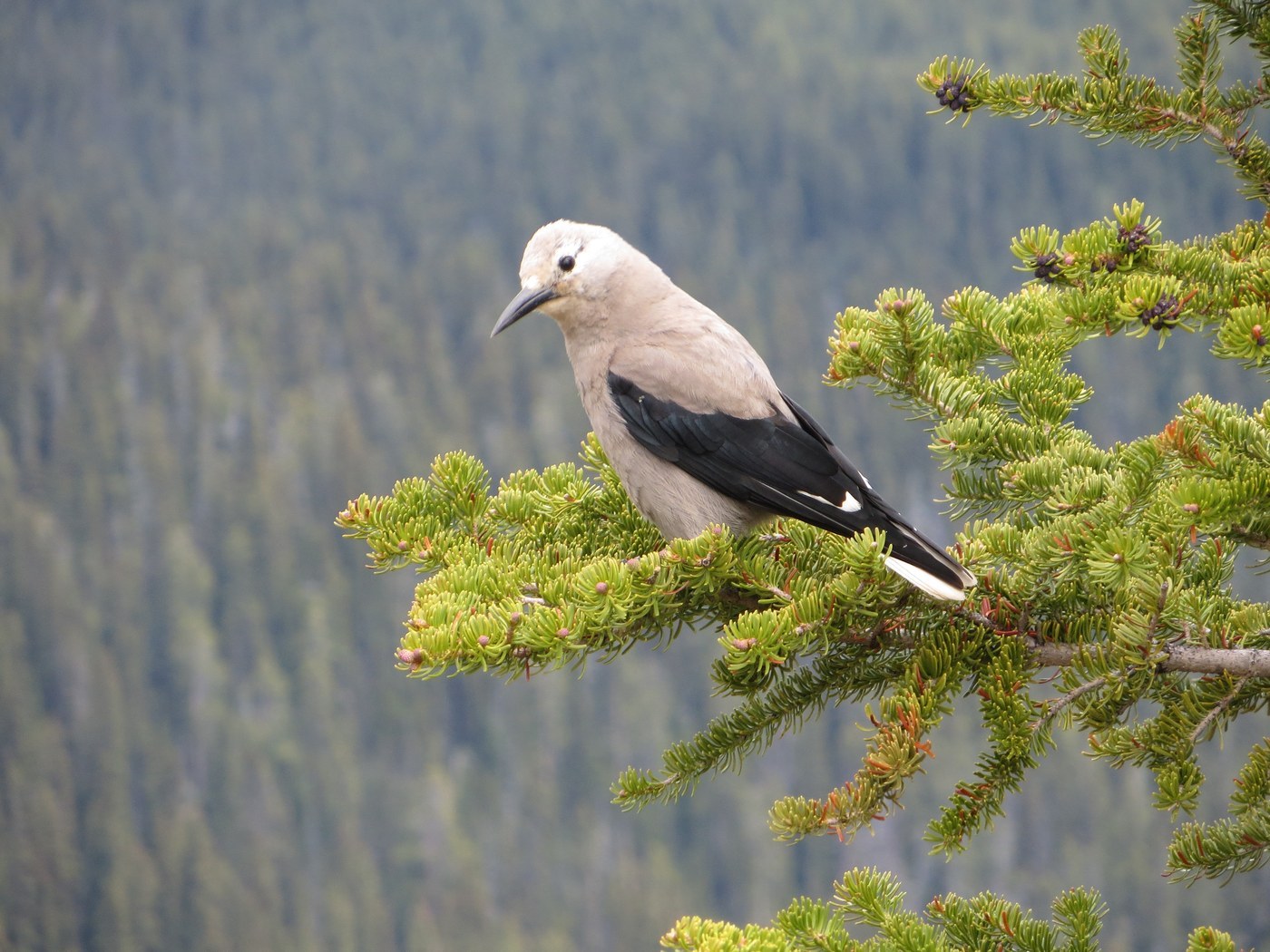
A pale gray, crow-like bird of high mountain pine forests, best known for storing thousands of pine seeds each autumn to survive winter.
- Feather type
- Contour and flight feathers
- Colours
- Pale ash-gray body with black wings and tail marked in white
- Bird size
- Jay-sized, ~30 cm
Found a feather like this?
Identify any feather from a photo, free.
Overview
The Clark's Nutcracker is a stocky, pale gray corvid found in high-elevation conifer forests of the western mountains, from British Columbia south through the Rockies and Sierra Nevada. It belongs to the crow and jay family and is closely tied to whitebark, pinyon, and other large-seeded pines. Its sturdy, dagger-like bill is adapted for prying seeds from unopened cones, and a special pouch under the tongue lets it carry many seeds at once to hidden caches.
Identifying the Feather
Body (contour) feathers are soft and pale gray, giving the bird an overall ashy look with a slightly darker head. The wings are glossy black with white tips on the secondary flight feathers, forming a bright white trailing patch visible in flight. The central tail feathers are black while the outer tail feathers are white, creating a bold black-and-white tail pattern when spread. Compared to a Steller's Jay, the plumage is much paler and lacks blue tones; compared to a crow, the body plumage is distinctly lighter gray rather than solid black.
Plumage & Molt
Sexes look alike, both showing the same pale gray body with black-and-white wings and tail year-round. Juveniles resemble adults but appear duller and slightly more brownish-gray until their first full molt. Adults undergo a single complete molt after the breeding season, and feather wear through the year can make the gray body plumage look slightly grayer or browner depending on season.
Habitat & Range
Clark's Nutcrackers live in open subalpine and montane pine forests, often near treeline, across the mountain ranges of western North America. They are largely resident, but seed crop failures can trigger irruptive movements to lower elevations or other regions in search of pine seeds. Their strong association with large-coned pines makes them an important seed disperser in these ecosystems.
Behavior & Field Notes
Nutcrackers cache huge numbers of pine seeds in the ground each fall, relying on excellent spatial memory to relocate many of these caches through winter and spring, even under snow. Flight is strong and undulating, often at a distance over open mountain terrain. Calls are harsh, nasal, and far-carrying, frequently described as a grating "kraaa" or "khaaa." They nest very early in the year, sometimes while snow is still on the ground, timed to have young ready to exploit stored seed caches.
Frequently asked questions
How can I identify a Clark's Nutcracker feather?
Look for pale gray body feathers combined with glossy black flight feathers tipped in white, and a black tail with white outer feathers — a combination not shared by other gray mountain birds.
Where do Clark's Nutcrackers live?
They live in high-elevation pine forests of western North America, especially where whitebark or pinyon pine grows near treeline.
Why does this bird store so many seeds?
It relies almost entirely on cached pine seeds to survive winter and to feed its early-hatching young, so it buries thousands of seeds each autumn.
How is Clark's Nutcracker different from a Steller's Jay?
The nutcracker is pale gray overall without a crest or blue tones, while the Steller's Jay is dark blue-black with a prominent crest.
Clark's Nutcracker guides
In-depth guides for identifying and understanding Clark's Nutcracker.
Other feathers you may enjoy

Yellow-billed Magpie
Contour, wing, and tail feathers

White-throated Magpie-Jay
Contour, wing, and tail feathers

White-necked Crow
Contour and flight feathers

Slender-billed Crow
Contour and flight feathers

Sinaloa Crow
Contour and flight feathers

Siberian Jay
Contour, wing, and tail feathers

Yellow-billed Blue Magpie
Contour, wing, and tail feathers
Woodhouse's Scrub-Jay
Contour and flight feathers
White-winged Chough
Contour and flight feathers

Rufous Treepie
Long, graduated tail feathers; loose body contour feathers

Thick-billed Raven
Contour and flight feathers
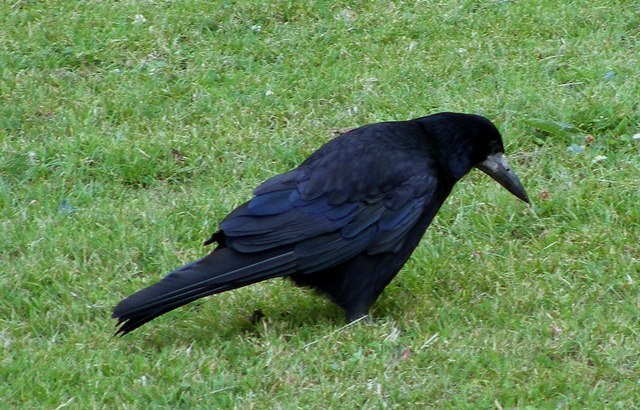
Rook
Glossy purple-black flight and body feathers; loose, shaggy thigh (leg) feathers