
How to Identify Cocoi Heron Feathers
Identify a Cocoi Heron feather by its large size, black cap with trailing plumes, and bold black-and-white striped neck pattern — the South American counterpart to the Great Blue Heron.
Read the full Cocoi Heron encyclopedia entry →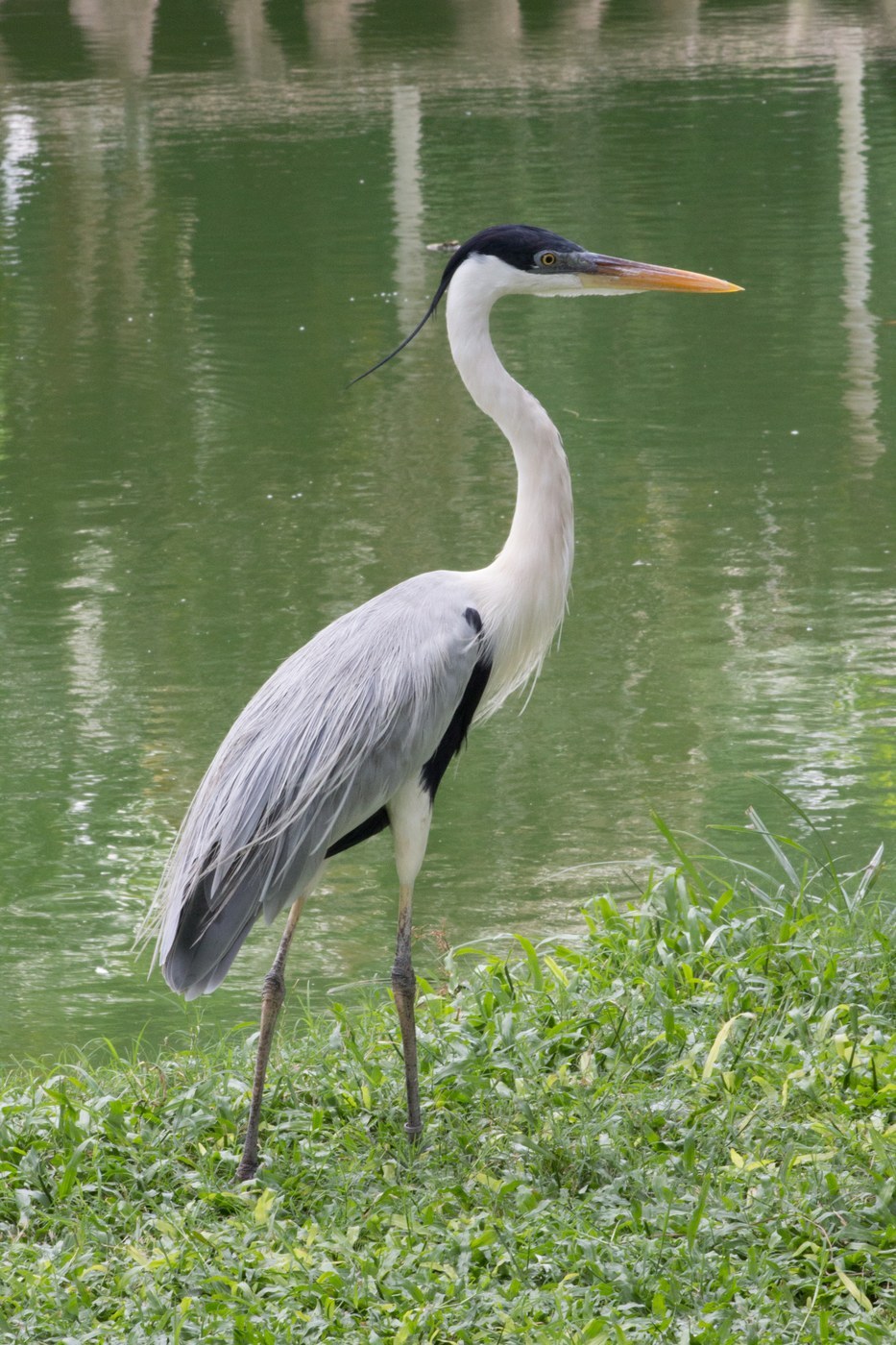
What Cocoi Heron Feathers Look Like
The Cocoi Heron is one of South America's largest herons, and its feathers reflect that scale — expect notably long, substantial flight and plume feathers compared to smaller wading birds sharing its wetlands. The crown is solid black, and breeding adults grow elongated black plumes trailing from the back of the head (occipital plumes), a soft, wispy feather type distinct from the stiffer flight feathers.
The neck is mostly white but marked by a bold black stripe running down the center of the foreneck, creating strong black-and-white contrast that's a key identification feature. The back and wing coverts are a plain gray, while the flight feathers (primaries) are notably darker — a blackish-slate tone that contrasts against the paler gray body. Long, thin breast plumes (aigrette-type feathers) grow from the lower neck/breast during the breeding season.
Step-by-Step: Is This Feather From a Cocoi Heron?
- Check size first: this is a large heron, so flight feathers and plumes are correspondingly long and substantial.
- Examine crown/head feathers: solid black, and if long wispy plumes are attached or found nearby, that supports breeding-season adult plumage.
- Look at neck feathers: white with a bold black central stripe running down the front — a strong, specific pattern.
- Compare flight feather color to body feather color: blackish-slate primaries against paler gray back/covert feathers indicates real contrast, consistent with this species.
- Consider habitat: wetlands, rivers, and marshes anywhere in South America.
Similar Species & How to Tell Them Apart
- Great Blue Heron: the North/Central American counterpart, similar in size and general gray-blue tone, but shows rustier thighs and a less starkly contrasted neck pattern; ranges barely overlap, making location a helpful clue.
- Great Egret: entirely white, with no gray body or black cap/neck stripe at all — easily excluded.
- Whistling Heron / other South American herons: generally smaller with different color patterns (buffier tones, different head markings) and lacking the bold black neck stripe and black cap combination of Cocoi Heron.
Where & When You'll Find Them
Cocoi Herons inhabit wetlands, rivers, marshes, and coastlines throughout South America, and are largely resident with only local movements tied to water levels and food availability. Molt timing varies by region depending on local breeding seasons (often linked to dry-season or wet-season cycles), but feathers — including the diagnostic elongated head and breast plumes — are most commonly found near colonial nesting sites (heronries) especially just after the breeding season.
Because this species often nests alongside egrets, ibises, and other herons in mixed colonies, a feather found beneath a heronry should be checked carefully against its size and the black cap/neck-stripe pattern before assuming species, since several similarly sized wading birds may be present at the same site. Away from breeding colonies, look for shed feathers along riverbanks, lakeshores, and tidal mudflats where adults spend much of the year hunting fish alone or in loose groups.
Frequently asked questions
How is this different from a Great Blue Heron feather?
Cocoi Heron shows an even bolder black-and-white contrast on the neck (a solid black central stripe) and a purely black cap without the rufous thigh tones sometimes seen on Great Blue Heron; the two species' ranges barely overlap, which also helps.
What are the long wispy feathers sometimes found near the head or breast?
These are breeding-season plumes (occipital plumes on the head, aigrette-type plumes on the breast) grown by adults during the nesting season — softer and thinner than regular flight or contour feathers.
Why are the flight feathers darker than the body feathers?
Cocoi Heron's primaries are a blackish-slate tone that contrasts against its paler gray back and covert feathers, a helpful clue when comparing feathers from different parts of the same bird.
When are plume feathers most likely to be found?
Near colonial nesting sites (heronries) during and just after the breeding season, when adults grow and eventually shed their elongated head and breast plumes.