
How to Identify Common Bullfinch Feathers
A guide to recognizing the rose-pink breast, black cap, white rump, and bold wing-bar feathers of this stocky European finch.
Read the full Common Bullfinch encyclopedia entry →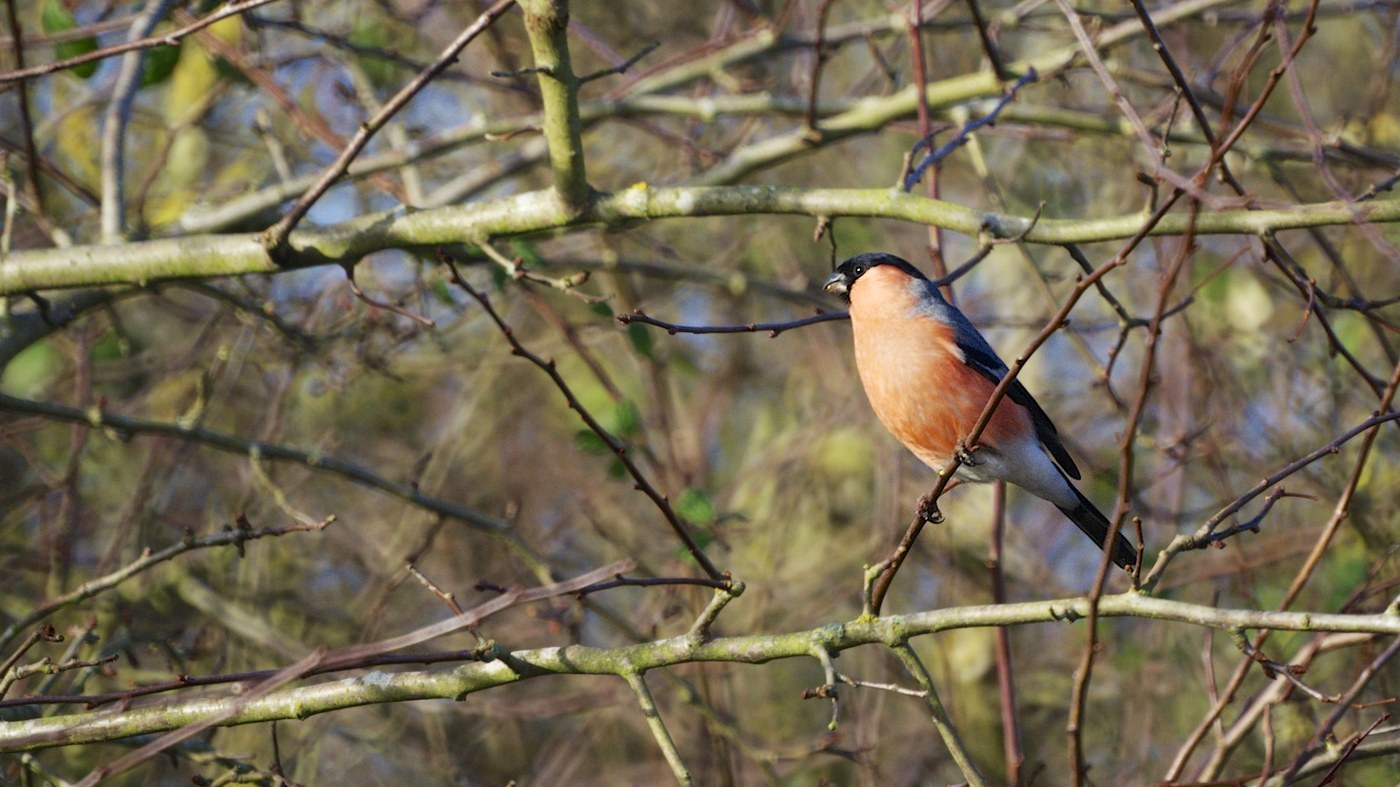
What Common Bullfinch's Feathers Look Like
The Common Bullfinch is a plump, quiet finch of European and Asian woodlands and hedgerows, and its feathers are among the most colorful of any common garden finch. Males show a striking rose-pink to reddish breast and cheek feathers, a glossy jet-black cap on the crown that extends down to include the chin, and a blue-grey back. Females replace the pink with a soft warm buff-grey tone on the same feather tracts, while keeping the same black cap and grey back pattern — so a black-capped feather paired with either pink or buff underparts both point to this species depending on sex.
One of the most useful diagnostic feathers is from the rump: both sexes show a clean, bright white rump patch, highly conspicuous in flight and unusual among similarly sized finches. The wings are glossy black with a single broad, pale silvery-grey to white wing bar across the greater coverts, and the tail is black, slightly forked. Feathers overall have a smooth, dense texture typical of a stocky, seed-eating finch, with a notably thick, strong shaft reflecting the bird's powerful, blunt bill and build.
Step-by-Step: Is This Feather From a Common Bullfinch?
- Check for the white rump. A small, clean white feather from the lower back, especially if adjoining grey feathers, is one of the most distinctive single clues for this species.
- Look at breast color. Rose-pink to reddish points to a male; soft buff-grey points to a female — either is consistent with Common Bullfinch if paired with the right supporting features.
- Find the black cap. A glossy black feather from the crown/chin area, contrasting with a blue-grey back feather, strongly supports this species.
- Measure it. Flight feathers run about 6–8 cm and tail feathers 6–7 cm, fitting a stocky, sparrow-to-finch-sized bird.
- Look for the wing bar. A single broad pale grey-white bar crossing an otherwise black wing feather is a good supporting clue.
- Feel the shaft. A notably thick, sturdy rachis relative to feather size fits a heavy-billed seed-eating finch.
Similar Species & How to Tell Them Apart
No common European finch combines a black cap with a bright white rump and rose-pink underparts quite like the Bullfinch, but the Chaffinch can cause confusion since it also shows white in the wing and rump area — Chaffinch white is in the wing bars and outer tail feathers rather than a solid white rump patch, and its breast is a duller pinkish-buff without the Bullfinch's saturated rose tone. The House Finch or Common Rosefinch, where ranges overlap, show reddish coloring too, but lack the crisp black cap and clean white rump combination. Female Bullfinches can be mistaken for female House Sparrows, but the white rump and black cap immediately separate them.
Where & When You'll Find Them
Common Bullfinches favor woodland edges, hedgerows, orchards, and dense shrubby gardens across much of Europe and temperate Asia, often staying hidden in cover and detected more by call than sight. They are largely resident or short-distance migrants, and most undergo a complete post-breeding molt in late summer, making July through September the most productive window for finding dropped body feathers near dense hedges and thickets. Look particularly near berry-bearing shrubs and bud-rich trees in early spring, when bullfinches feed heavily and are more active low in vegetation.
Frequently asked questions
What is the single best feather to confirm a Bullfinch?
A clean, bright white rump feather is one of the most distinctive single clues, since few similarly sized European finches show a solid white rump patch like this.
How do I tell a male feather from a female feather?
Male breast and cheek feathers are rose-pink to reddish; female equivalents are soft buff-grey. Both sexes share the same black cap and white rump, so color alone on the underparts tells you the sex.
Could this be a Chaffinch feather instead?
Chaffinches show white in the wing bars and outer tail feathers but lack a solid white rump patch and the Bullfinch's glossy black cap, and their pink tone is duller and more buff overall.
Why does the shaft feel unusually thick for the feather's size?
Bullfinches have a powerful, blunt bill adapted for crushing buds and seeds, and their feathers generally have sturdier shafts than more insectivorous songbirds of similar size.
When is the best time to find Bullfinch feathers?
Late summer (July–September) during the post-breeding molt is typically most productive, especially near dense hedgerows, orchards, and shrubby woodland edges.