
How to Identify Common Linnet Feathers
A field guide to spotting the small, streaky brown flight and body feathers of the Common Linnet and separating them from redpolls, twite, and sparrows.
Read the full Common Linnet encyclopedia entry →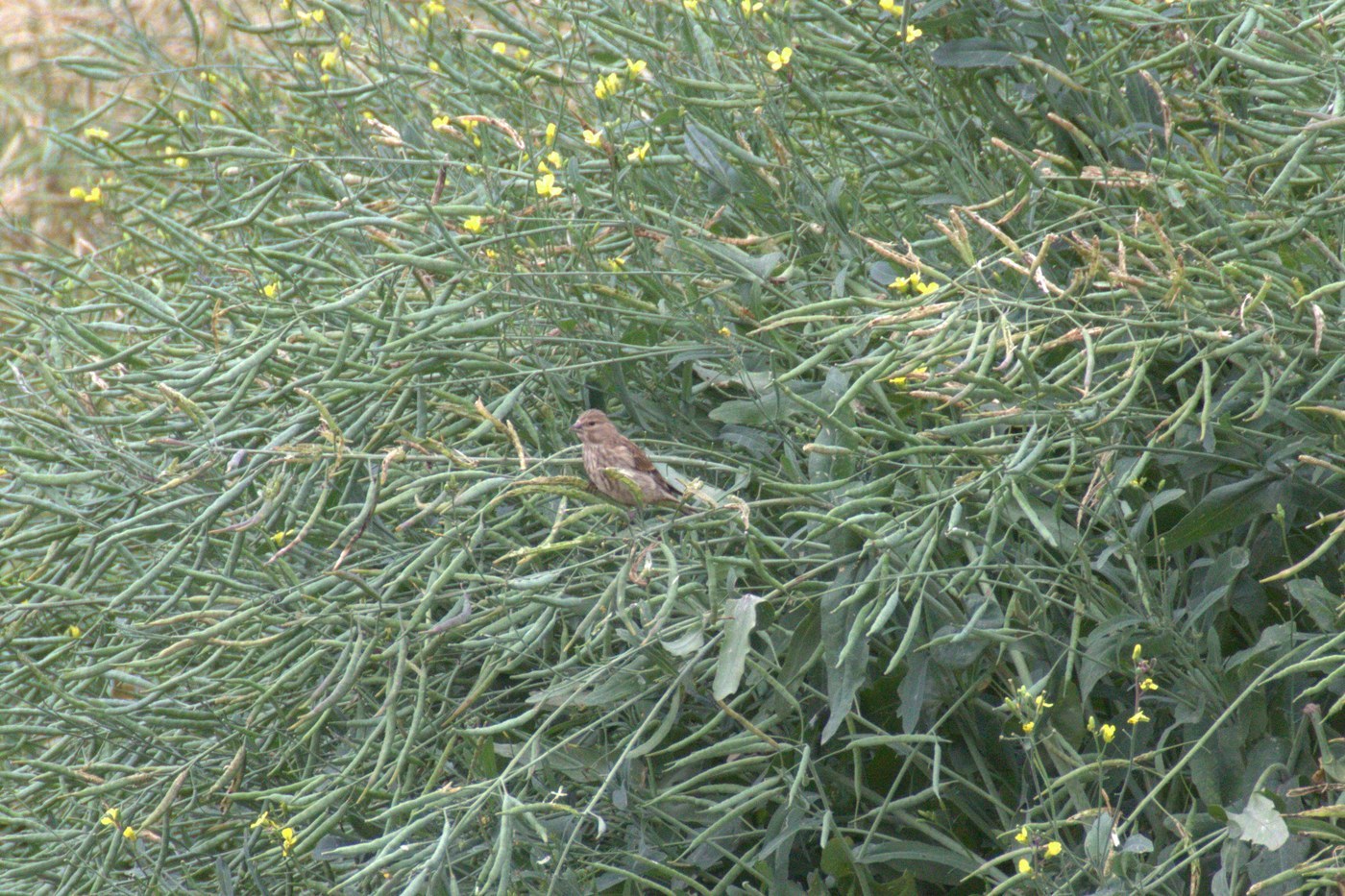
What Common Linnet Feathers Look Like
The Common Linnet is a small, slender finch, so every feather it drops is correspondingly small and lightweight. Flight feathers (primaries and secondaries) are dark brownish-grey with narrow pale buff edges and rarely exceed 6-7 cm in length. A useful diagnostic is the white patch at the base of the primaries, which shows as a flash of white along the leading part of the wing in flight — an isolated primary feather from a linnet often has a whitish or pale grey base even though the tip is dark brown.
Body (contour) feathers differ sharply by sex and season. Breeding male linnets carry crimson-red feathers on the forehead and breast, but this red is a seasonal flush that fades and can even be lost during molt in captivity or poor condition, so don't rule out a linnet just because a feather looks plain. Females and non-breeding males show warm chestnut-brown feathers on the back with buffy-white, lightly streaked underparts. The tail feathers are moderately forked, blackish-brown with clean white edges along the outer feathers — this white-edged forked tail is one of the most reliable single feathers to identify.
Step-by-Step: Is This Feather From a Common Linnet?
- Measure it. Linnet flight feathers are small — primaries under 7 cm, tail feathers around 5-6 cm. Anything notably larger points to a bigger finch or bunting.
- Check the tail feathers first. Look for a forked shape with crisp white edging along the outer vanes; this combination is a strong linnet indicator.
- Look for white at the primary base. Hold a wing feather up to the light — a pale or white patch near the feather's base (not just worn tips) suggests linnet.
- Assess color tone. Warm chestnut-brown on the back with buff, lightly streaked underside feathers fits a female or winter male; any crimson-pink flush on breast feathers confirms a breeding male.
- Rule out a solid red cap. If the feather is red-capped, it is not from a linnet — check redpoll instead.
- Consider the setting. Feathers found in farmland hedgerows, weedy fields, or heathland with scattered gorse or scrub fit linnet habitat well.
Similar Species & How to Tell Them Apart
Common Redpoll feathers show a small but well-defined crimson-red cap patch confined to the forecrown and a black chin patch — the linnet has neither a red cap nor a black chin, and its red (when present) is spread across the forehead and breast rather than capped. Twite looks similar to a female linnet but has a buffier, more uniformly streaked plumage without the linnet's warmer chestnut back tone, and in winter its bill-associated feathering looks yellower rather than grey. House Sparrow feathers are noticeably bulkier and lack the linnet's fine streaking and forked, white-edged tail. Chaffinch feathers show bold white wing bars and white outer tail feathers that are broader and more contrasting than a linnet's fine white fringing.
Where & When You'll Find Them
Common Linnets favor open farmland, heathland, hedgerows, coastal scrub, and weedy waste ground across Europe, western Asia, and North Africa, often in loose flocks outside the breeding season. Northern and eastern populations migrate south for winter, while southern birds are largely resident. The post-breeding molt runs from July through September, which is the peak window for finding dropped flight and tail feathers around breeding territories; worn breeding-plumage body feathers, especially faded red ones, turn up through mid-summer just before this molt begins.
Frequently asked questions
Why does a linnet feather I found look plain brown with no red at all?
Only breeding males carry the crimson forehead and breast feathers, and even then the color is a seasonal flush that can fade with wear. Females and non-breeding males are naturally streaky brown, so a plain feather is still consistent with a linnet.
What is the single best feather to check for a quick linnet ID?
A tail feather. Look for a moderate fork and crisp white edging on the outer vanes — this combination is one of the most consistent linnet field marks.
How can I tell a linnet feather from a redpoll feather?
Redpolls have a small, sharply defined red cap on the forecrown and a black chin patch. Linnets lack both features; any red on a linnet is spread across the forehead and breast, not capped.
Does feather size help separate a linnet from a house sparrow?
Yes. Linnet feathers are noticeably smaller and finer, with delicate streaking, compared to the bulkier, coarser feathers of a house sparrow.
When is the best time of year to find molted linnet feathers?
Late summer, from July through September, during the post-breeding molt, is when most flight and tail feathers are dropped near breeding habitat.