
How to Identify Common Myna Feathers
A guide to identifying the chocolate-brown body feathers, black hood, and white wing-flash feathers of the Common Myna, with comparisons to Jungle Myna and starlings.
Read the full Common Myna encyclopedia entry →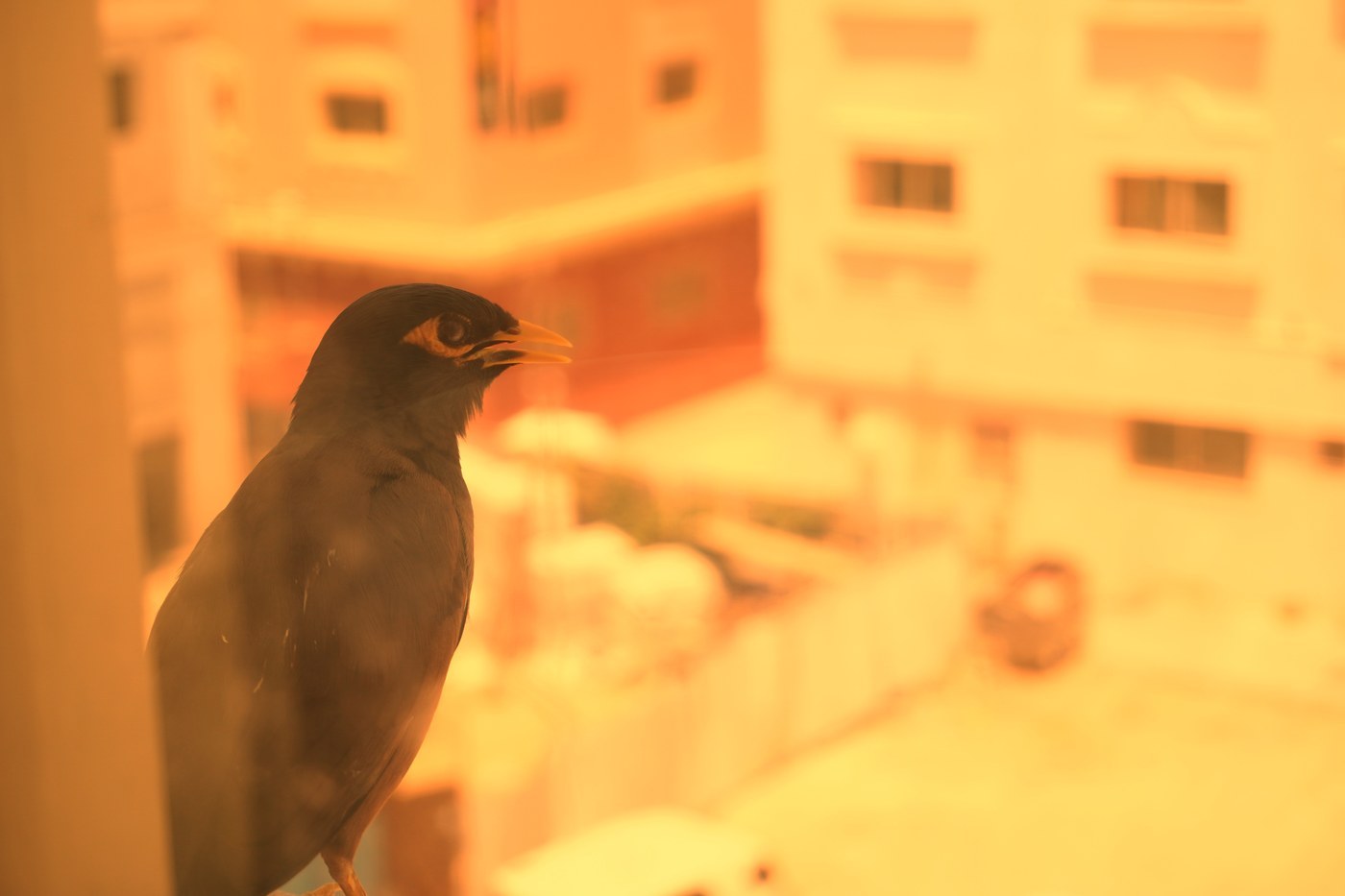
What Common Myna Feathers Look Like
The Common Myna is a mid-sized, robust starling relative, and its feathers reflect a bold, high-contrast plumage built for urban and open-country visibility. Body (contour) feathers on the back, breast, and belly are a rich chocolate-brown, dense and slightly glossy. The head and upper neck feathers are a deep glossy black, forming a distinct "hood" that contrasts sharply with the brown body — this hooded look, rather than an all-brown or all-black bird, is a key diagnostic when feathers are examined together from one bird.
The single most useful individual feather for identification is a primary flight feather with a white base: mynas show a bold white patch at the base of the primaries that flashes conspicuously in flight, so an isolated primary feather is often dark brown or blackish at the tip with a clean white basal section. Tail feathers are dark brown with distinctive white tips on the outer feathers, and the undertail covert feathers are white, another reliable clue if you find fluffy feathers from the vent area. Bare-skin areas (bill, legs, eye-patch) are bright yellow-orange in life but obviously aren't feather-based clues.
Step-by-Step: Is This Feather From a Common Myna?
- Check for a white primary base. A dark brown or black flight feather with a clean white patch near its base strongly suggests a myna.
- Look at tail feather tips. White tips on the outer tail feathers, with the rest of the tail dark brown, is a solid supporting clue.
- Assess body feather color. Rich, warm chocolate-brown (not grey-brown or streaky) body feathers fit myna better than most similarly sized songbirds.
- Check for a black hood contrast. If you have feathers from both the head and body of the same bird, a glossy black head against brown body feathers is diagnostic.
- Look for white undertail feathers. Fluffy white feathers from the vent/undertail area support the myna identification.
- Consider the setting. Feathers found in urban parks, farmland, or near human settlements in myna's introduced or native range fit its ecology well.
Similar Species & How to Tell Them Apart
Jungle Myna is the closest look-alike but shows an overall greyer, less warmly brown body tone, a small tuft of feathers at the base of the bill (visible as slightly elongated forehead feathering), and pale bluish-white rather than yellow-orange bare skin around the eye — its wing patch is similarly white but the surrounding feather tone is cooler grey. European Starling and other true starlings lack the myna's clean white wing-flash and instead show iridescent black feathers overall (breeding) or black feathers with pale spangled tips (non-breeding), never the myna's brown-and-black hooded combination. Other brown-bodied songbirds of similar size typically lack both the black hood and the bold white primary-base patch together.
Where & When You'll Find Them
Native to South and Southeast Asia, the Common Myna has been widely introduced and is now common in urban areas, farmland, and open country across Australia, parts of Africa, the Middle East, Hawaii, and other Pacific islands, in addition to its native range. It is largely non-migratory and highly adapted to human settlements, nesting in building crevices, roof spaces, and tree cavities. The post-breeding molt typically follows the local breeding season (timing varies by region given its near-global introduced range), and feathers are most commonly found year-round in the urban parks, gardens, and agricultural edges the species favors, with a peak after fledging when family groups molt into fresh plumage.
Frequently asked questions
What single feather feature best confirms a Common Myna?
A dark brown or blackish flight feather with a clean white patch at its base is one of the most reliable single-feather clues, corresponding to the bold white wing-flash seen in flight.
How do I tell a Common Myna feather from a Jungle Myna feather?
Jungle Myna feathers run cooler and greyer overall rather than warm chocolate-brown, and Jungle Myna also has a small forehead tuft that Common Myna lacks.
Why does this brown feather have a glossy black feather right next to it?
Common Mynas have a glossy black hooded head contrasting with chocolate-brown body feathers, so finding both colors together from one bird is expected, not a sign of two different species.
Do Common Myna feathers have any white on the tail?
Yes, the outer tail feathers typically show white tips, and the undertail covert feathers are white as well.
Is the Common Myna native where I found the feather?
It depends on location. The species is native to South and Southeast Asia but has been introduced and is now common in Australia, parts of Africa, the Middle East, Hawaii, and other regions.
Common Myna identified by the community
Recent Common Myna feathers identified with Feather Identifier.
