
How to Identify Common Whitethroat Feathers
A guide to the rufous-fringed wing feathers and white throat patch of the Common Whitethroat, and how to separate it from Lesser Whitethroat and Garden Warbler.
Read the full Common Whitethroat encyclopedia entry →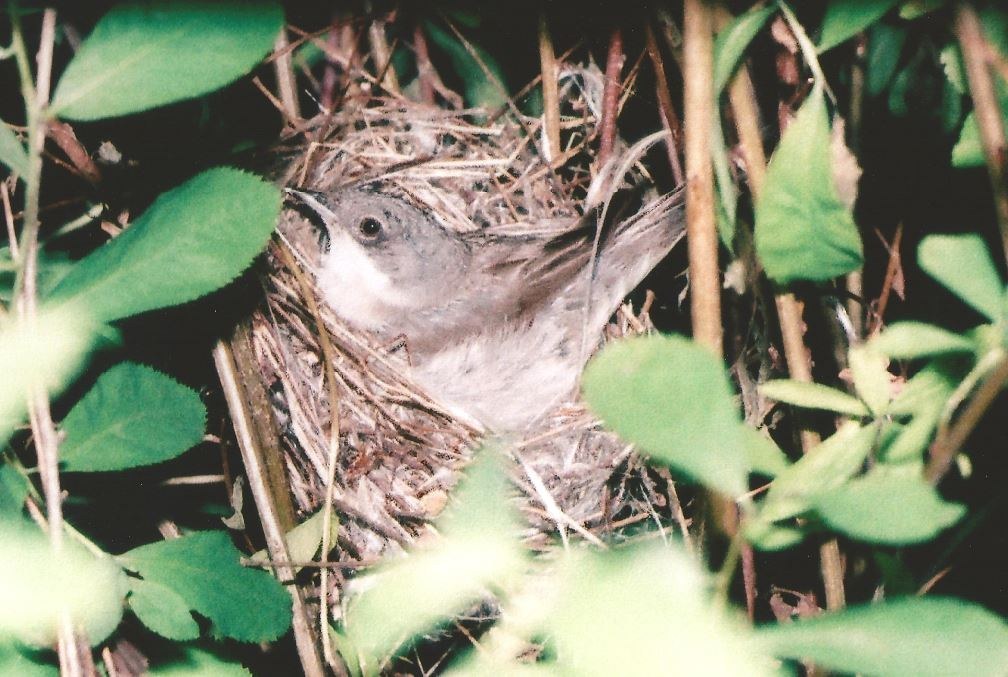
What Common Whitethroat Feathers Look Like
The Common Whitethroat is a small warbler of scrub and hedgerow whose name points directly to its most obvious feather feature: a pure white throat patch, often fluffed out conspicuously during the male's song display, giving isolated throat feathers a bright, clean white look that contrasts sharply with the rest of the plumage. Wing covert and tertial feathers show a distinctive bright rufous-chestnut fringing along their edges — this warm rufous edging on the wing feathers is one of the best diagnostic clues for the species and gives the folded wing a warm, rusty-brown look rather than a plain grey-brown.
Male head feathers are grey, while back feathers are a warm brown, and the outer tail feathers show white edges, visible as a flash when the tail is spread. Females and immatures show a browner head than the male's grey, but they retain the same bright white throat and rufous wing-feather fringing, making those two features more reliable across ages and sexes than head color alone.
Step-by-Step: Is This Feather From a Common Whitethroat?
- Check for rufous wing fringing. Bright chestnut-rufous edges on covert or tertial feathers are one of the strongest single clues for this species.
- Look for a bright white throat feather. A clean, pure white feather from the throat area, distinct from the surrounding brown/grey body, supports whitethroat.
- Assess head feather color. Grey head feathers indicate an adult male; browner head feathers fit a female or immature, but don't rule out the species based on head color alone.
- Check outer tail feathers. White edging on the outer tail feathers, visible as a flash, is a supporting clue.
- Rule out a uniform grey-brown wing. If the wing covert feathers lack any rufous fringing, consider Lesser Whitethroat instead.
- Consider the habitat. Feathers found in scrub, hedgerows, or bramble thickets fit Common Whitethroat's preferred breeding habitat.
Similar Species & How to Tell Them Apart
Lesser Whitethroat lacks the bright rufous wing fringing entirely, showing a cooler, more uniform grey-brown wing instead, and its head/face shows a darker grey ear patch or mask that gives a slightly hooded look — its throat is still white but the overall body tone is colder and greyer than Common Whitethroat's warmer brown. Garden Warbler lacks any white throat contrast at all, appearing a plain, uniform brownish-grey throughout without the rufous wing edging or a bright white throat patch. Blackcap shows a solid black (male) or reddish-brown (female) cap rather than a plain grey or brown head, and also lacks the white throat contrast and rufous wing fringing typical of Common Whitethroat.
Where & When You'll Find Them
Common Whitethroats breed in scrub, hedgerows, and bramble thickets across Europe and western Asia, favoring open country with dense low cover rather than closed woodland. They are long-distance migrants, wintering in sub-Saharan Africa. The species undergoes a partial molt before migration and a complete molt on the African wintering grounds, so feathers found near breeding scrub and hedgerow habitat in late summer tend to be somewhat worn pre-migration feathers, while fresher plumage is acquired later on the wintering grounds.
Frequently asked questions
What's the best feather clue to confirm a Common Whitethroat?
Look for bright chestnut-rufous fringing on the wing covert or tertial feathers combined with a clean white throat feather — this pairing is one of the species' most reliable identification features.
How do I tell Common Whitethroat from Lesser Whitethroat using feathers?
Check the wing. Common Whitethroat shows bright rufous fringing on the covert feathers, while Lesser Whitethroat's wing is a cooler, more uniform grey-brown without that warm rufous edge.
Why does the head feather I found look brown instead of grey?
That's consistent with a female or immature Common Whitethroat — only adult males show the grey head; females and young birds have a browner head but retain the same white throat and rufous wing fringing.
Does Garden Warbler have a white throat like Common Whitethroat?
No, Garden Warbler is a plain, uniform brownish-grey throughout without any bright white throat contrast or rufous wing edging.
When are Common Whitethroat feathers most likely to be found near breeding habitat?
Late summer, during the partial molt that occurs before the species migrates to its sub-Saharan African wintering grounds.