
How to Identify Dunlin Feathers
A guide to recognizing the small, gray-and-rufous feathers this common sandpiper drops on mudflats and shorelines during migration and winter.
Read the full Dunlin encyclopedia entry →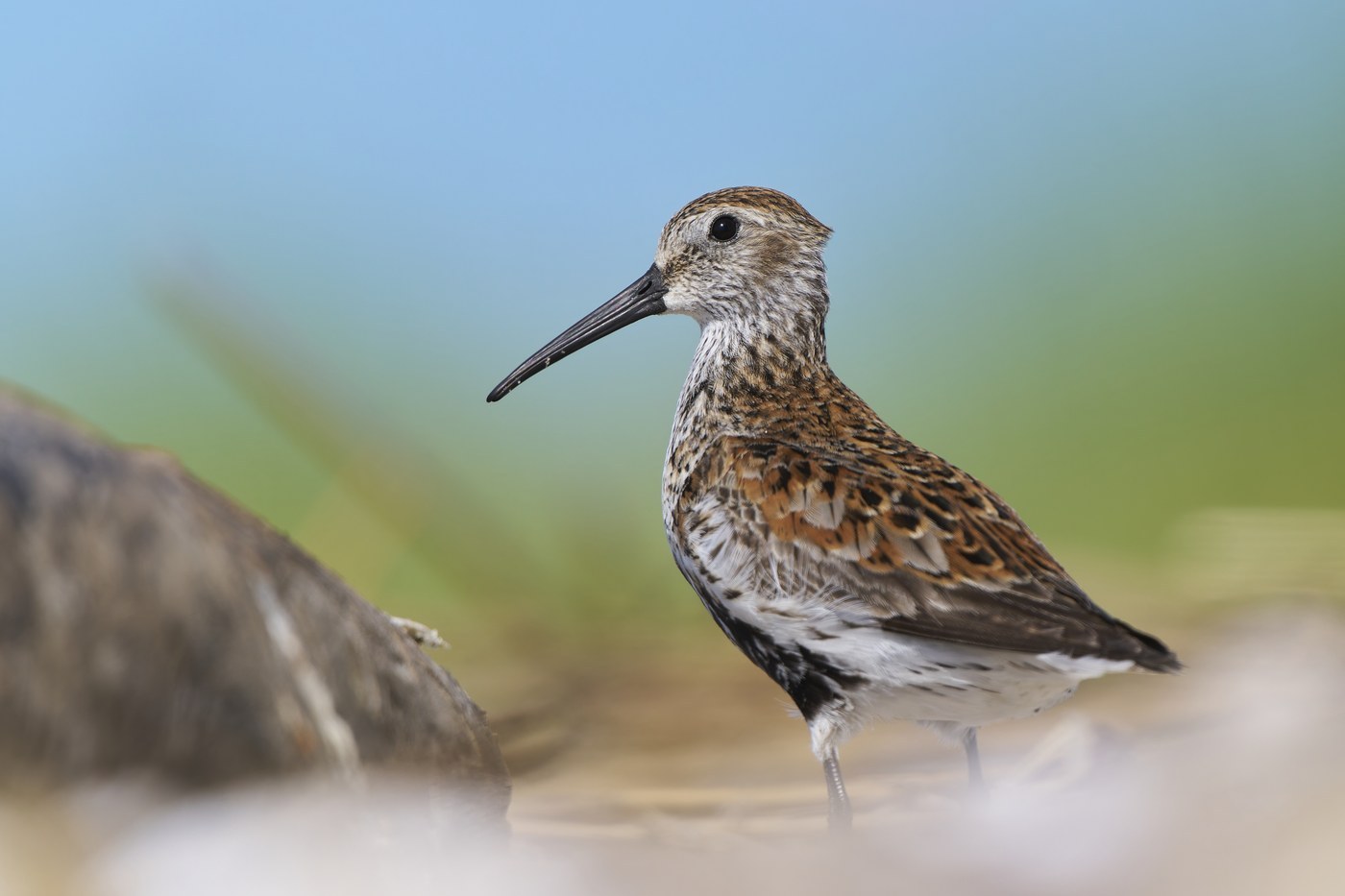
What Dunlin's Feathers Look Like
Dunlin are small sandpipers, so almost every feather you find will be modest in size — flight feathers rarely exceed 8-9 cm (3-3.5 in), and body feathers are smaller still. In breeding plumage, scapular and back feathers are strikingly two-toned: bright rufous-chestnut with a solid black center, giving a scaled, almost tortoiseshell look. By late summer these are replaced by plain, unremarkable gray-brown winter feathers with only faint dusky shaft streaks — a big seasonal contrast if you find feathers from the same bird months apart. The belly patch that gives breeding Dunlin their black smudge is made of solid sooty-black feathers, unusual for a small shorebird. Primaries are dark gray-brown with narrow pale fringes, and the tail shows a dark brown center with paler gray-white outer feathers. The bill and legs aren't feathered, but the slight downward droop of the bill tip is a useful mental anchor when picturing which bird a feather belongs to.
Step-by-Step: Is This Feather From a Dunlin?
- Measure first. Anything longer than about 9 cm is too large for a Dunlin — check against known "peep" and small sandpiper sizes.
- Look for the two-tone scapular pattern. A feather that's rufous-chestnut with a bold black center strongly suggests breeding-plumage Dunlin.
- Check for a plain gray-brown feather with fine shaft streaking. This is typical of winter Dunlin and easy to mistake for "any small shorebird" without more context.
- Search for solid black belly feathers. Few small sandpipers show a solid black patch; this is a strong seasonal clue for breeding Dunlin.
- Examine the tail. Dark brown center feathers flanked by paler gray edges match Dunlin's tail pattern.
- Factor in the setting. Feathers found scattered across mudflats or salt marsh edges, often in loose clusters, fit Dunlin's habit of feeding in tight flocks.
Similar Species & How to Tell Them Apart
The trickiest look-alikes are other small Calidris sandpipers — Western and Semipalmated Sandpipers, Sanderling, and Least Sandpiper. Western Sandpiper feathers are similar in size but tend to show more scattered rufous only on the crown and scapulars rather than the bold black-centered scapular pattern of breeding Dunlin. Sanderling feathers run paler and grayer overall, with almost no rufous, and Sanderling notably lacks a hind toe (not visible in feathers, but their winter plumage feathers are notably paler and colder-toned than Dunlin's warmer brown winter feathers). Least Sandpiper feathers are smaller still and browner, without the solid black belly patch. If a feather shows that black belly smudge alongside rufous-and-black scapulars, Dunlin is by far the most likely source among common shorebirds.
Where & When You'll Find Them
Dunlin are among the most widespread wintering shorebirds, found on mudflats, sandy beaches, salt marshes, and estuaries across coastal North America, Europe, and Asia, often in large, tightly packed flocks. Breeding occurs on Arctic tundra, far from where most people encounter feathers. Body feathers turn up most often in late fall through winter, when Dunlin are in their plainer gray-brown plumage and gathering in the biggest numbers at coastal roosts. The distinctive rufous-and-black breeding feathers are more likely to be found in late spring, just before birds depart for the tundra, or occasionally in early fall as returning juveniles and adults begin their molt into winter plumage.
Frequently asked questions
Why do some Dunlin feathers look rufous and others plain gray?
Dunlin have a strongly seasonal plumage: rufous, black-centered feathers belong to breeding adults (spring/early summer), while plain gray-brown feathers with faint streaking are worn the rest of the year.
How big are Dunlin feathers compared to other shorebirds?
Very small — flight feathers rarely exceed 8-9 cm, matching other small 'peep' sandpipers, so size alone won't separate Dunlin from its close relatives.
What's the single best clue for a Dunlin feather?
A solid black belly-patch feather paired with rufous-and-black scapular feathers is a strong combination that few other small shorebirds show.
Could this be a Sanderling feather instead?
Possibly — Sanderling feathers run paler and colder gray with little to no rufous, whereas Dunlin winter feathers keep a warmer brown tone.
When are Dunlin feathers most common on beaches?
Late fall through winter, when large flocks gather at coastal mudflats and estuaries in their plain non-breeding plumage.