
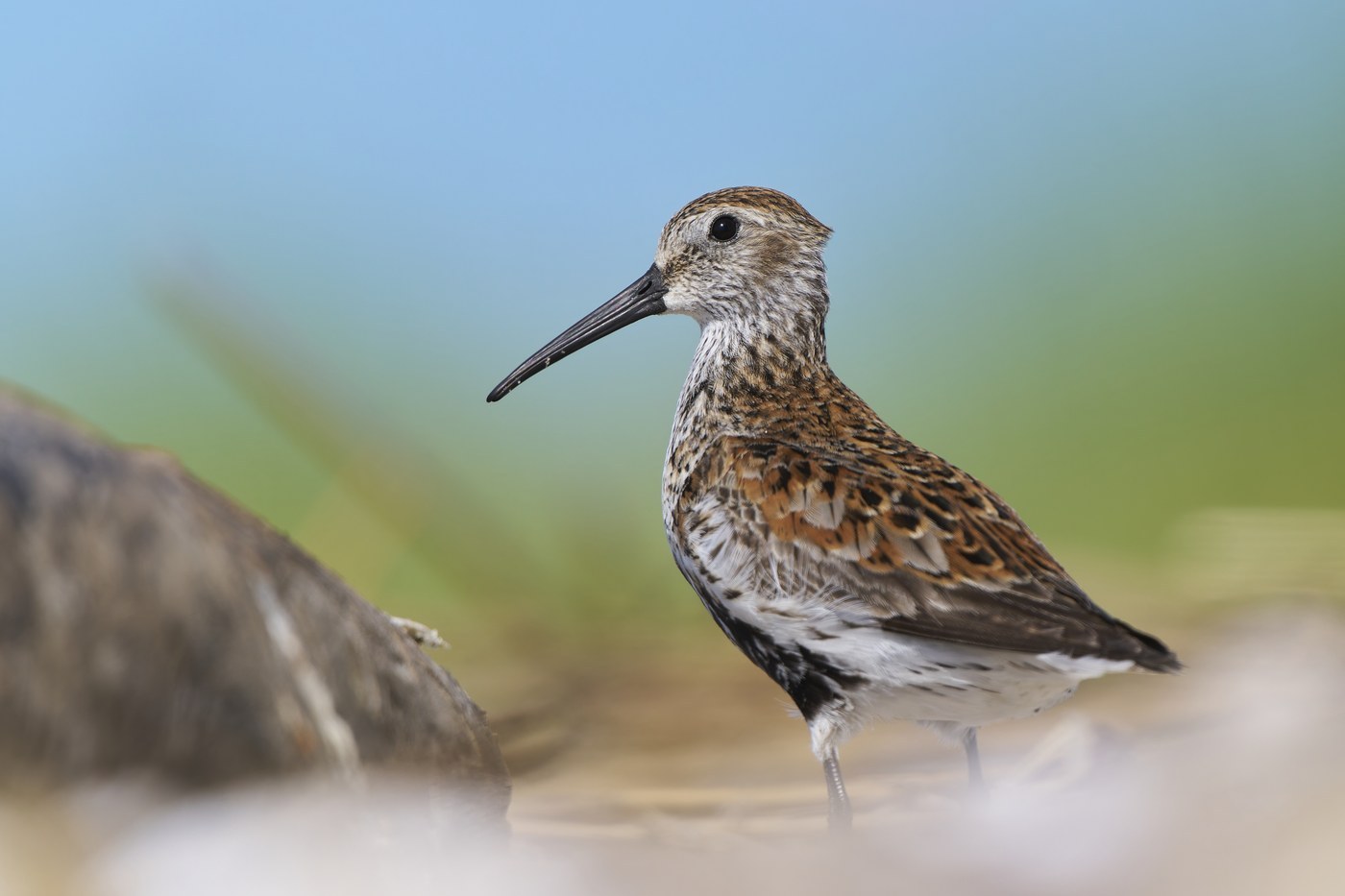
Dunlin
Calidris alpina
A common small sandpiper whose breeding plumage features a bold black belly patch found on no other similarly sized shorebird.
- Feather type
- Contour and flight feathers
- Colours
- Rufous-brown with black belly patch (breeding); plain gray-brown (winter)
- Bird size
- Small sandpiper, ~16-22 cm
Found a feather like this?
Identify any feather from a photo, free.
Overview
Overview
The Dunlin is one of the most abundant and widespread small sandpipers, easily recognized in breeding plumage by a bold black patch on an otherwise white belly, paired with rich rufous-brown upperparts. In non-breeding plumage this striking pattern is replaced by a much plainer gray-brown above and white below. Its slightly drooped bill tip is a useful year-round feature separating it from many similar species.
Dunlins breed on Arctic and subarctic tundra across the Northern Hemisphere and winter in enormous flocks on coastal mudflats and estuaries.
Identifying the Feather
Feather Identification
- Underparts (breeding): A bold black patch covers the lower breast and belly, unique among small sandpipers of similar size and unmistakable when present.
- Upperparts (breeding): Rich rufous-chestnut feather edges create a warm, mottled back pattern, brighter than most other small Calidris sandpipers.
- Non-breeding plumage: Plain gray-brown above and white below, with a faint gray wash across the breast and no strong markings.
- Bill: Moderately long with a distinct downward droop at the tip, a helpful feature in both plumages.
- Compared to similar species: The black belly patch is diagnostic in breeding plumage; in winter, the drooped bill tip and slightly larger size help separate it from the straighter-billed Semipalmated and Western Sandpipers.
Plumage & Molt
Plumage Notes
Breeding adults show a bold black belly patch and rufous-mottled upperparts, molting into a much plainer gray-brown non-breeding plumage by early autumn. Sexes look similar, though females may average slightly larger. Juveniles show a scaly, buff-and-black patterned back quite different from either adult plumage, transitioning through a first-winter plumage before resembling adults.
Habitat & Range
Habitat & Range
Dunlins breed across Arctic and subarctic tundra in North America, Europe, and Asia. They winter in large numbers on coastal mudflats, estuaries, and marshes across temperate coastlines of the Northern Hemisphere, forming some of the largest shorebird flocks observed anywhere.
Behavior & Field Notes
Behavior & Field Notes
This species forages by probing rapidly into soft mud with a rhythmic sewing-machine motion, picking up small invertebrates. Dunlins are highly social, forming dense, synchronized flocks that wheel and turn together in flight, flashing alternately dark and pale as they turn. Their call is a distinctive raspy "treep" or "kreep." Nesting occurs on the ground on open tundra, often in loose association with other breeding waders.
Frequently asked questions
What color are Dunlin feathers in breeding season?
Rufous-chestnut mottled upperparts paired with a bold black patch on the belly, unique among small sandpipers of similar size.
Do Dunlin feathers look different in winter?
Yes, winter plumage is much plainer, with gray-brown upperparts and white underparts lacking the black belly patch and rufous tones.
How can I identify a Dunlin by its bill shape?
Dunlins have a moderately long bill with a distinct downward droop at the tip, present in both breeding and non-breeding plumage.
Where would I find a Dunlin feather?
On coastal mudflats, estuaries, and marshes in winter, or Arctic and subarctic tundra during the breeding season.
Dunlin guides
In-depth guides for identifying and understanding Dunlin.
Other feathers you may enjoy
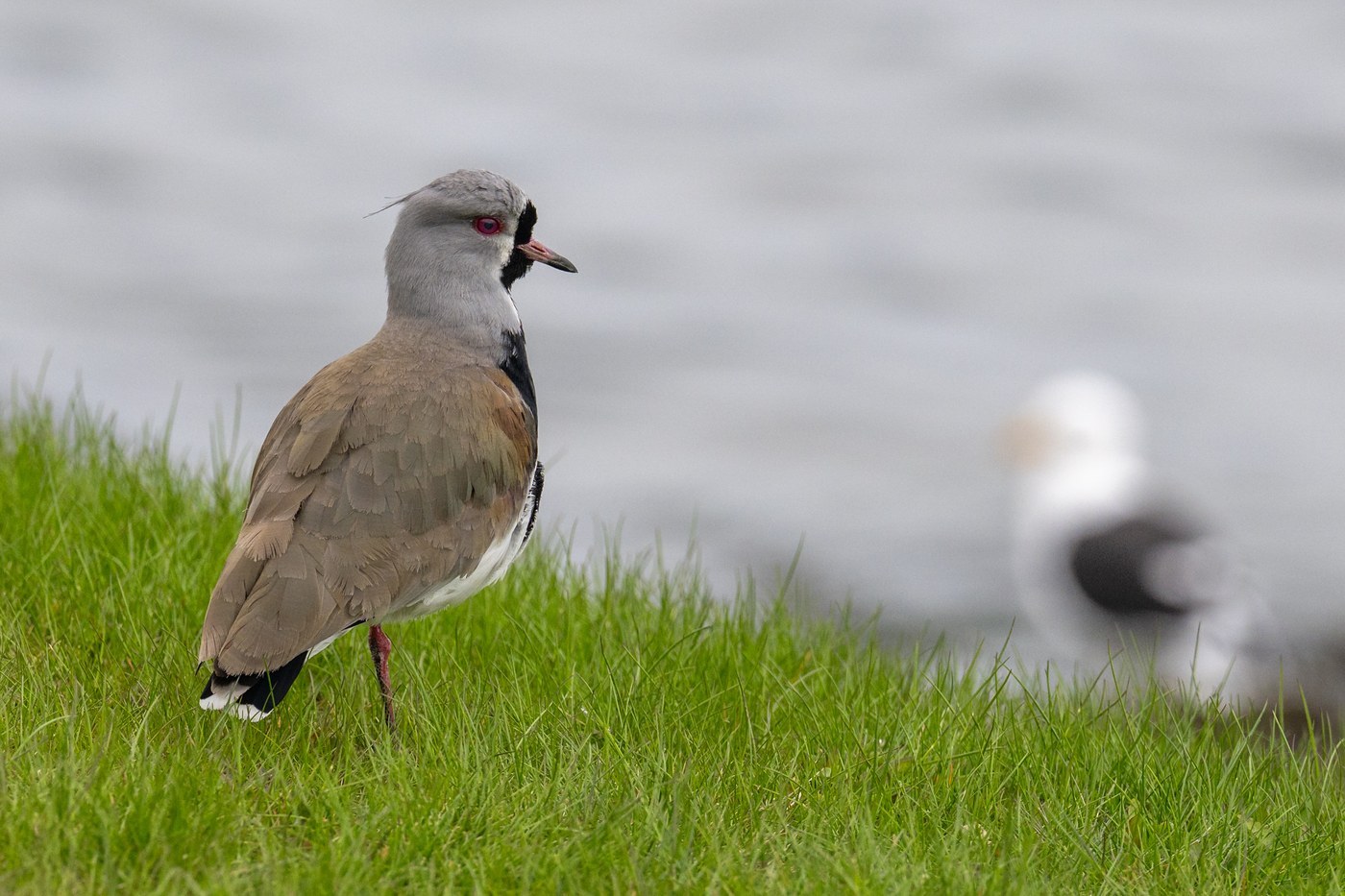
Southern Lapwing
Body, flight, and tail feathers

Jack Snipe
Body and flight feathers

Far Eastern Curlew
Body, flight, and tail feathers

Terek Sandpiper
Body and flight feathers

Wilson's Phalarope
Body and flight feathers
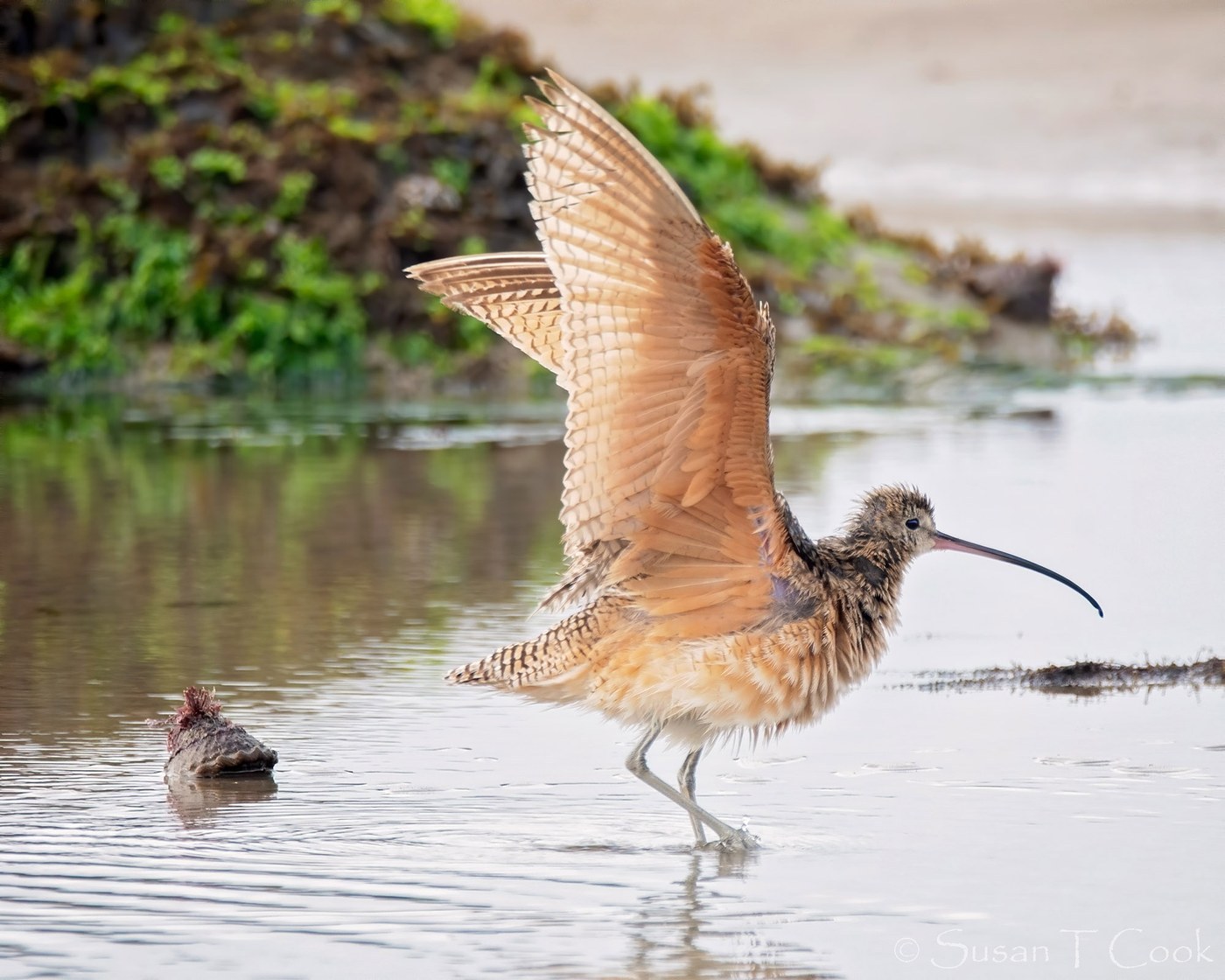
Long-billed Curlew
Body, flight, and tail feathers

Upland Sandpiper
Body, flight, and tail feathers

Red Phalarope
Body and flight feathers

Eurasian Dotterel
Body feathers
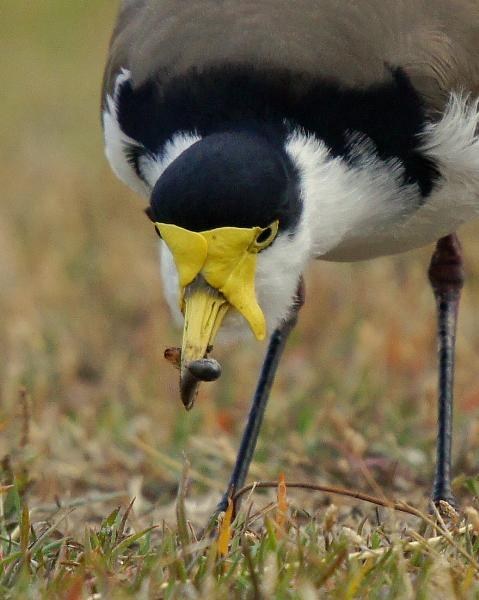
Masked Lapwing
Body, flight, and tail feathers
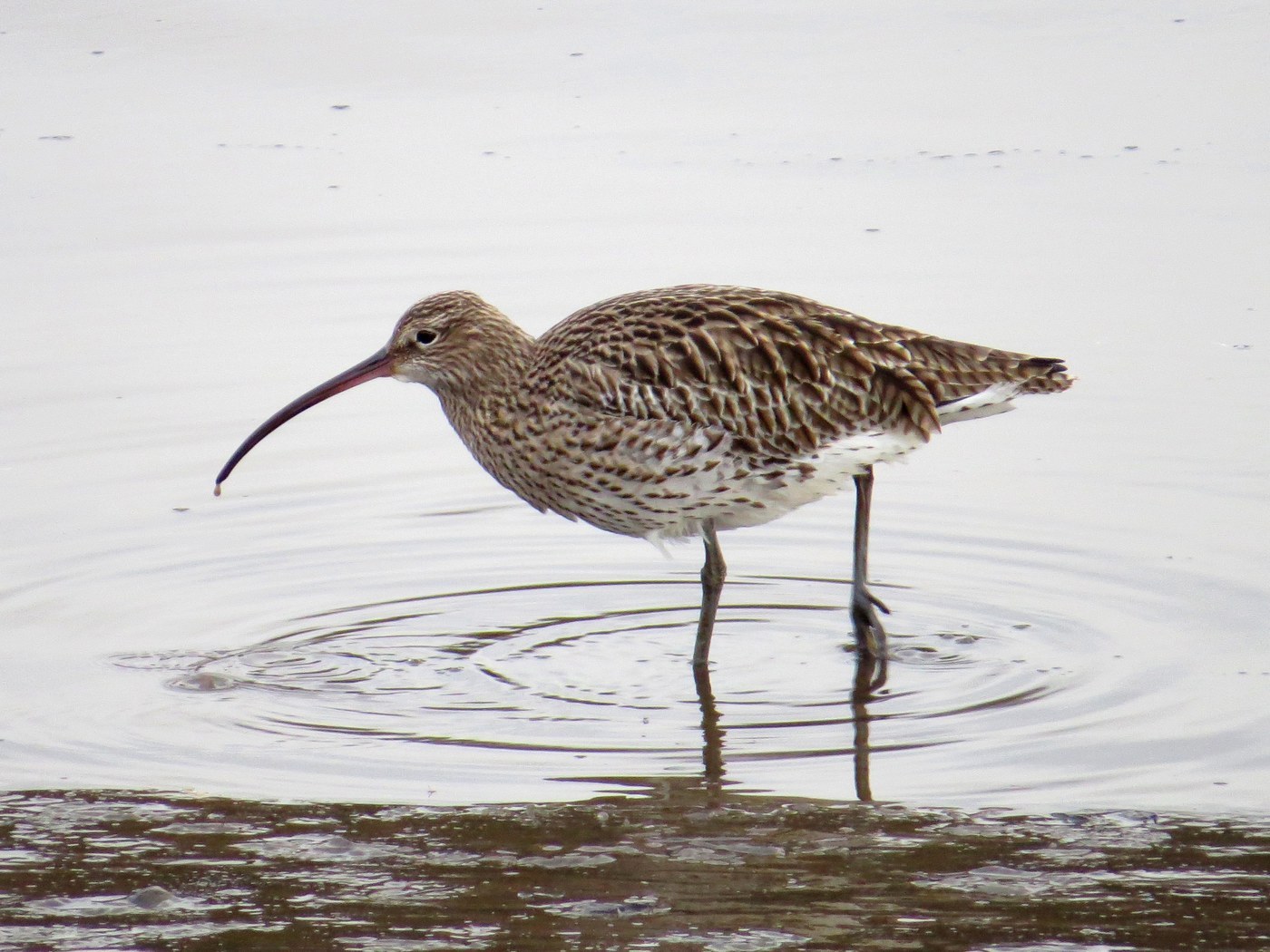
Eurasian Curlew
Body, flight, and tail feathers
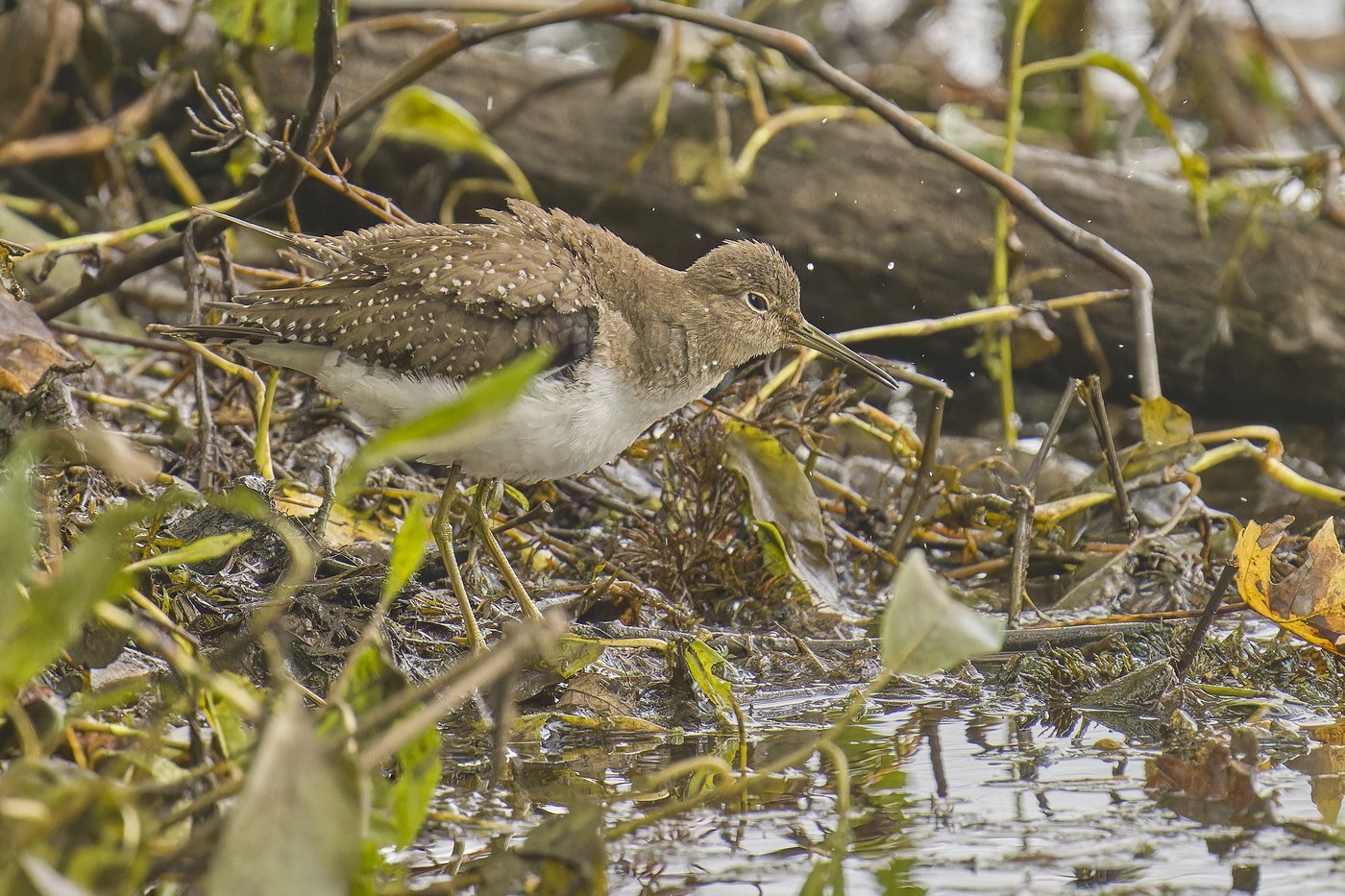
Solitary Sandpiper
Contour and flight feathers