
How to Identify Egyptian Goose Feathers
A field guide to the buffy-gray body feathers, dark eye patch, and bold white wing patch of the Egyptian Goose, an African waterfowl with a striking wing flash.
Read the full Egyptian Goose encyclopedia entry →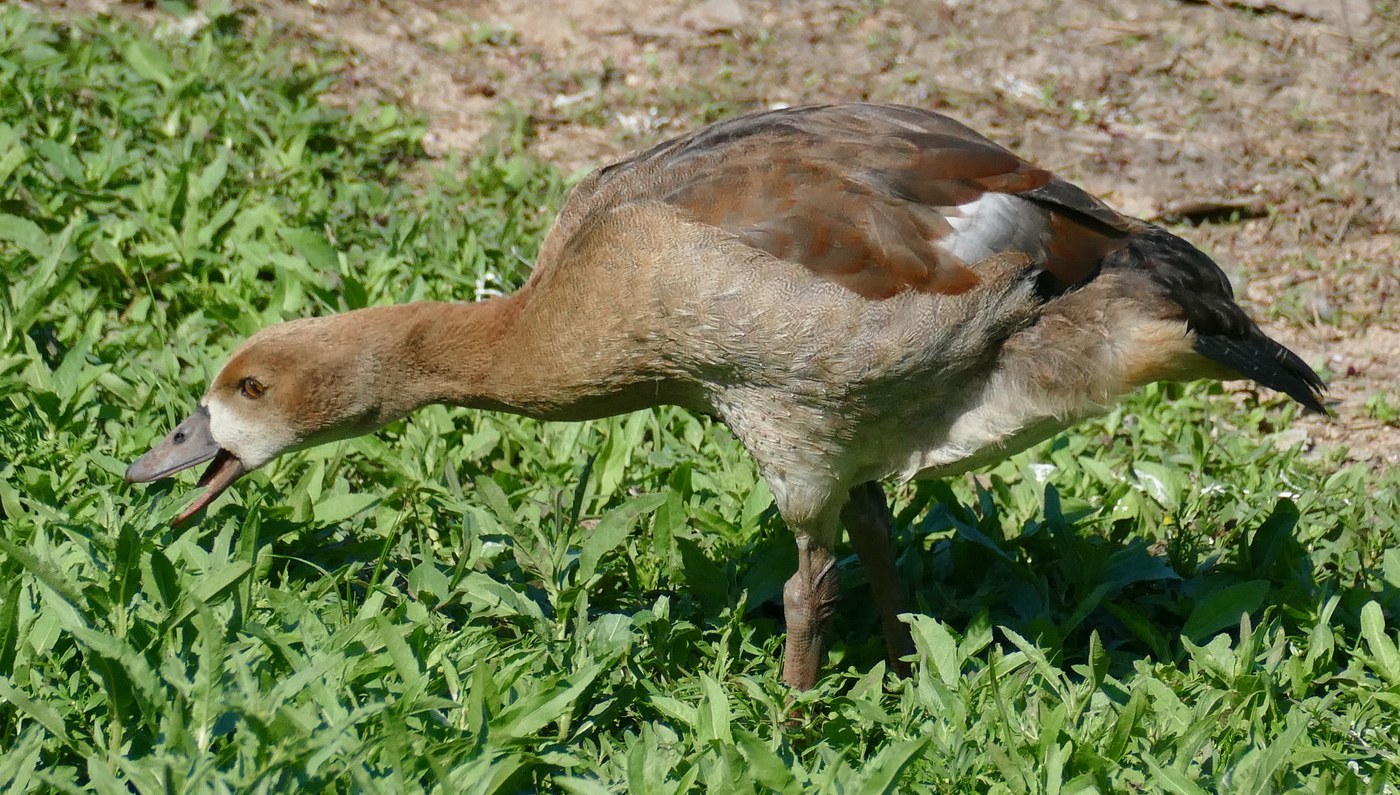
What Egyptian Goose's Feathers Look Like
Egyptian Goose feathers combine a subdued, finely marked body plumage with one very bold, unmistakable wing feature. Body feathers are a pale buffy-gray to pinkish-brown, finely vermiculated (patterned with fine wavy lines) across the back and flanks, giving an overall soft, mottled look rather than a bold pattern. A patch of dark brown feathers surrounds the eye, extending back like a "mask," and a similar chestnut-brown patch sits in the center of the breast, both standing out against the paler surrounding body feathers. The standout feature is the wing: greater and lesser covert feathers form a large, bold white patch, sharply bordered by glossy iridescent green feathers (the speculum) and blackish flight feathers — a striking black-white-green combination visible even in a single wing covert feather, and one of the most reliable waterfowl wing patterns to key in on. Overall feather size is substantial, fitting a large, heavy-bodied waterfowl species roughly duck-to-small-goose in scale.
Step-by-Step: Is This Feather From an Egyptian Goose?
- Check wing covert feathers for large areas of solid white, bordered by glossy green and black — this bold tri-color wing pattern is highly diagnostic.
- Look for a dark brown "mask" feather that would surround the eye, distinct from the paler body feathers.
- Examine breast feathers for a chestnut-brown patch set against the paler buffy-gray surrounding plumage.
- Confirm fine vermiculation (wavy fine lines) on back and flank feathers rather than bold barring or plain color.
- Measure the size. Large and substantial, fitting a bird between a large duck and small goose in overall scale.
- Weigh the habitat. Found near water in Africa (or as an established feral population in parts of Europe/elsewhere), rather than open ocean or forest interior.
Similar Species & How to Tell Them Apart
Ruddy Shelduck and other shelduck species share a similarly large, robust waterfowl feather size and a white wing patch, but lack the specific dark eye-mask and breast patch combination, and their body tone tends to run more uniformly orange-buff rather than Egyptian Goose's finely vermiculated pale gray-brown. Nile Goose is simply another common name for this same species, so no distinction is needed there. True geese like Canada Goose or Greylag Goose lack the bold white-green-black wing patch entirely, showing more uniform gray-brown or blackish wings without this striking speculum pattern. The combination of a dark eye-mask feather, chestnut breast patch, and especially the bold white-bordered-by-green wing patch is a distinctive fingerprint that sets Egyptian Goose apart from both true geese and most other African waterfowl.
Where & When You'll Find Them
Egyptian Geese are native to Africa south of the Sahara and the Nile Valley, favoring lakes, rivers, wetlands, and even golf courses and parks with water features, and the species has also established sizable feral, self-sustaining populations in parts of Europe (especially the UK and Netherlands) and Florida following escapes from captivity. As a largely non-migratory, resident species across most of its range, feathers can be found year-round, though the best window is likely during the molt period following breeding, when adults become flightless for a few weeks and shed large numbers of flight and covert feathers near their home water body. Check shorelines, pond edges, and grassy areas near lakes and rivers where these increasingly common and conspicuous waterfowl gather.
Frequently asked questions
What is the most distinctive feature of an Egyptian Goose feather?
A bold white wing-covert patch bordered by glossy iridescent green and black flight feathers — a striking tri-color combination that's highly diagnostic among waterfowl.
Does the Egyptian Goose have any facial markings visible in its feathers?
Yes — a dark brown patch of feathers surrounds the eye like a mask, and a similar chestnut-brown patch sits on the center of the breast.
How is this different from a true goose like a Canada Goose?
True geese lack the bold white-green-black wing patch entirely, showing more uniform gray-brown or blackish wing feathers without a speculum.
Is the Egyptian Goose found outside Africa?
Yes — established feral populations exist in parts of Europe (especially the UK and Netherlands) and Florida, descended from escaped captive birds.
When are Egyptian Goose feathers easiest to find?
Year-round is possible since they're largely resident, but the post-breeding molt period, when adults become flightless and shed feathers in bulk, is likely the best window.