
How to Identify Eurasian Nuthatch Feathers
How the blue-gray back, black eye-mask, and rusty flanks identify this compact woodland climber and separate it from tits sharing its habitat.
Read the full Eurasian Nuthatch encyclopedia entry →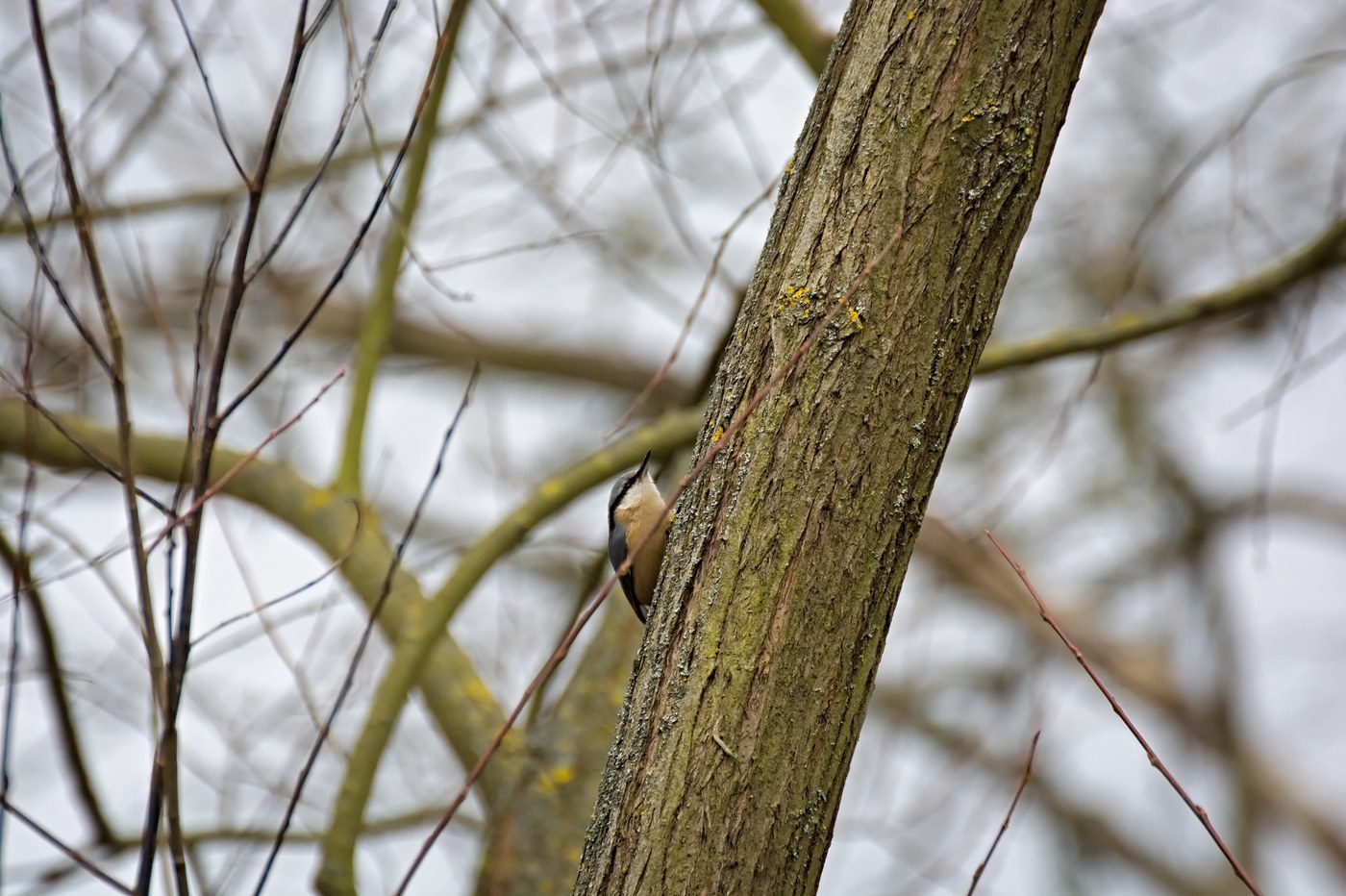
What Eurasian Nuthatch Feathers Look Like
This compact, tree-climbing bird shows a distinctive three-part color scheme that makes its feathers fairly easy to place with confidence.
- Upperpart feathers (back, wings, tail): smooth blue-gray, unmarked and fairly uniform.
- Face: a bold black eye-stripe running through the eye from the base of the bill, contrasting with a clean white throat and cheek.
- Underparts: buffy-orange to rufous, richest and darkest on the flanks, paling somewhat toward the center of the belly.
- Undertail coverts: chestnut, with small white spots near the tips — a useful detail if you find a feather from this specific area.
- Tail feathers: blue-gray with white spots near the tip on the outer feathers, visible when the tail is spread.
Step-by-Step: Is This Feather From a Eurasian Nuthatch?
- Check for blue-gray upperpart color. A smooth, unmarked slate-blue tone on a back or wing feather is a strong starting clue.
- Look for a black eye-stripe on a face feather. A bold dark line through where the eye would be, bordered by white, supports Nuthatch.
- Assess underpart color. Buffy-orange to rusty tones, especially richer on the flanks, fit this species well.
- Examine undertail coverts. Chestnut feathers with small white spotted tips are a specific and useful detail.
- Check outer tail feathers for white spots. Small white spots near the tip of an otherwise blue-gray tail feather round out the identification.
Similar Species & How to Tell Them Apart
Common woodland tits sharing the same habitat — Great Tit, Blue Tit, Coal Tit — all lack the specific combination of blue-gray upperparts with a bold black eye-mask and rusty flanks; their patterns involve different color combinations (black heads, blue crowns, or white nape patches) that don't match Nuthatch. The White-breasted Nuthatch of North America is a related look-alike but occupies a different continent, so within Europe and Asia a nuthatch-patterned feather can be confidently attributed to the Eurasian species. The trio of slate-blue back, black eye-line, and rusty flanks together is not replicated by any other bird in its shared woodland range.
Where & When You'll Find Them
Eurasian Nuthatches are non-migratory residents of mature deciduous and mixed woodland across Europe and Asia, nesting in tree cavities that they famously plaster down to a smaller entrance with mud to exclude larger competitors. They undergo a complete molt from July through September after breeding, so feathers are most often found near tree trunks and old nest holes in late summer, particularly around the mud-plastered cavity entrances the species is known for. Nuthatches are also year-round residents at garden feeding stations in wooded areas, frequently wedging seeds and nuts into bark crevices to hammer them open, and this repeated foraging behavior at trunk level means feathers can also turn up snagged in rough bark well away from any active nest hole.
Frequently asked questions
Why is the black eye-stripe such a useful feature for identification?
Few other birds sharing Nuthatch woodland habitat combine a bold black eye-line with blue-gray upperparts, so this specific facial feature narrows the identification quickly even from a single face feather.
How can I tell the chestnut undertail feathers from a robin's rusty breast feathers?
Nuthatch undertail coverts show small white spots near the tip mixed into the chestnut, a detail robin breast feathers lack, plus the overall shape and stiffness of the feather differs between the two species.
Is the rusty flank color present in both sexes?
Yes, both males and females show buffy-orange to rusty flanks, though females average slightly paler than males, making flank color a weak indicator of sex on its own.
Why do Nuthatch feathers turn up near mud-plastered nest holes specifically?
Because Nuthatches spend extended time at the nest cavity entrance shaping and maintaining the mud plaster that narrows the hole, feathers commonly get caught in or shed near that exact spot during the nesting season.
Does this species migrate, and does that affect when feathers are found?
No, Eurasian Nuthatches are non-migratory residents, so unlike migratory species, feather finds aren't concentrated around specific migration-related molt windows, though late summer after breeding remains the most productive time.