
How to Identify Eurasian Treecreeper Feathers
A guide to the bark-camouflaged upperpart feathers and stiff tail feathers of this trunk-climbing songbird, and how to separate it from nuthatch and woodpecker feathers.
Read the full Eurasian Treecreeper encyclopedia entry →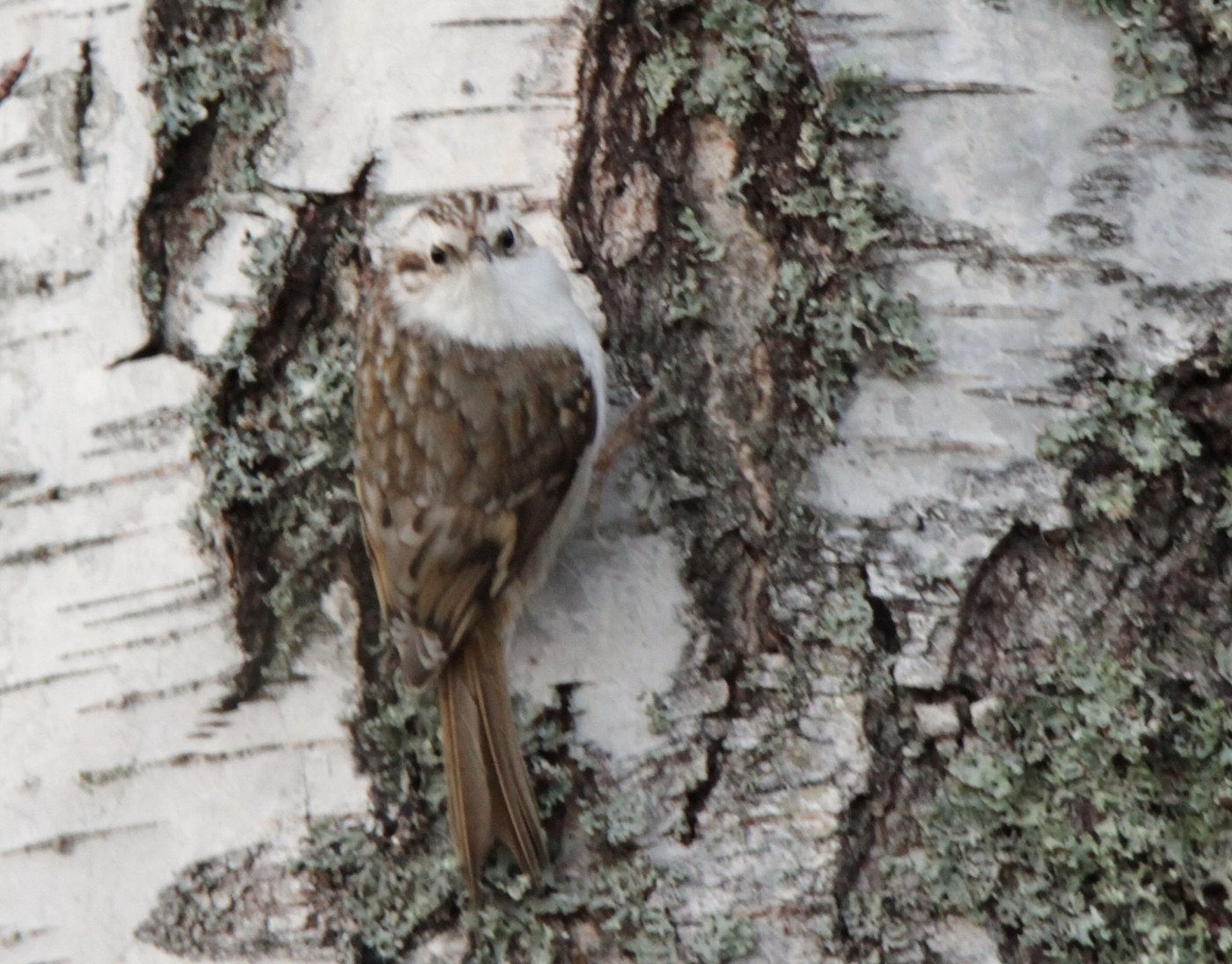
What Eurasian Treecreeper Feathers Look Like
Eurasian Treecreeper feathers are small (body feathers 2-3 cm, tail feathers up to about 6-7 cm) and built for a life spent spiraling up tree trunks. Upperpart feathers show an intricate mottled brown-and-buff bark-like pattern, with darker brown centers and pale buff streaks and spots that make the bird nearly invisible against tree bark — one of the best camouflage patterns among European songbirds. The rump feathers show a warm rufous-buff tint, a useful contrast against the duller mottled back. Underparts feathers are clean silky white, a sharp contrast to the camouflaged upperparts. The most distinctive feathers, however, are the tail feathers: like woodpeckers, Treecreepers use their tail as a brace while climbing, so the tail feathers are unusually stiff and pointed, with rigid shafts extending slightly beyond the webbing — a texture and shape not typical of most small songbirds.
Step-by-Step: Is This Feather From a Eurasian Treecreeper?
- Check for bark-like mottling. Fine brown-and-buff streaking and spotting that mimics tree bark, rather than solid color or bold bars, is the starting point.
- Look for a rufous rump feather. A warm rufous-buff tone distinct from the duller mottled back feathers supports Treecreeper.
- Inspect underparts feathers. Clean silky white with no streaking contrasts sharply with the mottled upperparts — this contrast itself is diagnostic.
- Feel a tail feather for stiffness. A rigid shaft with a pointed tip, similar in concept to woodpecker tail feathers but much smaller, confirms this trunk-climbing adaptation.
- Check the site. Found on or beneath tree trunks with rough bark (oak, pine) rather than in open ground or shrub habitat supports Treecreeper.
Similar Species & How to Tell Them Apart
- Eurasian Nuthatch feathers show a plain blue-gray back (no mottling at all) with a black eye stripe and rich buff-orange underparts, a completely different, unstreaked pattern, and Nuthatch tail feathers are not noticeably stiffened since this species climbs head-first down trunks without using its tail as a prop.
- Short-toed Treecreeper, a close relative in parts of continental Europe, has nearly identical camouflage feathers, making this pairing very difficult to separate by feather alone — habitat (Short-toed favors lower-elevation broadleaf and parkland, Eurasian favors conifers and higher elevations in areas of overlap) and range are more reliable than plumage.
- Wren feathers are more uniformly rufous-brown with fine dark barring throughout, lacking Treecreeper's pale streaky "bark" mottling and clean white underparts contrast.
- Wood Warbler and other similarly sized brownish songbirds lack both the stiffened tail feather structure and the specific bark-mimicking mottled pattern, and show more uniform olive or greenish tones instead.
Where & When You'll Find Them
Eurasian Treecreepers are non-migratory residents of mature woodland across Europe and temperate Asia, favoring old trees with deeply fissured or flaking bark (oak, pine, and other conifers) where they forage in a spiral path up the trunk before flitting to the base of the next tree. Because they're resident year-round, feathers can be found at any time directly around trunk bases and along foraging routes on rough-barked trees, especially near roost sites — Treecreepers often roost pressed into bark crevices or against soft bark like Wellingtonia. Feather finds may tick up slightly in late summer, following the post-breeding molt, when worn tail feathers (heavily used all season for bracing) are replaced.
Frequently asked questions
What makes Treecreeper tail feathers unusual for a songbird?
They're notably stiff with rigid, slightly protruding shafts, an adaptation for bracing against bark while climbing — a texture more typical of woodpeckers than typical small perching birds.
How do I rule out Nuthatch when I find a small brownish feather on a tree trunk?
Check for mottling: Treecreeper upperparts are intricately streaked and spotted like bark, while Nuthatch upperparts are plain, unstreaked blue-gray, a completely different look.
Can I reliably tell Eurasian Treecreeper from Short-toed Treecreeper by feather alone?
Not easily — their feathers are very similar, so range and habitat (conifers and higher elevation favor Eurasian; lowland broadleaf favors Short-toed, where their ranges overlap) are more useful than plumage detail.
What color is the rump feather and why does it matter?
A warm rufous-buff, distinctly different from the duller mottled back — this contrast is a handy secondary check beyond the general bark-like pattern.
Where exactly should I look for these feathers?
At the base of large, rough-barked trees such as oak or pine, and along the trunk where the bird typically forages and roosts.