
How to Identify European Stonechat Feathers
A guide to recognizing the small, dark-headed body feathers and warm orange breast feathers of this small chat.
Read the full European Stonechat encyclopedia entry →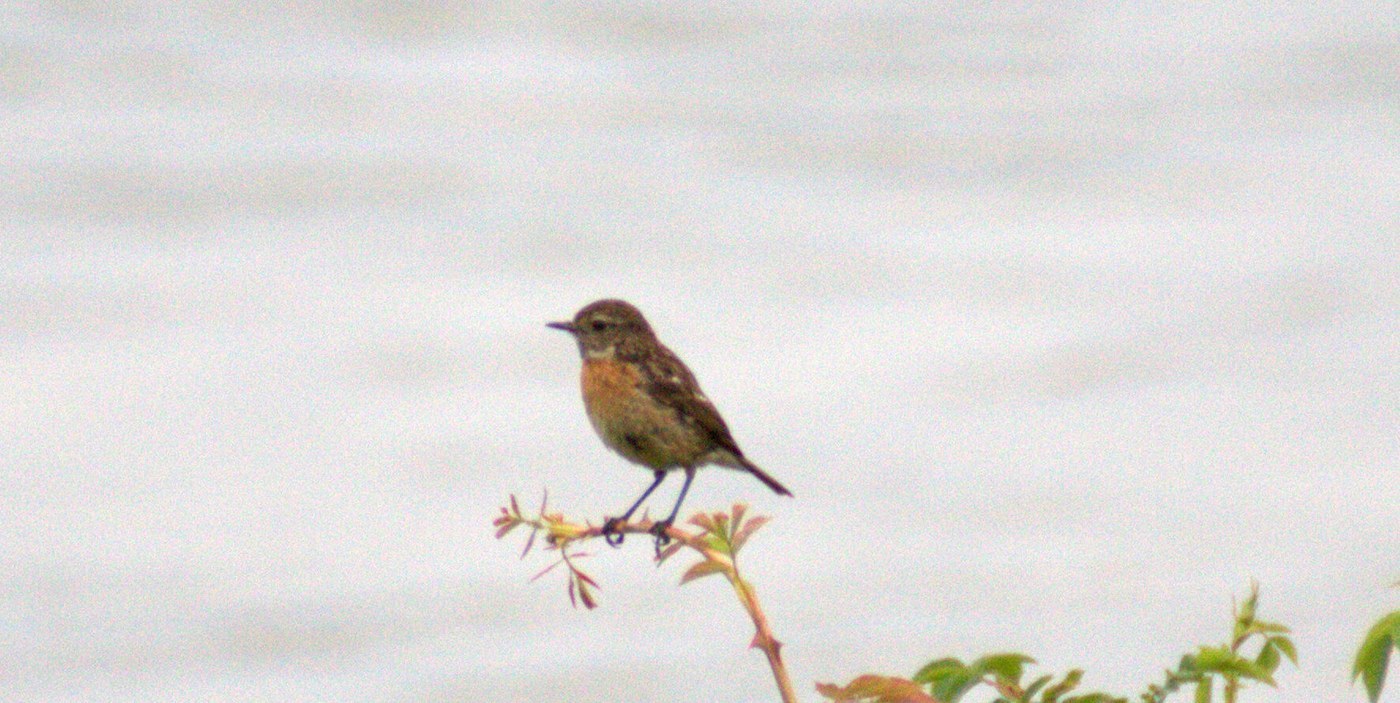
What European Stonechat's Feathers Look Like
European Stonechat is a small chat, so every feather is correspondingly tiny, but the color pattern is distinctive. Male breeding-plumage head and throat feathers are solid sooty black, contrasting with a bold white patch on the side of the neck and a small white rump patch; the breast feathers are a rich orange-rufous, fading to paler buff on the belly. Female and non-breeding male feathers are much duller, with the black head feathers replaced by streaky dark brown ones and a paler, less crisp neck patch, but the orange breast wash is still present, if muted. Wing feathers are dark brown-black with a small but sharp white covert patch that shows as a wing panel even on folded wings. Tail feathers are short, dark blackish-brown, and unmarked. All feathers are small, with even the longest primaries measuring only about 5-6 cm, in keeping with the bird's sparrow-sized body.
Step-by-Step: Is This Feather From a European Stonechat?
- Check size first: feathers should be tiny, only a few centimeters long; anything larger than a house sparrow's feathers is not a stonechat.
- Look for a solid black head feather: an unstreaked, solid sooty-black small feather (not blue-black or glossy) suggests a male stonechat's head or throat.
- Look for orange-rufous on a body feather: a warm orange wash, richest on the breast and fading toward the belly, is diagnostic when paired with the small size.
- Check for a crisp white patch feather: an isolated small white feather from the neck side or rump, found alongside dark and orange ones, supports stonechat.
- Look at the wing: a small white or whitish covert feather set among dark brown wing feathers indicates the white wing panel typical of the species.
Similar Species & How to Tell Them Apart
Whinchat, a close relative and frequent companion species in the same habitats, is the main look-alike. Whinchat feathers lack the solid black head; instead, head feathers are streaked brown with a bold whitish supercilium (eyebrow stripe), a feature stonechat never shows, and Whinchat's tail feathers show white patches at the base that stonechat lacks. Black Redstart shares a dark body but has bright rusty-red tail and rump feathers, quite different from stonechat's plain dark tail, and lacks the neck-side white patch. Common Redstart similarly shows a red tail. Female and juvenile stonechats can be confused with female Whinchats, in which case the absence of a pale eyebrow stripe and the presence of a small white rump feather favor stonechat.
Where & When You'll Find Them
European Stonechats favor open, scrubby habitat: heathland, gorse-covered commons, coastal cliffs, and rough grassland across much of Europe, North Africa, and western Asia, often perched conspicuously on top of a bush or fence wire. Feathers are most likely to be found caught on gorse or bramble thorns, near favored perches, or around low nest sites hidden in dense scrub. Molt occurs in late summer (July-September) after breeding, when both adults and newly fledged juveniles replace feathers, making this the most productive season for finding dropped body and flight feathers in stonechat territory.
Frequently asked questions
How do I tell a male from a female stonechat feather?
Male feathers show a solid, unstreaked black head and throat, while female and non-breeding feathers are streaky brown; both sexes show some orange wash on the breast.
What's the easiest way to rule out Whinchat?
Look for a pale eyebrow stripe feather or white at the base of tail feathers; stonechats lack both, showing instead a solid dark head and a plain dark tail.
Why is the size of the feather so important here?
Stonechats are very small birds, so any feather larger than a few centimeters, especially flight feathers over 6-7 cm, is too big to be a stonechat.
Do stonechats have a white rump?
Yes, a small pale rump patch is present, especially useful when combined with the black head and orange breast to confirm identification.
When is molting season for stonechats?
Late summer, from roughly July through September, following the breeding season, is when most feathers are replaced and shed.