
How to Identify Great Tit Feathers
A guide to recognizing the yellow underparts, black belly stripe, and blue-grey wing feathers of this common Eurasian garden bird.
Read the full Great Tit encyclopedia entry →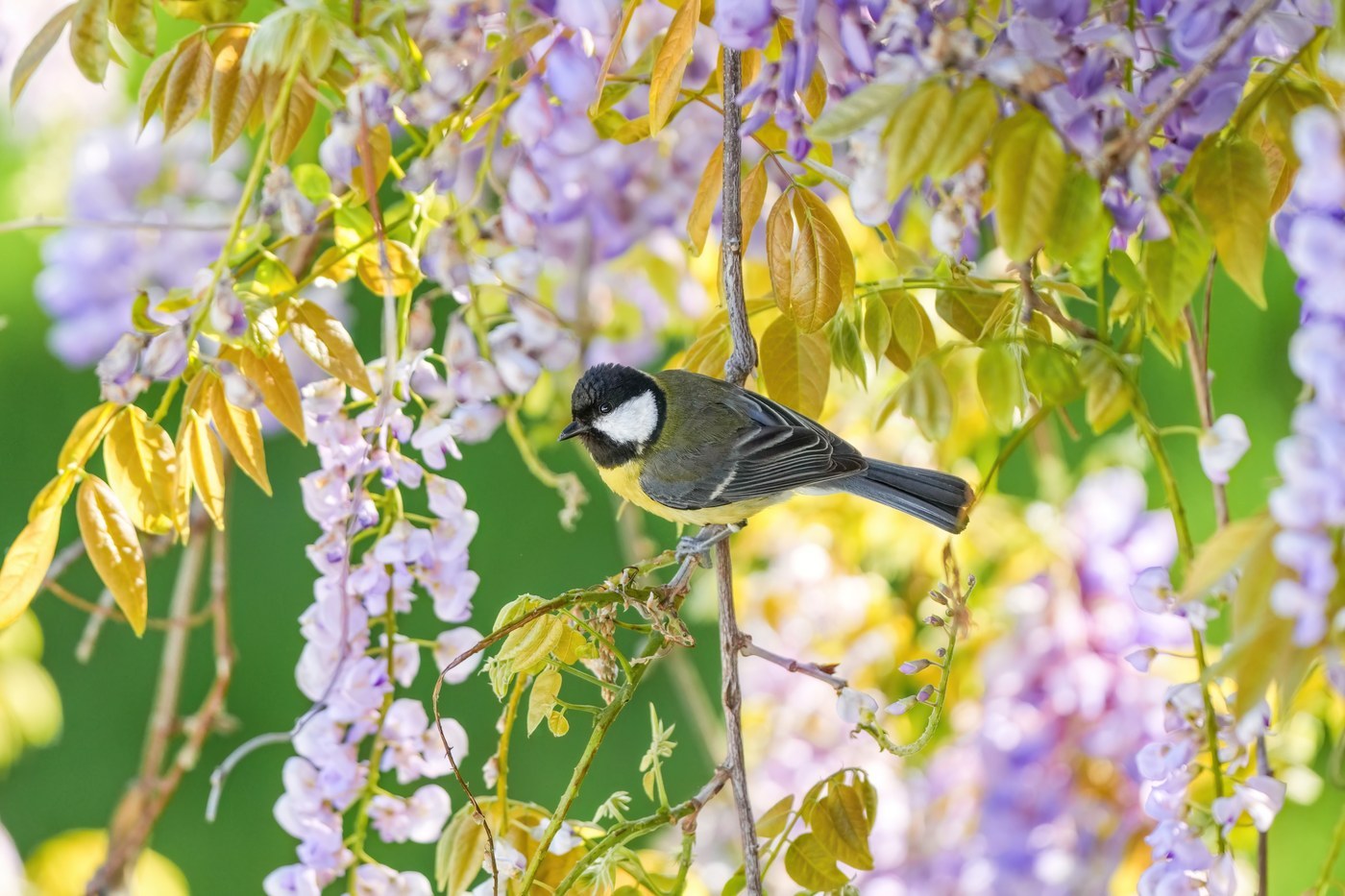
What Great Tit's Feathers Look Like
The Great Tit is one of Europe and Asia's most familiar garden and woodland songbirds, and its feathers combine cheerful color with crisp pattern. Underpart feathers are bright lemon-yellow, broken down the center by a bold black stripe running from the throat to the vent — this stripe is notably broader and more prominent in males, sometimes narrowing or breaking up in females, so stripe width on a breast feather can hint at sex. The head is glossy black with large, clean white cheek patches, and the black of the head extends down to form a full black bib at the throat.
Back feathers are olive-green, while the wings are blue-grey with a single crisp white wing bar formed by white tips on the greater covert feathers — a useful clue on its own since few similarly sized garden birds combine blue-grey wings with a white bar in this exact way. The tail is blackish-blue with white edges on the outer feathers, and overall feather texture is smooth and neat, typical of an active, acrobatic tit.
Step-by-Step: Is This Feather From a Great Tit?
- Check for the belly stripe. A yellow feather with a bold black central stripe is one of the most distinctive single clues for this species.
- Measure it. Flight feathers run about 6–8 cm and tail feathers 5–7 cm, fitting a small, sparrow-sized woodland bird.
- Look at wing color. Blue-grey wing feathers with a single crisp white bar support this species over most other yellow-breasted garden birds.
- Assess head feathers. A glossy black feather with a clean white patch (from the cheek) or an all-black throat/bib feather fits the head pattern.
- Consider stripe width for sex. A notably broad, bold black stripe suggests a male; a narrower or interrupted stripe suggests a female.
- Feel the texture. Smooth, neat, tightly webbed feathers fit an active, branch-hopping tit rather than a looser-feathered thrush or finch.
Similar Species & How to Tell Them Apart
The Blue Tit, a frequent companion species at feeders, has a blue (not black) cap, lacks the bold central belly stripe, and shows more extensive blue in the wings and tail rather than blue-grey. Various regional relatives such as the Cinereous Tit across parts of Asia lack the bright yellow underparts entirely, showing grey-white tones instead, which quickly rules them out. No other common garden bird combines yellow underparts, a black belly stripe, white cheek patches, and blue-grey wings in quite the same way, making a confidently identified Great Tit feather relatively reliable.
Where & When You'll Find Them
Great Tits are common and widespread across woodlands, parks, hedgerows, and gardens throughout Europe and much of temperate Asia, frequently nesting in tree cavities and readily using nest boxes. They are largely resident, and most undergo a complete post-breeding molt in late summer, so feathers are most often found near nest boxes, garden feeders, and woodland edges from July through September, with occasional feathers turning up year-round near favored feeding and roosting sites.
Frequently asked questions
What's the single easiest clue for a Great Tit feather?
A yellow breast feather with a bold black central stripe running down the middle is highly distinctive and is the fastest way to confirm this species.
How can I tell a male feather from a female feather?
A broader, bolder black belly stripe generally indicates a male, while a narrower or more interrupted stripe suggests a female, though this isn't always perfectly consistent.
How is this different from a Blue Tit feather?
Blue Tit has a blue, not black, cap and lacks the bold central belly stripe, showing more extensive blue throughout the wings and tail instead of blue-grey.
Why does the wing look blue-grey rather than bright blue?
Great Tit wing coverts and flight feathers are a more subdued blue-grey tone compared to the brighter blue of some related tit species, with a single white wing bar rather than extensive blue edging.
When are Great Tit feathers most commonly found?
Late summer, roughly July through September, during the post-breeding molt, especially near nest boxes and garden feeding areas.