
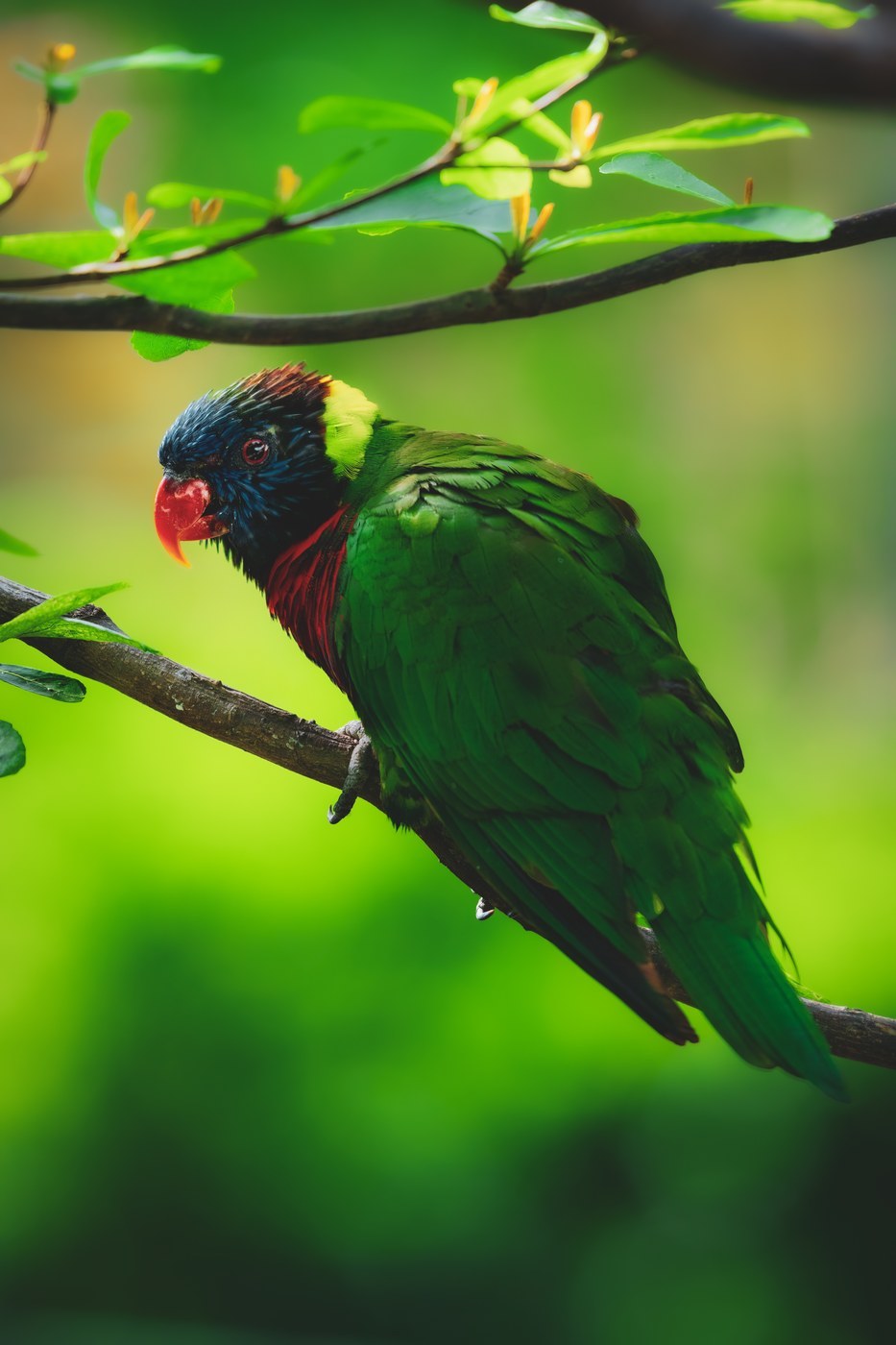
Green-naped Lorikeet
Trichoglossus haematodus
The Green-naped Lorikeet is a vividly colored parrot of New Guinea and surrounding islands, distinguished by a clear green band across the nape separating its blue head from its green back.
- Feather type
- Fine, densely packed multicolored contour feathers
- Colours
- Blue head separated from a green back by a distinct green nape band, with an orange-red breast
- Bird size
- Medium, ~26-30 cm
Found a feather like this?
Identify any feather from a photo, free.
Overview
Overview
The Green-naped Lorikeet is part of the broader lorikeet group found through New Guinea, nearby islands, and parts of eastern Indonesia. It shares the vivid multicolor pattern typical of this group but with a more clearly defined nape band.
- Slender body with a tapering tail
- Red bill typical of nectar-feeding lorikeets
- Range overlaps with related lorikeet forms in parts of its distribution
Identifying the Feather
Feather Identification
Head feathers are deep blue with fine streaking, bordered by a distinct band of green feathers across the nape that clearly separates the head from the green back and wings. The breast is orange-red, often with darker barring, and the belly is dark blue.
- Flight feathers: Green primaries and secondaries
- Tail feathers: Long, green, and tapering
- Nape band: A well-defined green collar is the key distinguishing feature from the Rainbow Lorikeet, whose blue-to-green transition is less sharply marked
This distinct green nape collar, combined with the orange-red breast, is the most reliable identification point for feathers of this species.
Plumage & Molt
Sexes are alike in plumage. Juveniles are duller with less vivid color contrast, particularly in the breast band, and a darker bill that brightens with age. Molt proceeds gradually and continuously.
Habitat & Range
This species occupies lowland and hill forest, forest edge, coconut plantations, and coastal woodland across New Guinea and neighboring islands. It is largely resident, with local nomadic movements tracking flowering trees.
Behavior & Field Notes
Green-naped Lorikeets are social birds, often gathering in flocks at flowering trees to feed on nectar and pollen using their brush-tipped tongues, supplemented by some fruit. They nest in tree hollows, with pairs defending nest sites. Vocalizations are loud, sharp screeches and chattering calls, typical of the lorikeet group, given in flight and while feeding.
Frequently asked questions
What is the clearest feather-based mark for this species?
A distinct green band across the nape that clearly separates the blue head from the green back is the most reliable mark.
How does this differ from the closely related Rainbow Lorikeet?
The Rainbow Lorikeet's head-to-back color transition is less sharply defined, lacking the same clean green nape collar.
What color is the breast in this species?
The breast is orange-red, often with some darker barring.
Are juveniles as brightly colored as adults?
No, juvenile plumage is duller with less contrast between the breast band and surrounding feathers.
Green-naped Lorikeet guides
In-depth guides for identifying and understanding Green-naped Lorikeet.
Other feathers you may enjoy
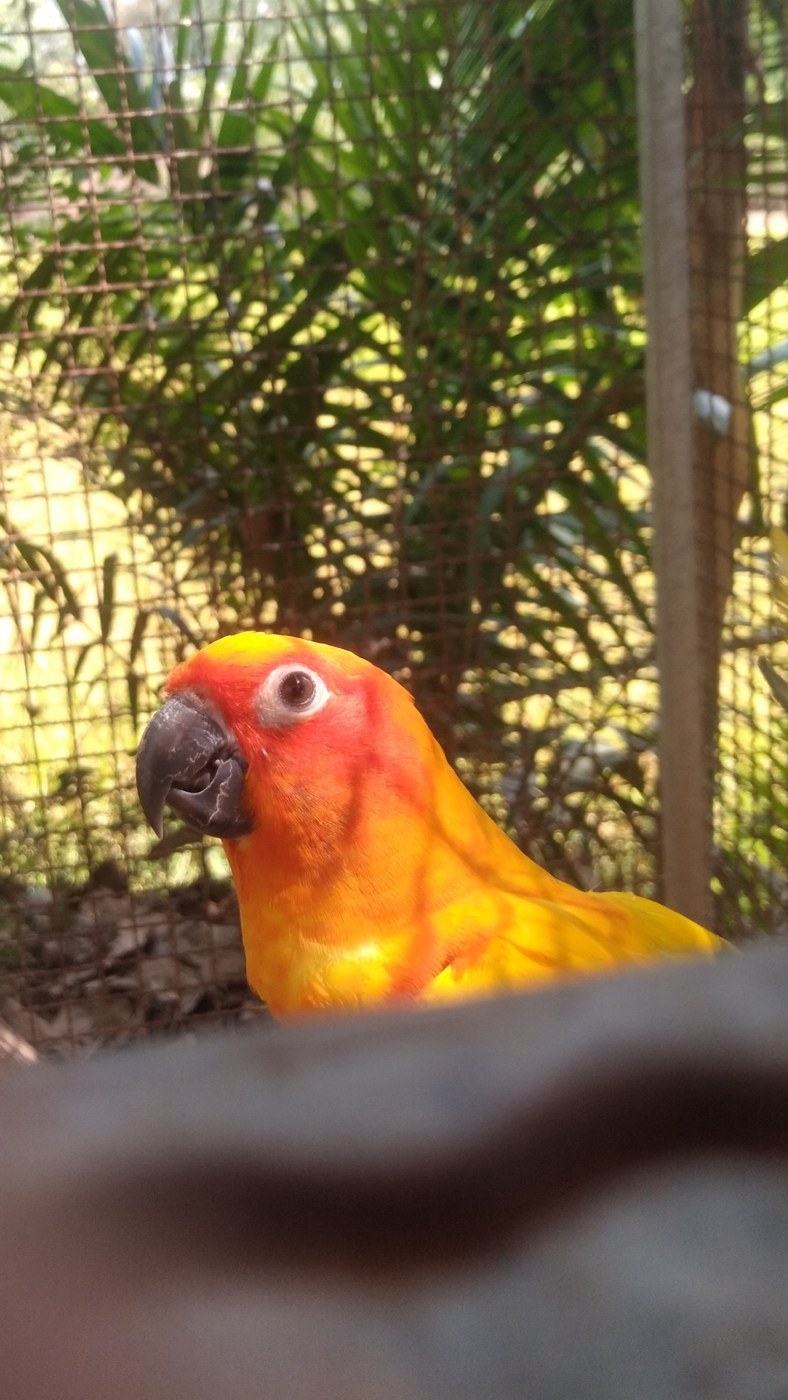
Sun Parakeet
Bright, dense body contour feathers; medium pointed tail feathers

Yellow-naped Amazon
Broad rounded contour feathers with sturdy flight feathers
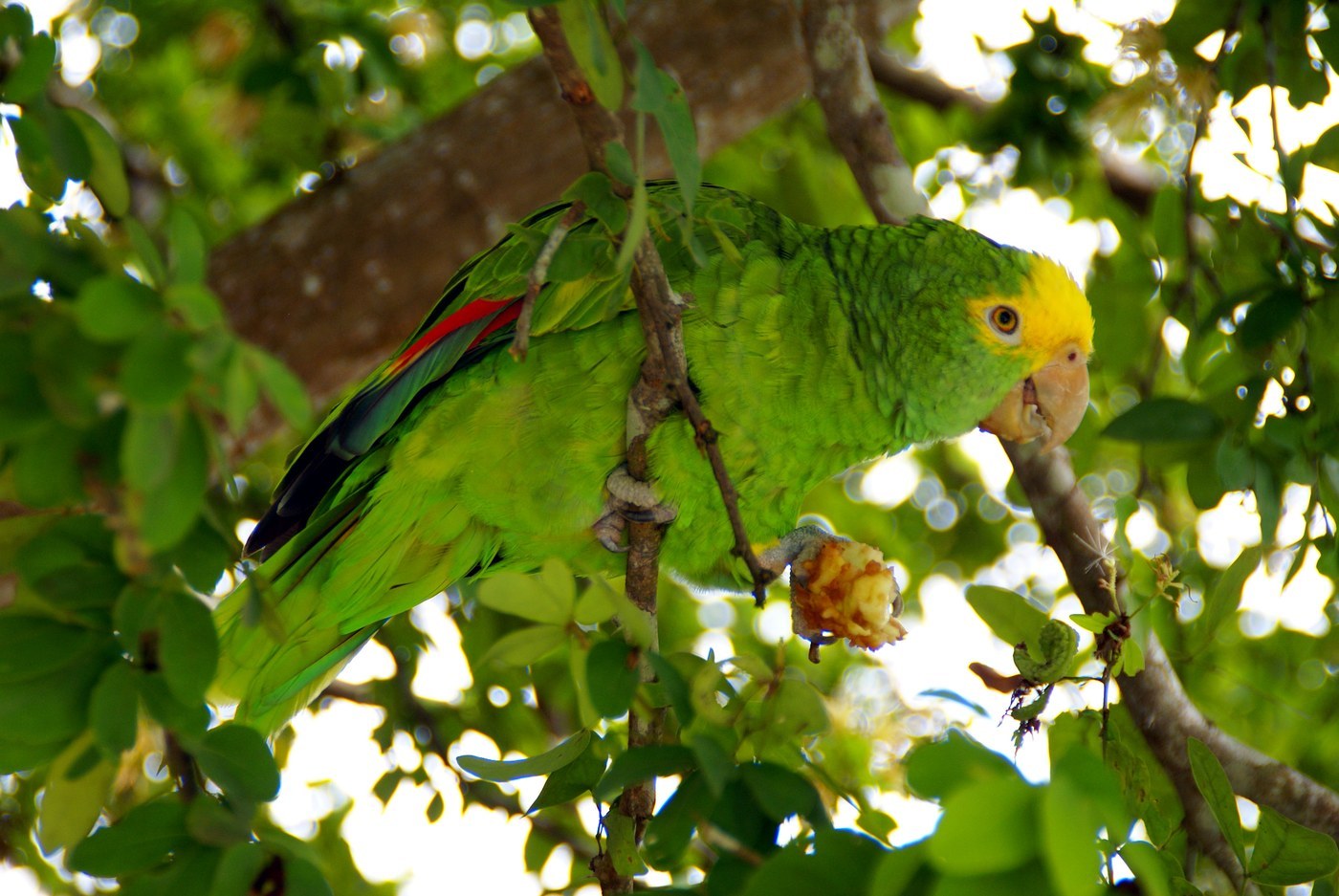
Yellow-headed Amazon
Dense, rounded body contour feathers; broad flight feathers
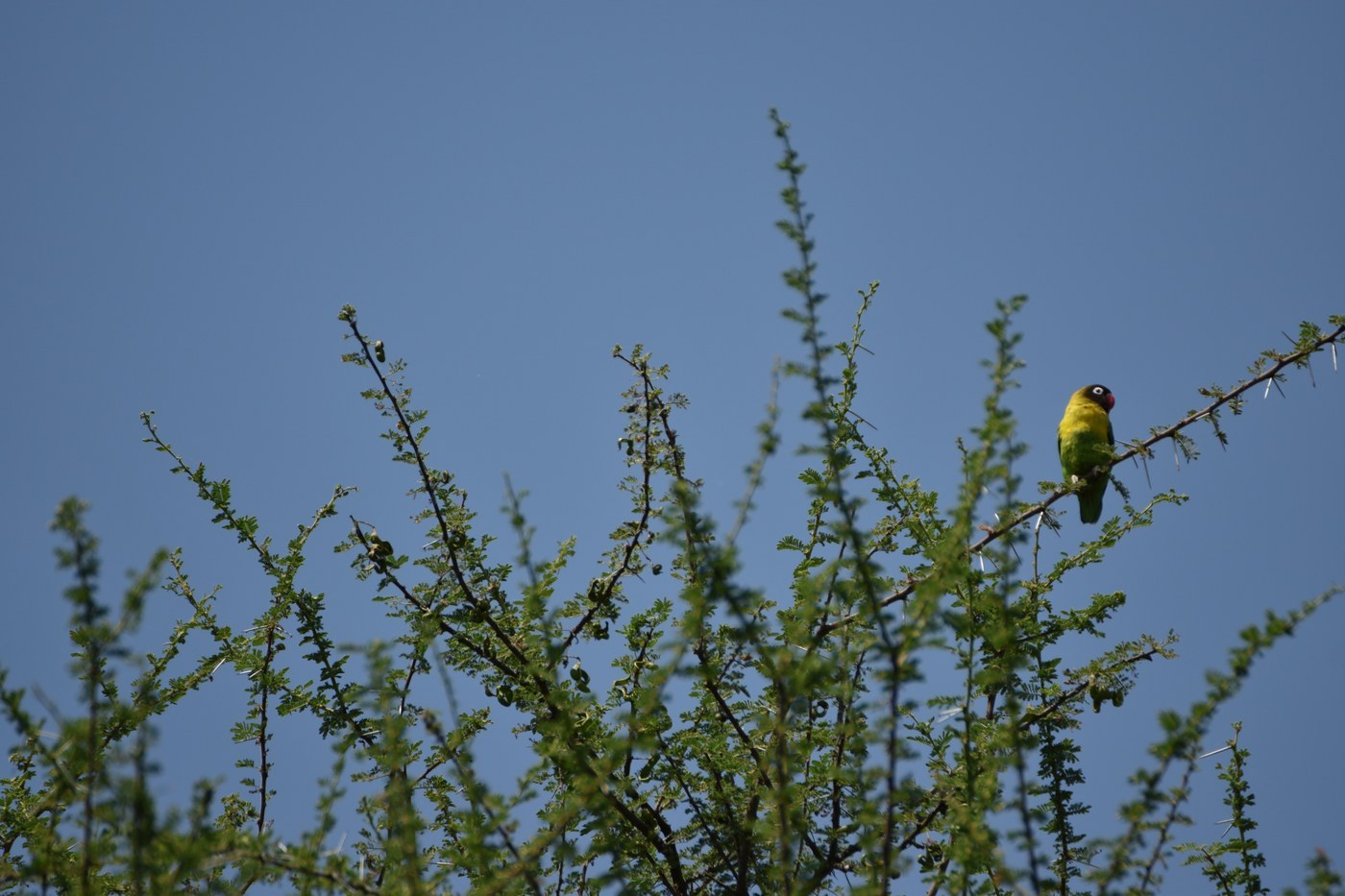
Yellow-collared Lovebird
Small compact flight feathers, short rounded tail

White-eyed Conure
Medium contour and long, graduated tail feathers

Yellow-tailed Black Cockatoo
Large, sturdy contour and flight feathers; short crest

Scarlet-chested Parrot
Small contour and flight feathers

Timneh Parrot
Broad flight feathers, scalloped body feathers with pale edges
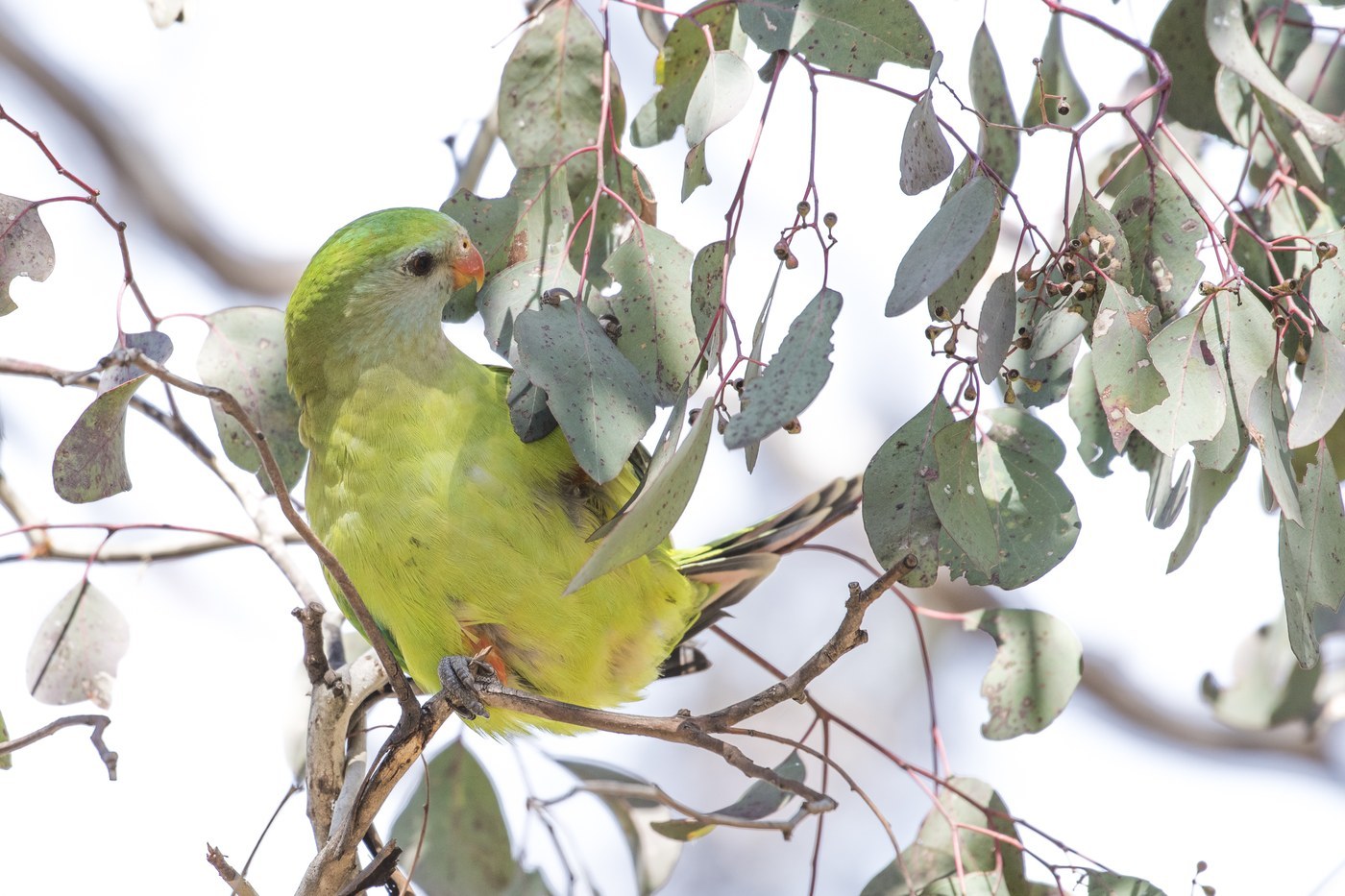
Superb Parrot
Sleek contour feathers with a long tapering tail

Red-shouldered Macaw
Compact body contour feathers; medium flight and tail feathers
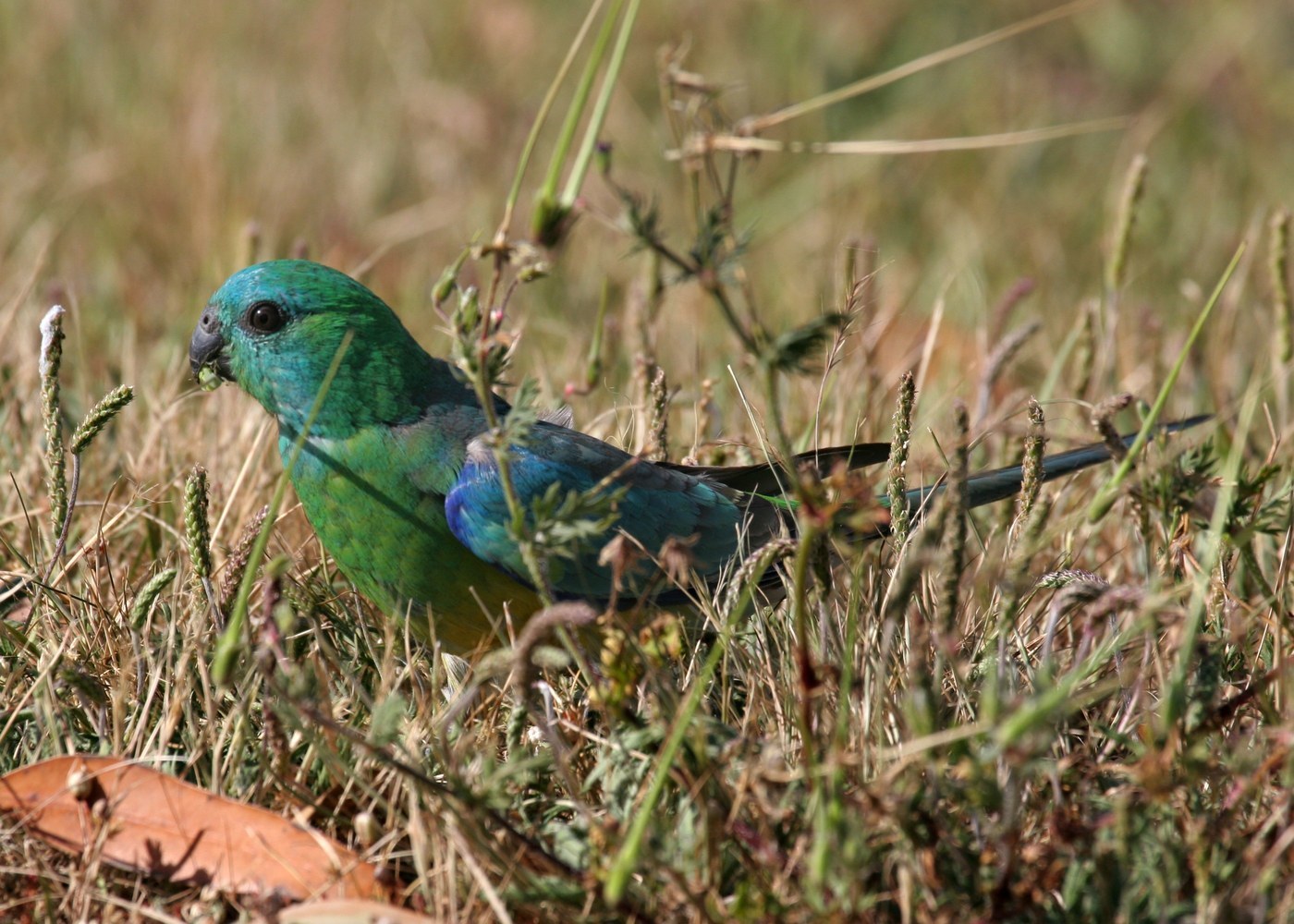
Red-rumped Parrot
Sleek contour feathers with a bright rump patch in males

White-capped Pionus
Compact contour feathers and short, squared tail feathers