
How to Identify Grey Fantail Feathers
How to spot this small flycatcher's signature fan-shaped tail feathers with white edges, plus its soft grey-brown body plumage.
Read the full Grey Fantail encyclopedia entry →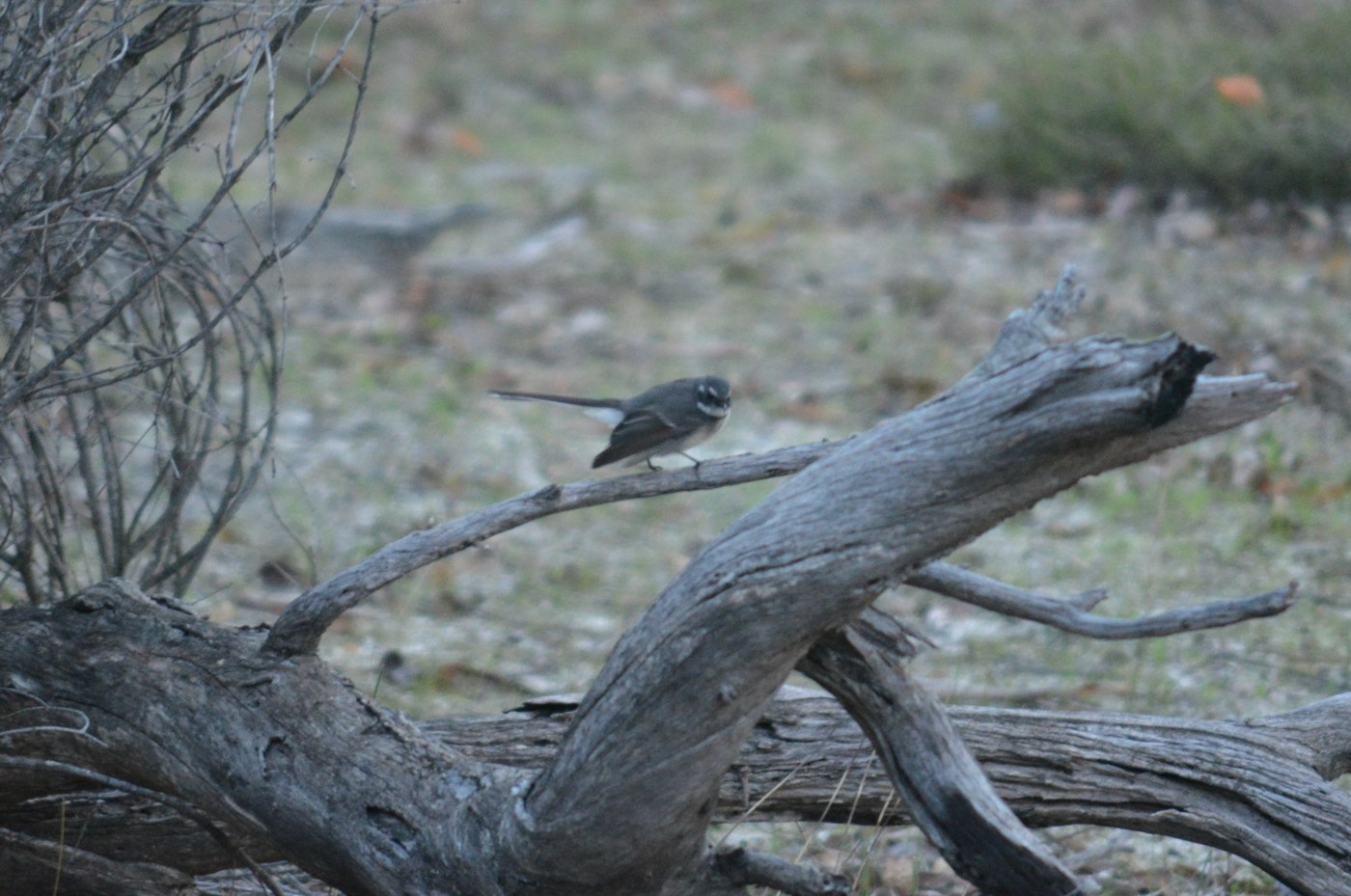
What Grey Fantail Feathers Look Like
The single most useful feather from this species is a tail feather, because Grey Fantails are named for constantly fanning their tails into a wide, flicking display. Individual tail feathers are 7-10 cm, dark grey-brown at the base, and — critically — most show a white tip and/or white edge along the outer web, especially on the outermost feathers of the tail. This creates the flashing white pattern you see when the bird fans its tail in the field, and it's a strong diagnostic even from a single detached feather.
Body (contour) feathers are soft, grey-brown above and pale buff to cinnamon below, with a subtly warmer wash on the flanks and breast than on the back. Wing feathers are unremarkable — dark grey-brown, sometimes with faint pale edging forming weak wing bars, much less bold than the tail markings. Overall the feathers are small and delicate, typical of an insect-hawking bird built for agile, fluttering flight rather than long-distance travel, with primaries only around 4-5 cm.
Step-by-Step: Is This Feather From a Grey Fantail?
- Look for a fanned tail feather first. A small, dark grey-brown tail feather with a white tip or white outer edge is the strongest single clue.
- Measure it. Tail feathers around 7-10 cm and wing feathers under 5 cm point to a small, active songbird.
- Check the underside color. Pale buff to cinnamon underparts contrasting with a grey-brown back matches this species well.
- Rule out bold wing bars. Only faint, weak pale edging should show on the wings — strong white wing bars suggest a different small songbird.
- Note softness. The feather should feel light and soft, consistent with a bird that spends its time fluttering after insects rather than flying long distances.
Similar Species & How to Tell Them Apart
Other fantail species (such as the Willie Wagtail, which is really a larger fantail) share the fanning tail behavior, but Willie Wagtail feathers are much larger and boldly black-and-white rather than grey-brown with white tips only. Small Australasian robins and flycatchers can show a superficially similar grey-brown back, but they lack the diagnostic white-tipped, fan-shaped tail feathers. Warblers of similar size tend to have plainer tail feathers without the bold white tip pattern this species shows.
Where & When You'll Find Them
Grey Fantails favor forest understory, woodland edges, and shrubby vegetation, often following mixed foraging flocks or working close to the ground and mid-story in search of flying insects. Because the birds are constantly active and often approach people and larger animals to catch flushed insects, feathers frequently turn up on forest trails and near clearings rather than deep in dense cover. Look for fresh feathers especially after the breeding season molt, when adults replace worn tail and flight feathers before the cooler months.
Frequently asked questions
What's the single best clue for identifying this feather?
A small tail feather with a white tip or white edge on the outer web — a direct match to the tail-fanning display this species is named for.
Could this be confused with a Willie Wagtail feather?
Not easily — Willie Wagtail feathers are considerably larger and show bold black-and-white patterning rather than grey-brown with white tips.
Are the wing feathers useful for identification?
Less so — they're fairly plain grey-brown with only faint pale edging, so the tail feathers are much more diagnostic.
What habitat should I search for these feathers in?
Forest understory, woodland edges, and shrubby areas, often along trails and clearings where the birds actively hawk insects.
When are fresh feathers most likely to appear?
Shortly after the breeding season, when adults molt and replace worn tail and flight feathers before conditions turn cooler.