

Grey Partridge
Perdix perdix
A dumpy, farmland gamebird with finely vermiculated grey body feathers, a bright orange face, and a distinctive chestnut horseshoe marking on the underparts.
- Feather type
- Body and flank feathers
- Colours
- Vermiculated grey-brown with an orange face patch and a chestnut horseshoe mark on the belly
- Bird size
- Small-medium gamebird, ~29-31 cm
Found a feather like this?
Identify any feather from a photo, free.
Overview
The Grey Partridge is a native farmland bird of Europe and temperate Asia that has suffered significant declines in many regions due to changes in agricultural practice. Its subtly patterned plumage provides excellent camouflage among stubble and hedgerow cover.
Identifying the Feather
Grey Partridge body feathers show fine grey vermiculations overlaid with rufous barring on the flanks, producing a soft, intricately patterned look rather than the bold contrasting bars of a Red-legged Partridge. The face and upper throat are washed with a warm orange-buff, and males typically show a dark chestnut, horseshoe-shaped patch of feathers on the lower breast/belly, though this can be faintly present in females too. The tail feathers are short and rufous-chestnut, often visible in flight even when the rest of the plumage looks drab and grey-brown.
Plumage & Molt
Sexes are similar but males usually show a bolder chestnut belly horseshoe than females, and females often show more patterning on the scapular feathers. Juveniles are streaky brown and lack the orange face and chestnut belly mark, acquiring adult plumage through the first full molt. Adults molt completely after breeding.
Habitat & Range
Grey Partridges favor arable farmland, grassy field margins, and hedgerows, historically common across agricultural landscapes in Europe and temperate Asia. The species is resident year-round, though it has declined significantly in many western European countries due to habitat and food source changes linked to modern farming.
Behavior & Field Notes
Grey Partridges live in family groups called coveys outside the breeding season, foraging on the ground for seeds and insects, and preferring to run rather than fly when disturbed, flushing in a fast, low, whirring burst if pressed. The call is a distinctive grating or creaking note. Nests are shallow ground scrapes in field margins or hedge bottoms. It remains locally common in some areas.
Frequently asked questions
How can I tell a Grey Partridge feather from a Red-legged Partridge feather?
Grey Partridge feathers show finer, softer vermiculated grey patterning, while Red-legged Partridge flank feathers have bold, sharply contrasting black, white, and chestnut bars.
What is the chestnut horseshoe mark on a Grey Partridge?
It is a patch of dark chestnut feathers on the lower breast, typically more pronounced in males but sometimes present in females as well.
Why have Grey Partridge populations declined?
Changes in farming practices have reduced the insect-rich field margins and stubble cover the species depends on, though this is unrelated to feather identification.
Where should I look for Grey Partridge feathers?
Arable farmland, grassy field edges, and hedgerow bottoms in agricultural landscapes are the most likely sites.
Grey Partridge guides
In-depth guides for identifying and understanding Grey Partridge.

Other feathers you may enjoy

Ring-necked Pheasant
Body (contour), tail, and wing feathers

Bornean Peacock-pheasant
Contour and tail feathers with iridescent ocelli

Crested Argus
Extremely elongated, ocellated (eyespot-patterned) tail feathers among the longest of any bird; tall, erectile crest

Willow Ptarmigan
Larger, stockier body feathers with warmer rufous tones in summer; tail feathers black year-round

Wild Turkey
Broad, iridescent body feathers and large flight and tail feathers

Bulwer's Pheasant
Contour feathers and elongated white tail feathers
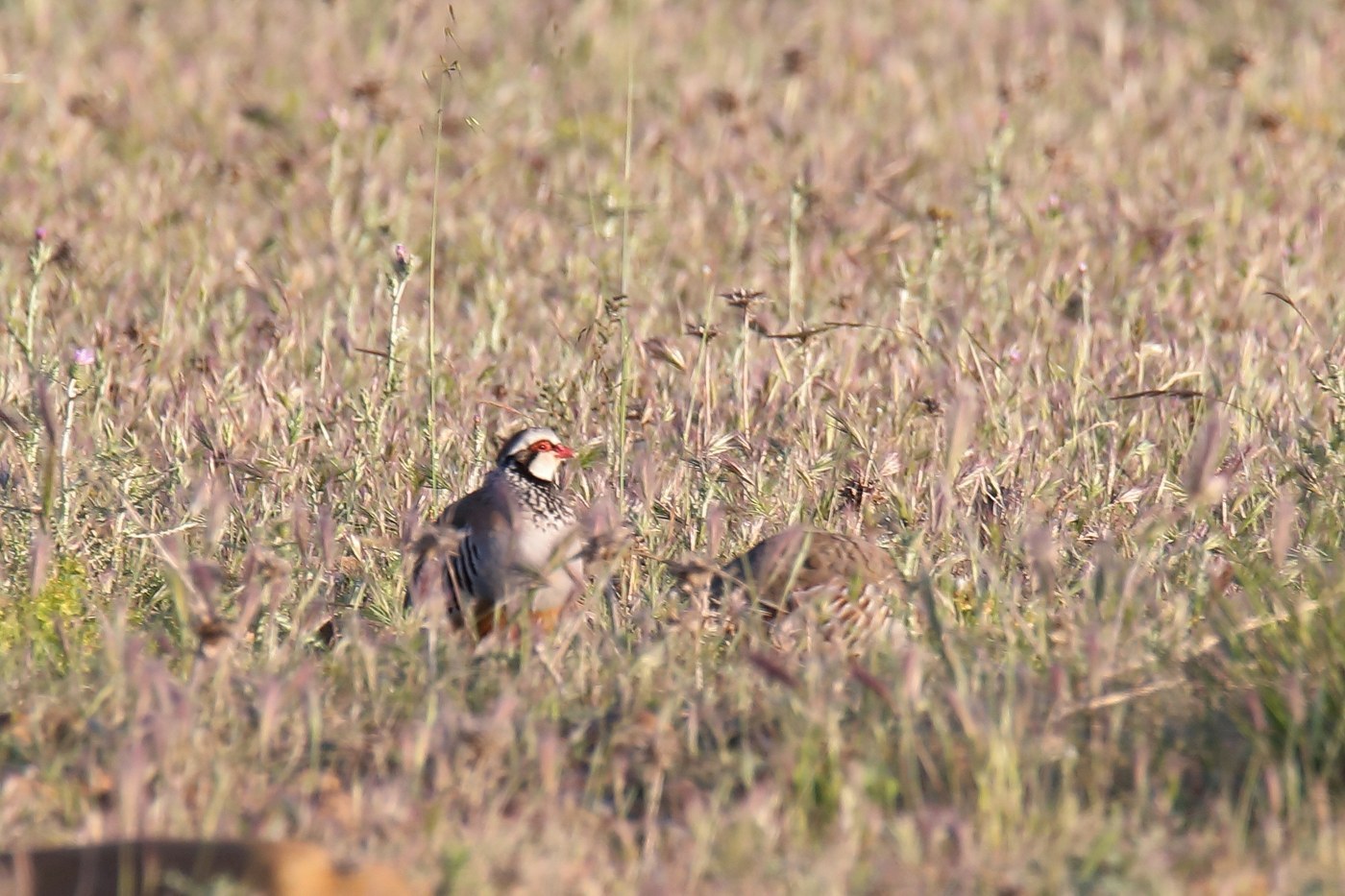
Red-legged Partridge
Flank, body, and flight feathers

White-tailed Ptarmigan
Small body feathers with a tail that stays pure white year-round, unlike other ptarmigan

Edwards's Pheasant
Contour and tail feathers

Sooty Grouse
Dense, plain contour feathers with a pale-tipped, fanned tail

Snow Partridge
Finely vermiculated barred contour feathers

Silver Pheasant
Finely vermiculated white upperpart feathers over glossy blue-black underparts