
How to Identify Griffon Vulture Feathers
How to recognize the enormous, deeply slotted flight feathers and pale, downy body plumage of this large soaring vulture.
Read the full Griffon Vulture encyclopedia entry →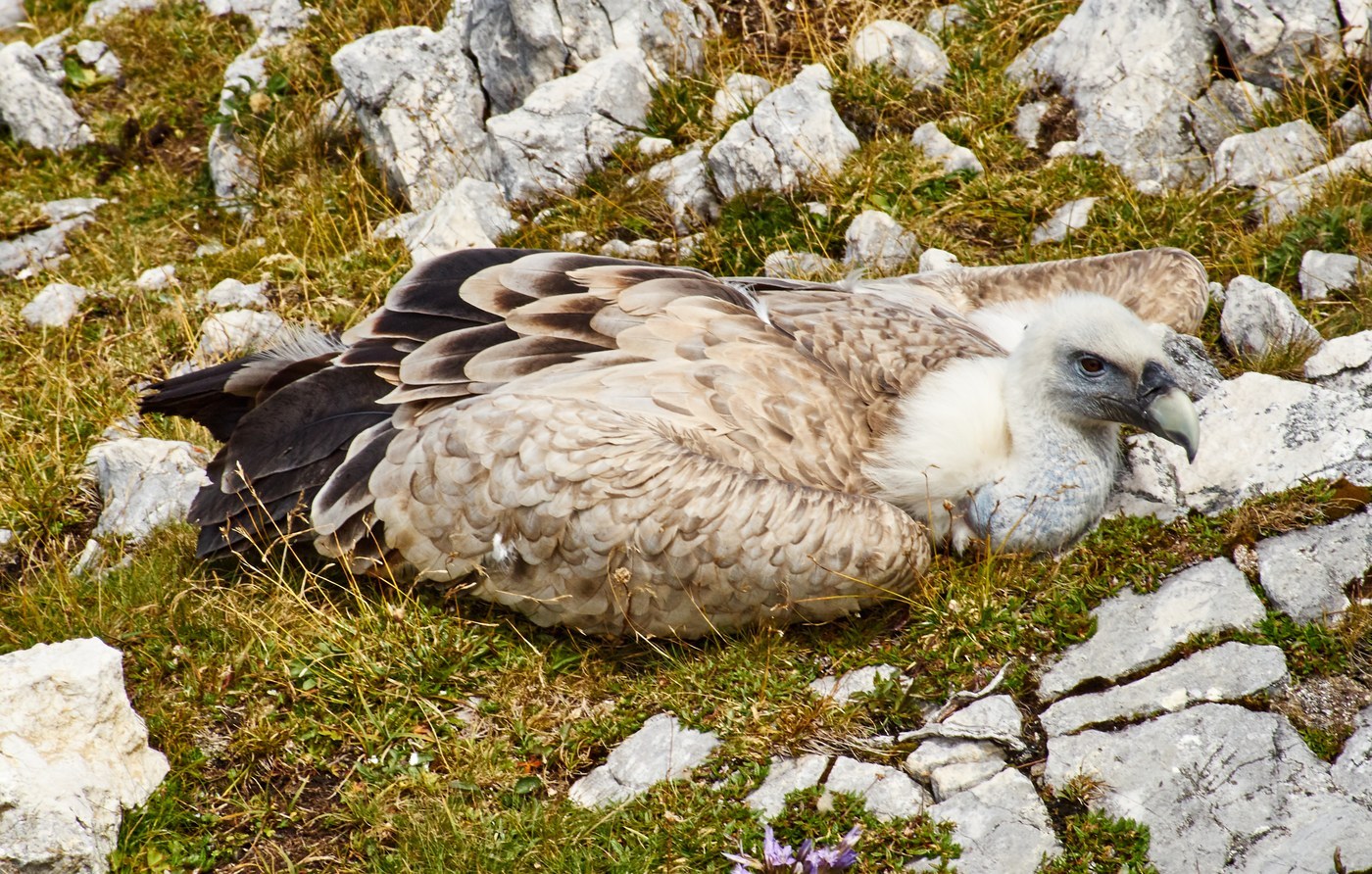
What Griffon Vulture Feathers Look Like
Few feathers you're likely to find in the wild are as large as a Griffon Vulture's primary flight feather: these can reach 40-50 cm or more in length, dark blackish-brown, with a thick, strong central shaft built to withstand the stress of prolonged soaring flight. A hallmark of these primaries is the deeply notched or "fingered" tip — the outer web narrows sharply near the end, which in the living bird creates the separated wingtip "fingers" so characteristic of soaring vultures and eagles riding thermals. Even a single primary feather often shows this narrowing taper if it includes the tip.
Body (contour) feathers are a warm, pale buff to sandy-brown, considerably paler than the dark flight feathers, creating the two-tone look typical of the species in flight. Around the base of the neck, Griffon Vultures have a distinctive ruff of white, downy feathers — soft, fluffy, and quite different in texture from the coarser body feathers elsewhere, an adaptation that keeps the neck clean while feeding since the head and neck itself are only sparsely feathered. Any unusually soft, fine white down found near vulture roosts likely comes from this neck ruff.
Step-by-Step: Is This Feather From a Griffon Vulture?
- Measure it. A very large flight feather (40+ cm) with a thick, strong shaft points strongly to a big soaring bird like a vulture.
- Check the tip shape. A sharply narrowed, "fingered" outer web near the tip is characteristic of soaring vultures and eagles.
- Compare body feather color. Pale buff-brown contour feathers, much lighter than the blackish flight feathers, fit this species.
- Look for soft white down. Fluffy white down feathers, distinct in texture from body feathers, likely come from the neck ruff.
- Consider the finding location. Cliff ledges, communal roosts, and carcass sites in open or mountainous terrain support vulture origin.
Similar Species & How to Tell Them Apart
Other large vultures in the same regions, such as the Cinereous (Black) Vulture, show darker, more uniformly blackish-brown body feathers rather than the pale buff tone of the Griffon, making body feather color a useful separator. Large eagles can produce similarly big, notched flight feathers, but eagle body feathers tend to run darker and more richly colored (rufous, gold, or dark brown) rather than the pale sandy tone typical of Griffon body plumage. The soft white neck-ruff down is a specific Griffon Vulture feature not shared by eagles, which have fully feathered heads and necks.
Where & When You'll Find Them
Look near cliffs, gorges, and mountainous open country used for nesting and communal roosting, as well as around carcass sites and traditional feeding stations where multiple vultures gather at once. Because these birds roost and breed communally on cliff ledges, feathers often accumulate in significant numbers below regularly used ledges. Molt is gradual and continuous through the year in adults, but the largest numbers of feathers — including the soft white down — are typically found near breeding cliffs during the nesting season when birds are most concentrated and active.
Frequently asked questions
How big are Griffon Vulture flight feathers?
Primaries can reach 40 to 50 centimeters or more, among the largest feathers you're likely to find from any bird in the region.
What does the notched wingtip feather shape indicate?
A sharply narrowed outer web near the tip is typical of large soaring birds like vultures and eagles, forming the separated wingtip 'fingers' seen when they ride thermals.
What is that soft white down I found near a vulture roost?
Likely the fluffy white down from the neck ruff, a feature that keeps the bird's neck area clean while feeding at carcasses.
How do I tell this apart from a large eagle feather?
Check body feather color — Griffon Vulture shows pale sandy-buff contour feathers, while eagles typically show darker, richer brown, gold, or rufous tones.
Where are feathers most concentrated?
Below cliff ledges used for communal roosting and nesting, especially during the breeding season when birds gather in numbers.
Griffon Vulture identified by the community
Recent Griffon Vulture feathers identified with Feather Identifier.
