
How to Identify Iceland Gull Feathers
A guide to recognizing the pale, white-winged flight feathers of the Iceland Gull and separating them from Glaucous and Herring Gull look-alikes.
Read the full Iceland Gull encyclopedia entry →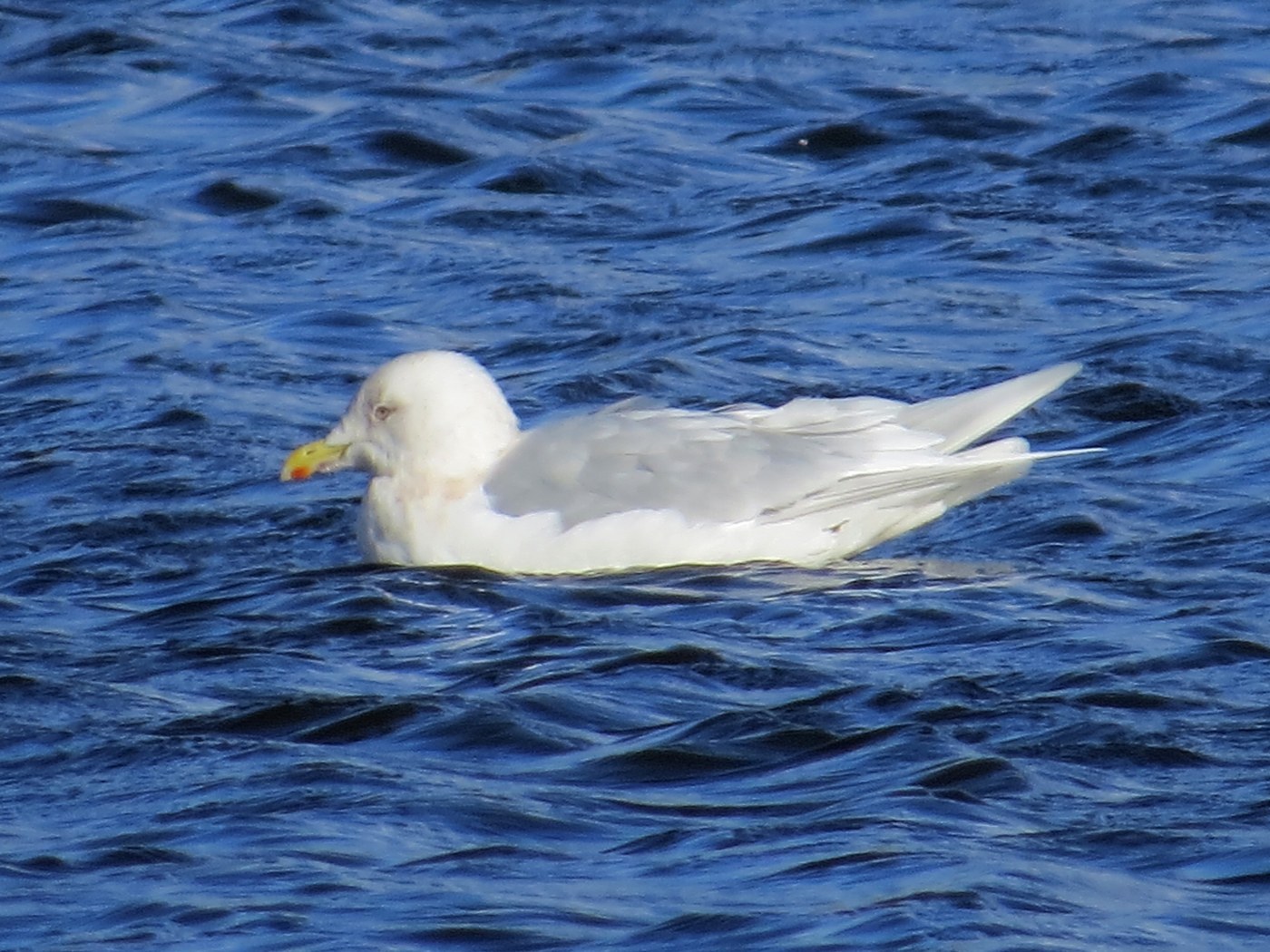
What Iceland Gull Feathers Look Like
The Iceland Gull is a medium-sized gull built for Arctic winters, and its feathers reflect that: pale, soft, and notably lacking the bold black wingtips most gulls show. Adult primary (wingtip) feathers are white to very pale gray, with no black pigment at all — this is the single most useful clue you'll find. Mantle and back contour feathers are a soft pale gray, similar in tone to a Herring Gull but slightly lighter. Immature birds (the age class you'll most often find feathers from, since juveniles molt heavily) show a frosty, checkered pattern of pale buff and white, and their feathers often look almost translucent or "washed out" compared to the boldly patterned brown feathers of most young gulls. Shafts are pale, almost white, throughout. Feather size is moderate — primaries typically run 12-15 inches on a folded wing, smaller and more slender than a Glaucous Gull's.
Step-by-Step: Is This Feather From an Iceland Gull?
- Check the tip color first. Hold the feather up: if the tip is solid black or has a black band, it is not an Iceland Gull (rules out Herring, Ring-billed, Lesser Black-backed, and most other common gulls).
- Judge the overall tone. Adult feathers should be pale gray to white with no strong contrast; immature feathers should look finely checkered and "frosty" rather than solidly brown.
- Measure the primary length. A folded primary in the 12-15 inch range fits Iceland Gull; anything notably longer and heavier points to Glaucous Gull.
- Look at the shaft. Iceland Gull shafts stay pale/whitish along their whole length, without darkening near the tip.
- Consider feather flexibility. Iceland Gull feathers are comparatively slight and less stiff than the primaries of bulkier gulls, reflecting a lighter-bodied bird.
Similar Species & How to Tell Them Apart
The closest match is the Glaucous Gull, which also has all-pale wingtips, but its feathers are noticeably larger, thicker-shafted, and belong to a much bulkier bird — if the feather feels oversized and heavy, suspect Glaucous rather than Iceland. Kumlien's Gull, treated as a subspecies of Iceland Gull, can show faint pale gray markings near the primary tips rather than pure white, so a little smudgy gray at the tip is still consistent with this species. Herring Gull and Ring-billed Gull both have crisp black wingtips with white "mirror" spots — any solid black at the tip rules out Iceland Gull entirely. Glaucous-winged Gull, a Pacific species, shows pale gray (not white) wingtips of a similar tone, but ranges do not overlap with Iceland Gull's Atlantic distribution.
Where & When You'll Find Them
Iceland Gulls breed in the high Arctic, including Greenland and Baffin Island, and winter along the shores of the North Atlantic — Iceland itself, the British Isles, and the northeastern coast of North America down to the mid-Atlantic states. Feathers are most likely to turn up on beaches, harbors, and landfills during the non-breeding season from late fall through early spring, when these gulls concentrate along temperate coastlines. A full molt occurs after the breeding season, so freshly dropped body feathers are most common in early winter, while worn, sun-bleached feathers accumulate by late winter before the birds head back north.
Frequently asked questions
Why do Iceland Gull feathers look almost white instead of gray?
Adult Iceland Gulls simply lack the dark pigment most gulls deposit in their wingtip feathers, so the primaries stay pale gray to white their whole length instead of turning black at the tip.
How can I tell an Iceland Gull feather from a Glaucous Gull feather?
Both lack black wingtips, but Glaucous Gull feathers are larger and noticeably heavier and stiffer, reflecting that species' bulkier body; Iceland Gull feathers are more slender and typically shorter.
I found a checkered brown-and-white feather — could it be a young Iceland Gull?
Yes. Immature Iceland Gulls show a frosty, finely checkered pale buff-and-white pattern rather than the bold solid-brown look of young Herring or Great Black-backed Gulls.
What time of year are Iceland Gull feathers easiest to find?
Late fall through early spring, while the birds winter along North Atlantic coastlines; they head back to Arctic breeding grounds by late spring.
Does a black-tipped wing feather rule out Iceland Gull?
Yes — any solid black pigment at the primary tip rules out Iceland Gull and points instead to species like Herring or Ring-billed Gull.