
How to Identify Indian Robin Feathers
How to identify Indian Robin feathers by their glossy black or brown coloring, white shoulder patch, and bright chestnut undertail coverts.
Read the full Indian Robin encyclopedia entry →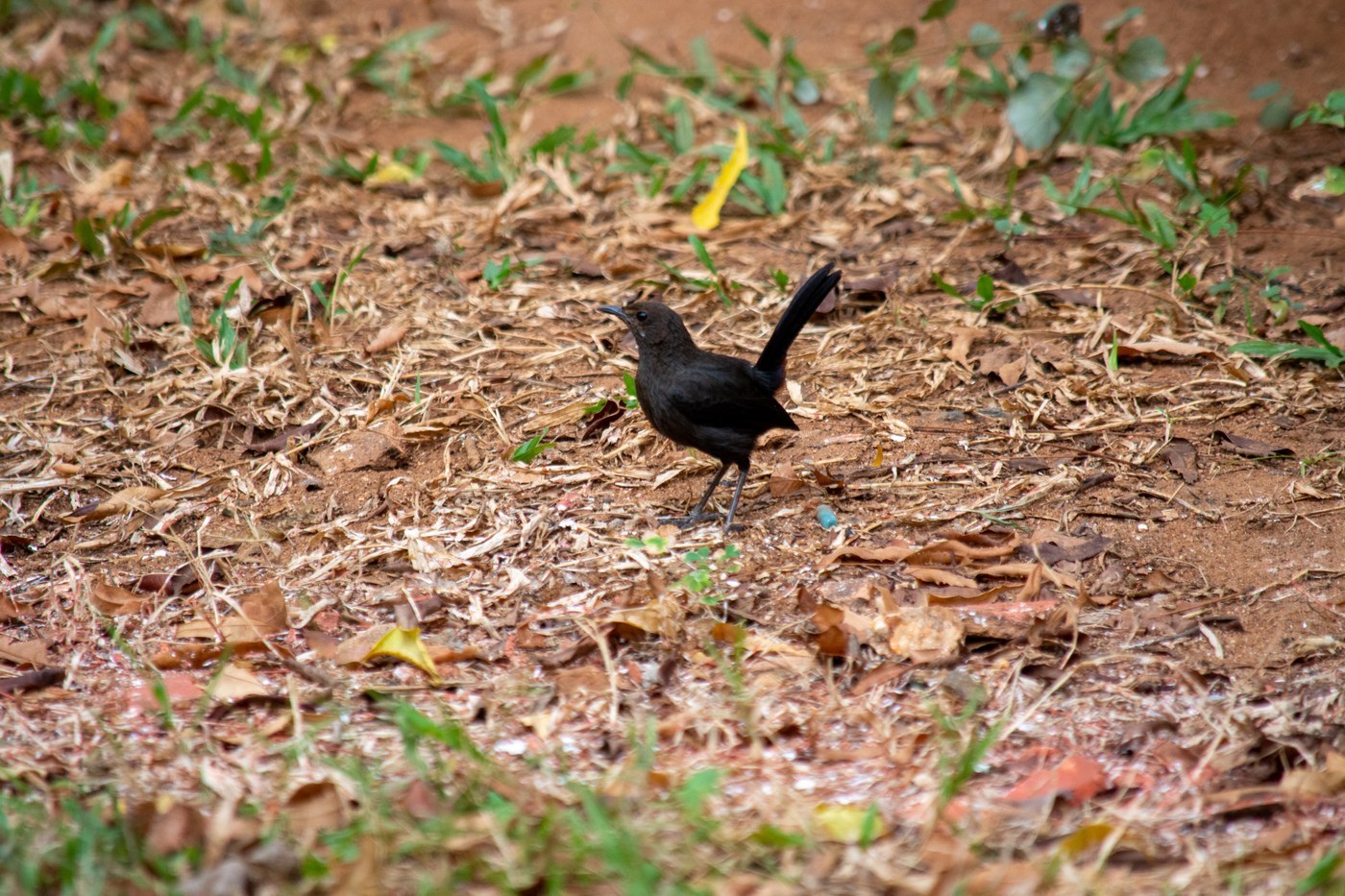
What Indian Robin's Feathers Look Like
The Indian Robin is a small, active chat of open scrub and gardens, and its feathers carry a few sharp, easy-to-spot clues. Males are glossy black overall, with a small but conspicuous white patch on the shoulder (formed by the lesser wing coverts) that stands out against the otherwise uniform black body. Both sexes share the species' signature feature: bright chestnut-to-rufous undertail covert feathers, a small but vividly colored patch near the base of the tail that the bird often flashes while foraging with its tail cocked upward. Females and juveniles are a plainer grayish-brown rather than black, but still carry that same rufous vent patch. Tail feathers are black (or brown in females) and unbanded. Feather size is small, fitting a bird only about 6-7 inches long.
Step-by-Step: Is This Feather From an Indian Robin?
- Check for the rufous vent patch first. A small, bright chestnut feather from the undertail area is present in both sexes and is one of the most reliable single clues.
- Judge the base color. Glossy black feathers suggest a male; plain grayish-brown feathers with the same rufous vent color suggest a female or juvenile.
- Look for a white shoulder patch feather. A small white contour feather alongside black ones supports male Indian Robin.
- Confirm there's no white in the tail or wings elsewhere. This species doesn't show extensive white patches beyond the shoulder spot.
- Measure size. Small, sparrow-to-chat-sized feathers (a few inches) fit; anything notably larger points elsewhere.
Similar Species & How to Tell Them Apart
The Oriental Magpie-Robin, found in the same region, is considerably larger and shows extensive white in the wings and outer tail feathers along with a solid white belly — features the Indian Robin never shows. The Pied Bushchat male is also black-and-white, but its white is arranged as a wing patch and white rump rather than a chestnut vent, and it lacks the rufous undertail entirely. The Black Redstart, which can overlap in parts of the region during winter, shows rufous confined to the tail itself (visible as a flash in flight) rather than isolated to the undertail coverts, and its overall structure and habits differ. The combination of glossy black body plus small white shoulder patch plus rufous vent is essentially unique to the Indian Robin among regional songbirds.
Where & When You'll Find Them
Indian Robins favor open scrub, rocky ground, garden edges, and dry cultivated land across the Indian subcontinent, where they forage on the ground and perch on low rocks or bushes with the tail habitually cocked. They are non-migratory residents, and molt typically follows the breeding season, which is timed around the monsoon; feathers are most likely to be found in open, sun-exposed scrub and garden habitat rather than dense forest.
Frequently asked questions
What is the single best diagnostic feather on an Indian Robin?
The bright chestnut undertail covert feather, present in both males and females, is one of the most reliable single clues for this species.
How can I tell if a black feather is from a male Indian Robin versus another black songbird?
Look for an accompanying small white shoulder-patch feather and any rufous vent feathers, which together are distinctive to male Indian Robins.
Why is my feather brown instead of black?
Female and juvenile Indian Robins are grayish-brown rather than glossy black, though they still show the same rufous undertail color as males.
How is this different from an Oriental Magpie-Robin feather?
Magpie-Robin is larger with extensive white in the wings, outer tail, and belly, while Indian Robin shows only a small white shoulder patch and no white belly or tail.
What habitat should I search for Indian Robin feathers?
Open scrub, rocky ground, and garden edges across the Indian subcontinent, since the species avoids dense forest.