
How to Identify Jabiru Feathers
How to identify the enormous, pure-white flight and body feathers of the Jabiru, the largest stork in the Americas.
Read the full Jabiru encyclopedia entry →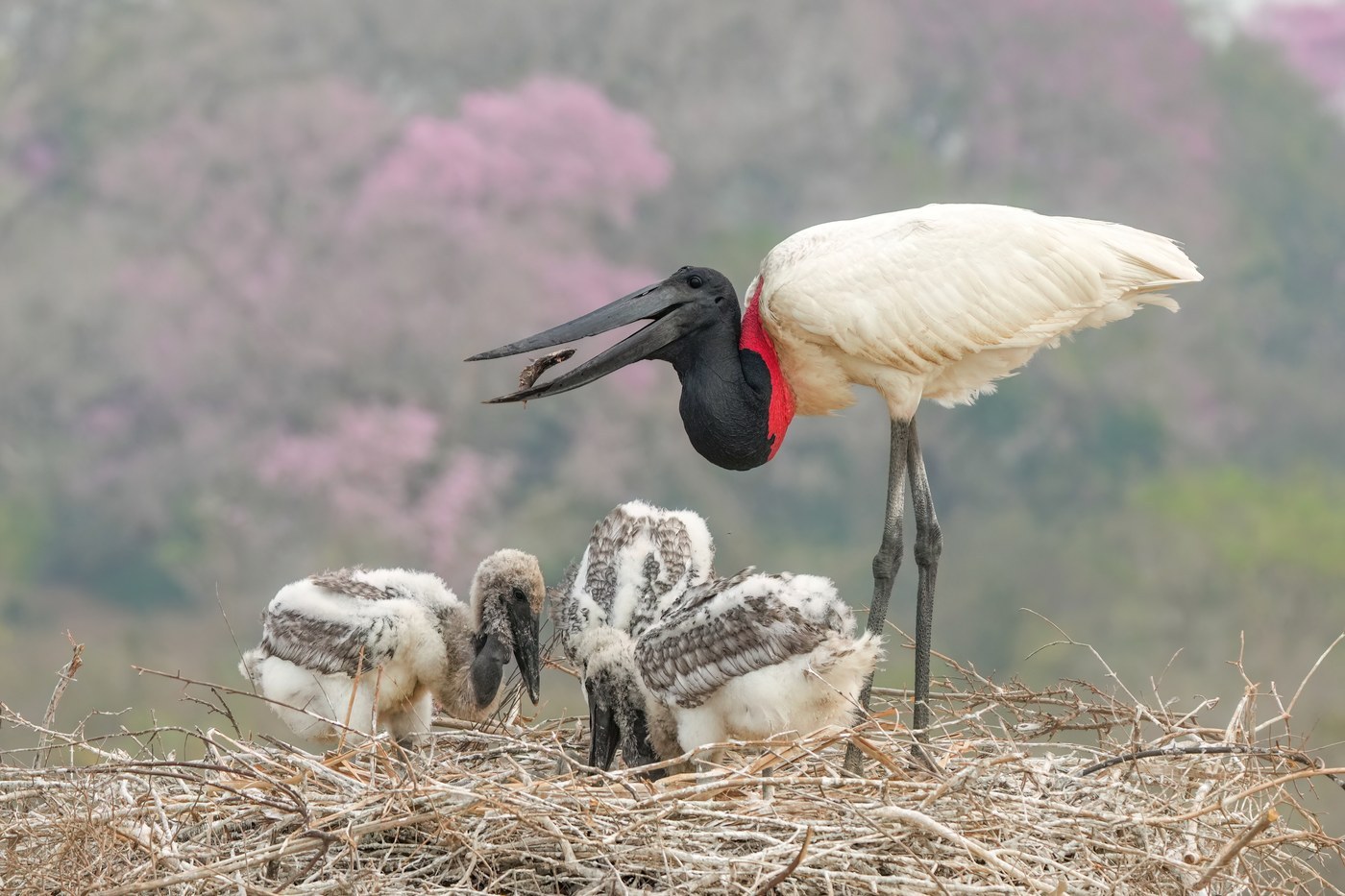
What Jabiru's Feathers Look Like
The Jabiru is the largest flying bird in the Americas, and its feathers are correspondingly massive. Every contour and flight feather on the body is pure white, since the bird's bare black head and neck carry no feathers at all to interrupt that whiteness. Flight feathers are especially notable: primaries can approach two feet in length, broad and rounded in shape, built for the powerful soaring flight of a bird with a wingspan that can reach nine feet. Unlike many large white water birds, the Jabiru shows no black in its flight feathers whatsoever — the entire wing, from covert to primary tip, stays white. Overall feather texture is sturdy and substantial, reflecting the demands of a very large-bodied soaring bird.
Step-by-Step: Is This Feather From a Jabiru?
- Check the size first. A primary feather approaching or exceeding a foot and a half in length, broad and rounded, is consistent with this species' massive scale.
- Confirm there's no black anywhere on the feather. Solid white from base to tip, including on the flight feathers, is a key diagnostic that separates Jabiru from most other large white water birds.
- Judge the shape. Broad, rounded flight feather tips fit a soaring bird adapted for long-distance gliding.
- Rule out smaller storks. If the feather is notably smaller and shows any black, a different stork species is more likely.
- Factor in region. Feathers found from Mexico through Central America into South America support this identification.
Similar Species & How to Tell Them Apart
The Wood Stork, found in overlapping range, is considerably smaller and shows black flight feathers and tail contrasting against a white body — any black on the wingtip or tail rules out Jabiru and points to Wood Stork instead. The American White Pelican is also an enormous white bird sharing some range, but it likewise shows black flight feathers contrasting with its white body and head, another instant disqualifier for Jabiru, whose wings stay entirely white. The White Stork of the Old World has a broadly similar body plan with black flight feathers as well, but does not occur in the Americas, making range alone sufficient to separate it from Jabiru even before checking feather color.
Where & When You'll Find Them
Jabirus inhabit wetlands, marshes, and river floodplains from Mexico through Central America and into South America, especially the Pantanal and Amazon basin regions. They are largely non-migratory, though some populations make seasonal local movements tied to wetland water levels, and molt occurs gradually through the year. Feathers are most likely to be found near large stick nests in wetland trees during the nesting season, or scattered around foraging marshes and floodplains at other times.
Frequently asked questions
What is the most reliable clue for identifying a Jabiru feather?
Completely solid white color with absolutely no black anywhere on the feather, even on the flight feathers — a combination that rules out most similarly large white water birds.
How do I tell Jabiru from Wood Stork by feather?
Wood Stork has black flight feathers and tail contrasting with its white body, while Jabiru's flight feathers stay entirely white.
Could this be an American White Pelican feather instead?
Only if it shows black in the flight feathers, which pelicans have; a fully white primary with no black points to Jabiru rather than pelican.
Why are Jabiru feathers so large?
Jabiru is the largest flying bird in the Americas, with a wingspan up to nine feet, so its flight feathers are correspondingly broad and can approach two feet long.
Where should I look for Jabiru feathers?
Near wetlands, marshes, and river floodplains from Mexico through Central America into South America, especially around large stick nests during nesting season.