

Lesser Prairie-Chicken
Tympanuchus pallidicinctus
A grassland grouse of the southern Great Plains, smaller and paler than its close relative the Greater Prairie-Chicken, with males displaying reddish-purple air sacs during courtship.
- Feather type
- Finely barred body feathers, paler than the Greater Prairie-Chicken, with shorter neck pinnae
- Colours
- Pale brown and buff barring with a short dark tail
- Bird size
- Medium grouse, ~38-41 cm, smaller than the Greater Prairie-Chicken
Found a feather like this?
Identify any feather from a photo, free.
Overview
Overview
The Lesser Prairie-Chicken occupies shortgrass and sand sagebrush prairie of the southern Great Plains, a more arid habitat than that used by the Greater Prairie-Chicken. It shares the same lekking courtship behavior, with males gathering on display grounds to perform booming calls and foot-stamping displays.
Identifying the Feather
Feather Identification
- Body feathers: finely barred in pale brown and buff tones, generally lighter and less contrasting than those of the Greater Prairie-Chicken
- Pinnae feathers: shorter and less prominent than in the Greater Prairie-Chicken, though still raised during display
- Tail feathers: short, dark, and rounded, similar in shape to the Greater Prairie-Chicken but from a smaller-bodied bird
- Size: overall smaller feathers than the Greater Prairie-Chicken, consistent with its smaller body size
- Vs. Greater Prairie-Chicken: paler ground color and finer barring are the main plumage clues, though the two species have limited range overlap
Plumage & Molt
Plumage Notes
Both sexes share a pale brown-and-buff barred pattern, with males slightly larger and showing bare reddish-purple neck skin (air sacs) along with shorter pinnae feathers than the Greater Prairie-Chicken. Females lack the pinnae and are more evenly barred. Juveniles resemble females. A single molt occurs annually after breeding.
Habitat & Range
Habitat & Range
Lesser Prairie-Chickens inhabit shortgrass prairie and sand sagebrush rangeland in a limited region of the southern Great Plains, including parts of Kansas, Oklahoma, Texas, Colorado, and New Mexico. The species is non-migratory, remaining in the same general grassland landscape throughout the year.
Behavior & Field Notes
Behavior & Field Notes
Males display on communal leks, inflating reddish-purple air sacs, producing a booming call, and stamping their feet while raising short pinnae feathers. Diet includes seeds, leaves, and insects, shifting with seasonal availability. Nests are shallow scrapes hidden in grass or low shrub cover. The species can be locally common on leks in spring but is otherwise cryptic and easily overlooked in its arid grassland habitat.
Frequently asked questions
How do Lesser Prairie-Chicken feathers differ from Greater Prairie-Chicken feathers?
They are generally paler with finer barring and come from a smaller-bodied bird, though the two species are similar enough that range is often the most useful distinguishing clue.
What color are the male's neck air sacs?
The bare neck skin inflated during display is reddish-purple, compared to the more orange-yellow air sacs of the Greater Prairie-Chicken.
Are the pinnae feathers as long as the Greater Prairie-Chicken's?
No, Lesser Prairie-Chicken pinnae feathers are typically shorter and less prominent.
What habitat clue helps confirm identification?
This species is associated with shortgrass and sand sagebrush prairie of the southern Great Plains, a drier habitat than the tallgrass prairie used by the Greater Prairie-Chicken.
Lesser Prairie-Chicken guides
In-depth guides for identifying and understanding Lesser Prairie-Chicken.

Other feathers you may enjoy

Ring-necked Pheasant
Body (contour), tail, and wing feathers

Bornean Peacock-pheasant
Contour and tail feathers with iridescent ocelli

Crested Argus
Extremely elongated, ocellated (eyespot-patterned) tail feathers among the longest of any bird; tall, erectile crest

Grey Partridge
Body and flank feathers

Willow Ptarmigan
Larger, stockier body feathers with warmer rufous tones in summer; tail feathers black year-round

Wild Turkey
Broad, iridescent body feathers and large flight and tail feathers

Bulwer's Pheasant
Contour feathers and elongated white tail feathers
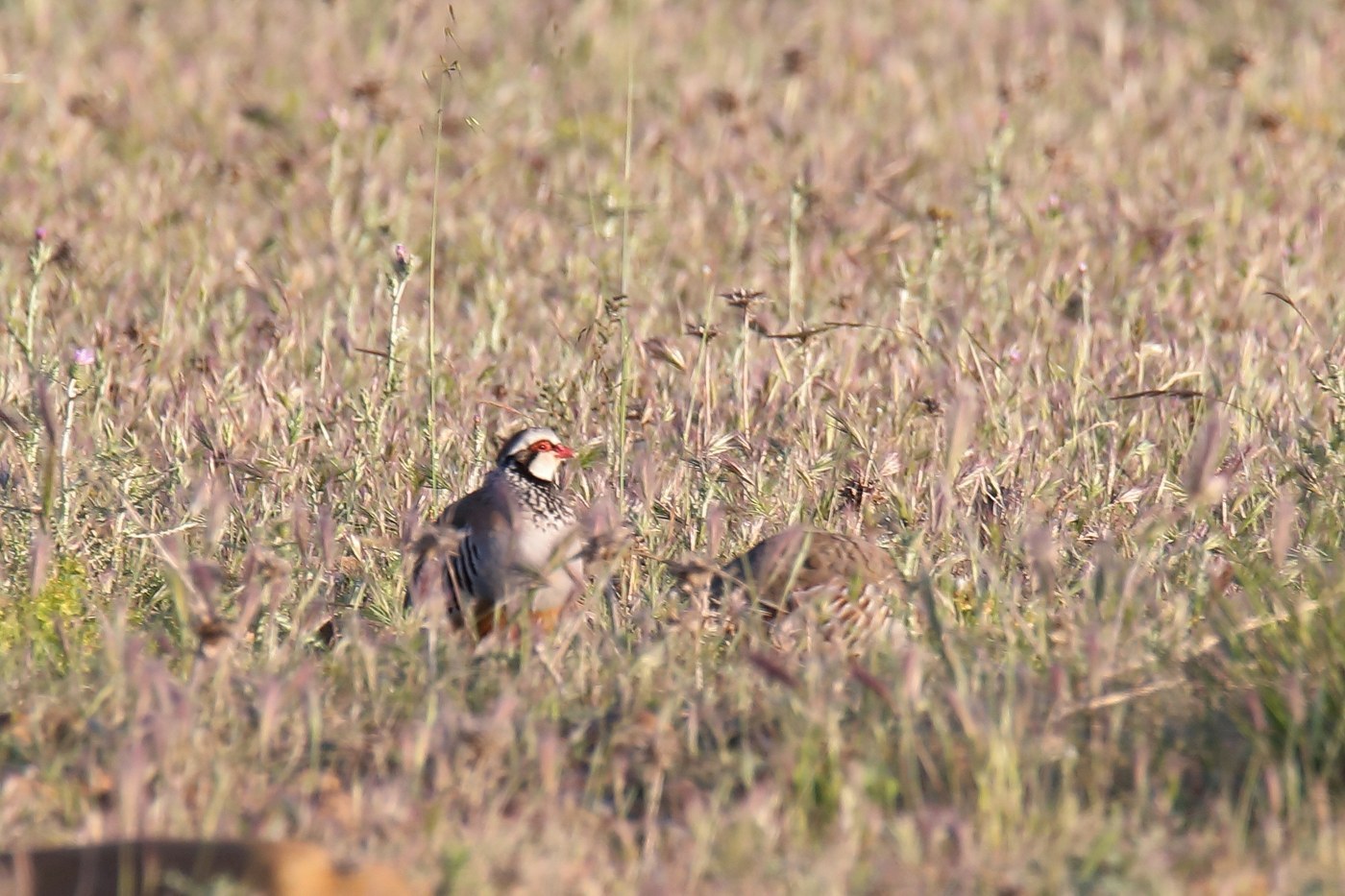
Red-legged Partridge
Flank, body, and flight feathers

White-tailed Ptarmigan
Small body feathers with a tail that stays pure white year-round, unlike other ptarmigan

Edwards's Pheasant
Contour and tail feathers

Sooty Grouse
Dense, plain contour feathers with a pale-tipped, fanned tail

Snow Partridge
Finely vermiculated barred contour feathers