
How to Identify Little Penguin Feathers
A guide to identifying Little Penguin feathers by their unique short, stiff, scale-like structure and distinctive blue-grey coloring unlike any other penguin.
Read the full Little Penguin encyclopedia entry →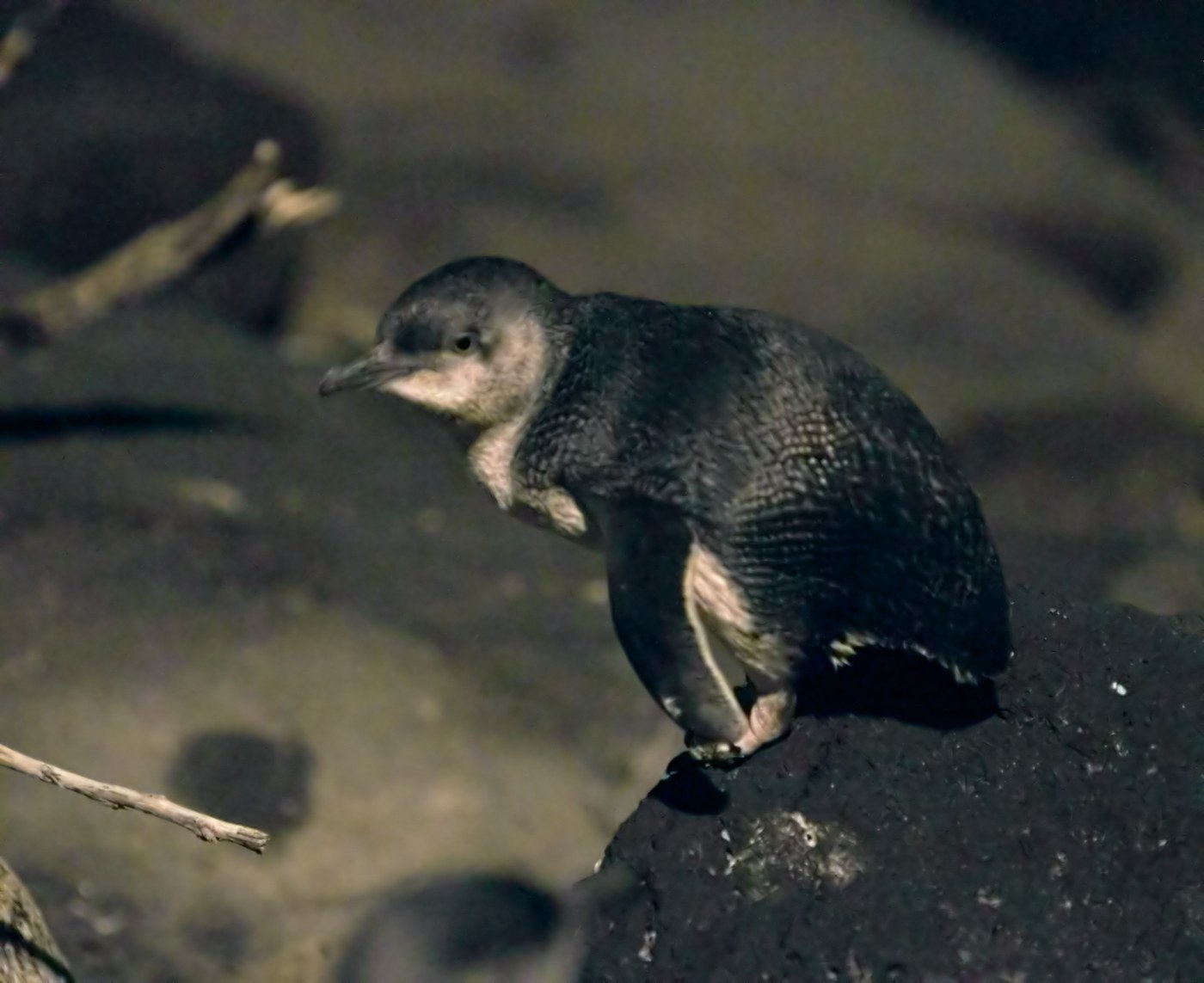
What Little Penguin's Feathers Look Like
Penguin feathers are unlike those of almost any other bird, and this is the first thing to check. Little Penguin feathers are short, stiff, narrow, and slightly curved, densely packed and overlapping like scales rather than forming the long, flat vanes typical of flighted birds. Individually they measure only 2-4 cm, feel almost plastic-like or waxy to the touch, and lack the soft, flexible structure of a typical contour feather. This dense, tile-like covering traps air for insulation and waterproofing rather than for flight, since Little Penguins are flightless.
Coloration is the clincher for species-level identification: Little Penguin is the only penguin species with slate blue-grey to indigo upperparts rather than black — a genuinely distinctive shade sometimes described as "fairy blue." The underparts are clean white, sharply demarcated from the blue-grey back, flippers, and head. Flipper feathers (modified wing feathers) are especially small, stiff, and paddle-shaped, unlike any flight feather from a flying bird.
Step-by-Step: Is This Feather From a Little Penguin?
- Check the texture first. Stiff, short, curved, scale-like feathers that don't lie flat immediately suggest a penguin rather than any flighted seabird.
- Confirm the color. A blue-grey (not black) upperside is diagnostic for Little Penguin among all penguin species.
- Look at the white underparts. A crisp, clean white with no streaking or spotting supports Little Penguin.
- Consider the size. Feathers under about 4 cm are consistent with the world's smallest penguin species.
- Rule out flight feather structure. If the feather has a flexible vane built for lift, it is not a penguin feather at all, regardless of color.
Similar Species & How to Tell Them Apart
- All other penguin species — every other penguin has black (not blue-grey) upperparts, making the blue-grey wash effectively unique to Little Penguin worldwide.
- Blue-grey seabirds like petrels or shearwaters — these have soft, flexible, typically shaped flight feathers built for gliding, easily distinguished from a penguin's stiff scale-like feather by texture alone.
- Fur or plastic fragments mistaken for feathers — because the feathers are so short, stiff, and non-vane-like, they are sometimes mistaken for animal fur or synthetic material at first glance; look closely for a faint central shaft running through the feather to confirm it truly is a feather.
Where & When You'll Find Them
Little Penguins nest in burrows and rock crevices along the coasts of southern Australia and New Zealand, coming ashore only after dark to avoid predators. Molted feathers accumulate heavily around breeding colonies during the annual catastrophic molt in late summer to early autumn, when adults shed their entire plumage over roughly two to three weeks while fasting ashore, making colony beaches and burrow entrances the most reliable place to find them. Outside the molt period, occasional loose feathers can also wash up along nearby beaches or be found tangled in coastal vegetation near well-used colony access paths.
Frequently asked questions
How can I be sure a feather is from a penguin and not another seabird?
Check the texture — penguin feathers are short, stiff, curved, and densely packed like scales, feeling almost waxy, very different from the soft, flexible flight feathers of gulls, petrels, or shearwaters.
What color should I look for to confirm Little Penguin specifically?
A slate blue-grey to indigo upperside is unique to Little Penguin among all penguin species, which otherwise all show black upperparts.
Why are Little Penguin feathers so short and stiff?
They're adapted for insulation and waterproofing in a flightless diving bird rather than for generating lift, so they're densely packed and scale-like instead of long and flexible.
When is the best time to find Little Penguin feathers?
During the catastrophic molt in late summer to early autumn, when adults shed their entire plumage over about two to three weeks while fasting at their breeding colony.
Where along the coast should I look?
Around burrow entrances, rock crevices, and beaches near breeding colonies in southern Australia and New Zealand, where birds come ashore after dark.