
How to Identify Manx Shearwater Feathers
A guide to recognizing the sharply bicolored black-and-white feathers of the Manx Shearwater, a long-distance-flying Atlantic seabird.
Read the full Manx Shearwater encyclopedia entry →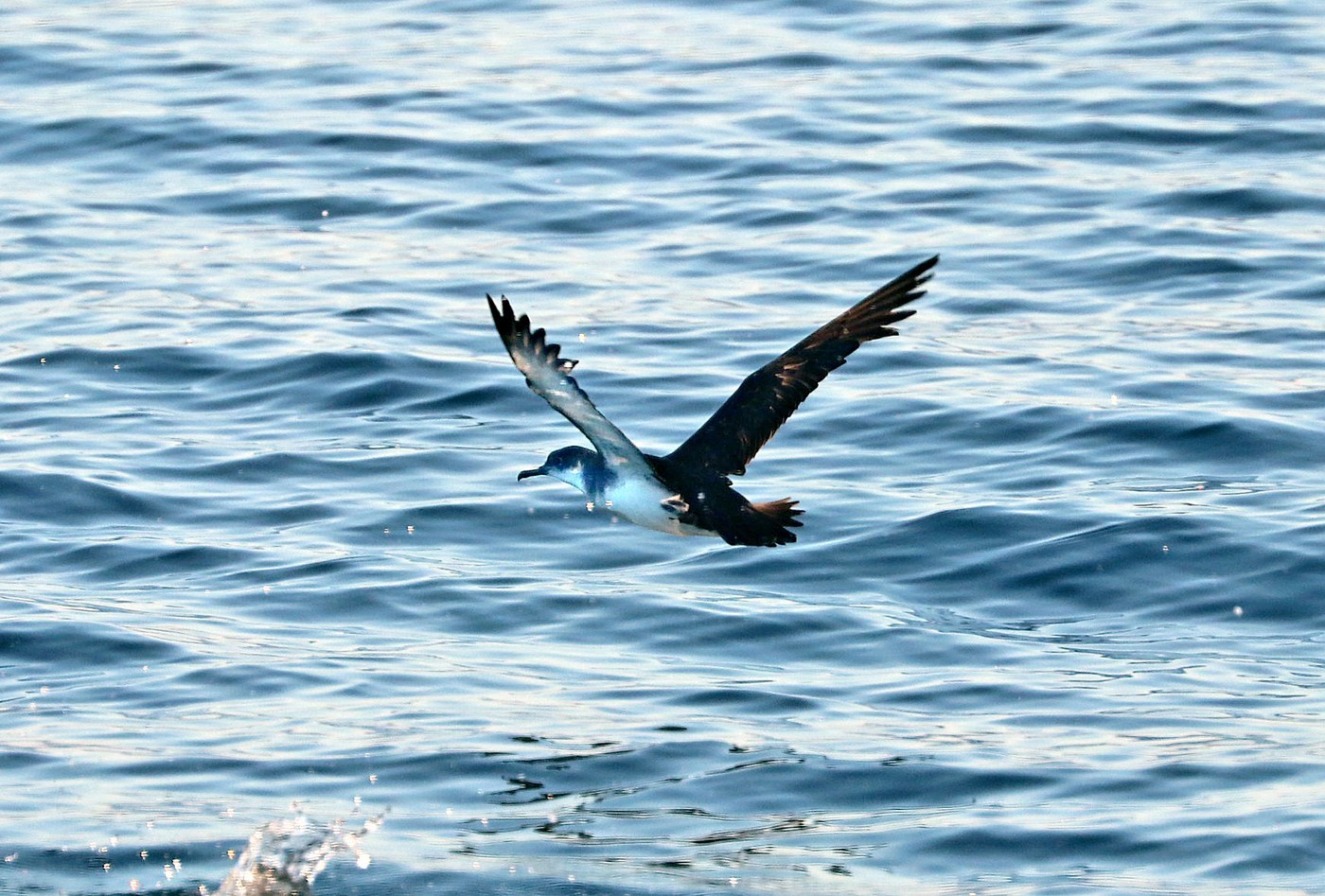
What Manx Shearwater's Feathers Look Like
The Manx Shearwater is a medium-sized Atlantic seabird built for a life of gliding low over waves, and its feathers reflect a crisp, high-contrast pattern. Upperpart feathers — from the crown, back, and upper wings — are sooty black to blackish-brown, appearing very dark and almost uniform. Underpart feathers, from the chin down through the belly, are clean white, with a sharp boundary between dark and light rather than a gradual blend. The border between black and white on facial feathers is notably crisp, often falling right around eye level, so a feather from the face or neck may show a clean line rather than mottling. Flank feathers sometimes show a dark smudge or patch, a helpful confirming detail. Wing feathers are long, narrow, and stiff, built for the shearwater's characteristic stiff-winged gliding flight low over the ocean surface, quite different from the more flexible flight feathers of gulls or terns sharing similar habitat.
Step-by-Step: Is This Feather From a Manx Shearwater?
- Check for sharp black-and-white contrast. A feather that is either solidly sooty-black or clean white, without gray intermediate tones or mottling, fits this species' bold two-tone pattern.
- Look for a crisp dividing line on any face or neck feather. A feather showing a sharp transition from black to white, rather than a blended or smudged boundary, supports Manx Shearwater.
- Examine flank feathers for a dark smudge. A white flank feather with an isolated dark patch is a specific, useful clue for this species.
- Assess wing feather stiffness. Long, narrow, stiff flight feathers, rather than soft or flexible ones, match this species' gliding flight adaptation.
- Consider the setting. Feathers found on ocean beaches, offshore islands, or near burrow colonies rather than inland freshwater support a shearwater over a similarly patterned landbird.
Similar Species & How to Tell Them Apart
Balearic Shearwater and other closely related shearwaters can show a similar body plan but tend toward duller, browner underparts rather than crisp white, making a truly clean white-and-black feather lean toward Manx Shearwater specifically. Storm-petrels share dark upperparts and sometimes white patches, but they are much smaller birds with correspondingly tiny, delicate feathers, easily ruled out by size. Auks such as the Razorbill or Common Murre also show sharp black-and-white contrast, but their feathers are shorter, stiffer, and more rounded, built for wing-propelled diving rather than gliding, and their body shape is stockier — feather stiffness and shape, not just color, help separate shearwaters from auks.
Where & When You'll Find Them
Manx Shearwaters breed colonially in burrows on offshore islands around the North Atlantic, especially in the United Kingdom and Ireland, spending the rest of the year far out at sea, including long migrations to wintering grounds off South America. Because they only come ashore to breeding burrows at night to avoid predators, feathers found on the surface near colonies are often connected to burrow activity, chick-rearing, or predation events rather than casual daytime visits. The breeding season runs roughly from spring through late summer, with adults and fledging chicks both shedding feathers around burrow entrances, making that period, especially late summer as chicks fledge, a good time to find feathers near known colonies.
Frequently asked questions
What single feature best confirms a Manx Shearwater feather?
A sharp, crisp black-to-white transition (rather than a blended or mottled boundary) on a face or body feather is the strongest clue for this species.
How does this differ from a similar shearwater like the Balearic Shearwater?
Balearic Shearwater tends to show duller, browner underparts rather than the crisp clean white typical of Manx Shearwater, so a truly bright white-and-black feather favors Manx.
Why would feathers appear near burrow entrances rather than in the open?
Manx Shearwaters only visit their breeding colonies at night and nest in burrows, so feathers often accumulate near burrow entrances from routine activity, chick growth, or occasional predation.
Can I distinguish a shearwater feather from an auk feather like a Razorbill's?
Yes — shearwater flight feathers are long, narrow, and built for gliding, while auk feathers tend to be shorter, stiffer, and more rounded for underwater wing-propelled diving.
When is the best time to find feathers near a colony?
Late summer, as chicks approach fledging and adult activity around burrows peaks, tends to be a particularly productive time near known breeding colonies.