
How to Identify Marabou Stork Feathers
A guide to recognizing the huge black wing feathers and soft white undertail plumes of the Marabou Stork, a massive African scavenging bird.
Read the full Marabou Stork encyclopedia entry →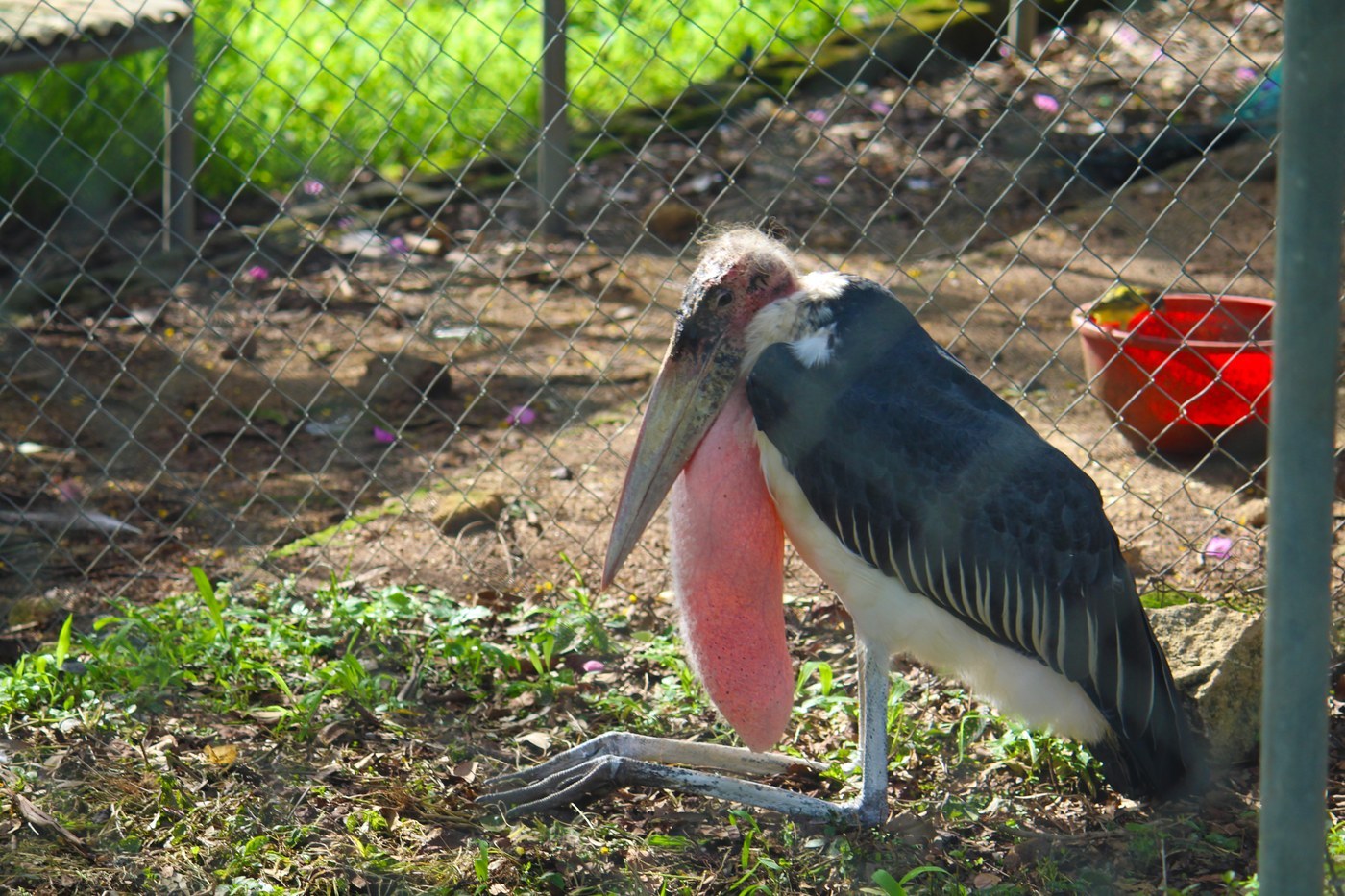
What Marabou Stork's Feathers Look Like
The Marabou Stork is one of the largest flying birds in the world, and its feathers are correspondingly enormous. Wing and back feathers are glossy black to blackish-gray, and primary flight feathers can be extraordinarily long — among the longest of any bird, sometimes measured in decimeters rather than centimeters — reflecting the huge wingspan needed to soar on thermals while scavenging. Underpart feathers are clean white, covering the belly and, notably, forming a fluffy mass of soft white plumes around the undertail and thigh area — these undertail plumes are unusually long, loose, and downy, and were historically valued in the fashion trade as "marabou feathers," a term that persists today for any fluffy decorative plume material. Neck feathers are sparse to absent on the living bird's bare, blotchy pink-and-gray skin, so neck-area material is more often bare skin than feather. A loose ruff of small white feathers sometimes appears at the base of the neck, contrasting with the mostly bare skin above it.
Step-by-Step: Is This Feather From a Marabou Stork?
- Check for extreme size first. Wing and flight feathers from this species can be dramatically larger than those of nearly any other land bird, a strong initial clue given the bird's huge size.
- Look for very soft, fluffy white plume feathers. Loose, downy white plumes, distinct from stiff flight feathers, match the species' famous undertail "marabou" plumage.
- Confirm a stark black-and-white body pattern. Black wings and back paired with white underparts and undertail fits this species' overall look.
- Assess flight feather stiffness and length together. Extremely long, broad, sturdy black flight feathers suit a huge soaring scavenger rather than a smaller black-winged bird.
- Consider the presence of bare skin nearby. If skin or wattle-like material is found alongside feathers, that supports this species, since Marabou Storks have extensively bare, blotchy necks and heads.
Similar Species & How to Tell Them Apart
Other large African storks, such as the Yellow-billed Stork or African Openbill, share a generally black-and-white pattern, but neither grows the same dramatically soft, downy undertail plumes that define Marabou Stork, and both are noticeably smaller with proportionately shorter flight feathers. Vultures sharing scavenging habitat, such as the White-backed Vulture, also have large dark flight feathers, but vulture body (contour) feathers tend toward brown tones rather than the Marabou's cleaner black-and-white split, and vultures lack the extensive fluffy white undertail plumage. The sheer scale of Marabou Stork's feathers — among the largest of any flying bird — combined with the soft white plume feathers is a fairly unique combination in its range.
Where & When You'll Find Them
Marabou Storks are found across sub-Saharan Africa, favoring savanna, wetland edges, garbage dumps, and areas near human settlements where they scavenge alongside vultures, as well as wetlands where they hunt fish and small animals. Feathers are commonly found near communal roosting and nesting colonies, which are often located in tall trees near towns, lakes, or landfills, as well as around carcasses and feeding sites shared with vultures. Molt in this large, long-lived stork is not tightly confined to a narrow season, so feathers can be found across much of the year, though increased activity around breeding colonies (timing varies by region, often linked to local dry or wet season patterns) can make certain periods more productive for finding feathers.
Frequently asked questions
Why are Marabou Stork feathers so unusually large?
The species has one of the largest wingspans of any flying bird, adapted for soaring on thermals while scavenging, which requires correspondingly enormous wing and flight feathers.
What are "marabou feathers" in the fashion sense, and are they from this bird?
Yes, the fluffy decorative plume material historically called "marabou" in fashion and crafts originally referred to this species' soft, downy undertail feathers, though the term is now used generically for similar fluffy plumes.
How do I tell this apart from a vulture feather found at the same carcass?
Vulture body feathers tend to run brown rather than sharply black-and-white, and vultures lack the soft, fluffy white undertail plumage that distinguishes Marabou Stork.
Why would I find bare skin material alongside the feathers?
Marabou Storks have extensively bare, blotchy pink-and-gray skin on the head and neck rather than feathers in that area, so skin fragments can turn up alongside body feathers from carcasses or roost sites.
Where are feathers most commonly found?
Near communal roosting and nesting trees, often close to towns, lakes, or landfills, as well as around carcasses and feeding areas shared with vultures.