
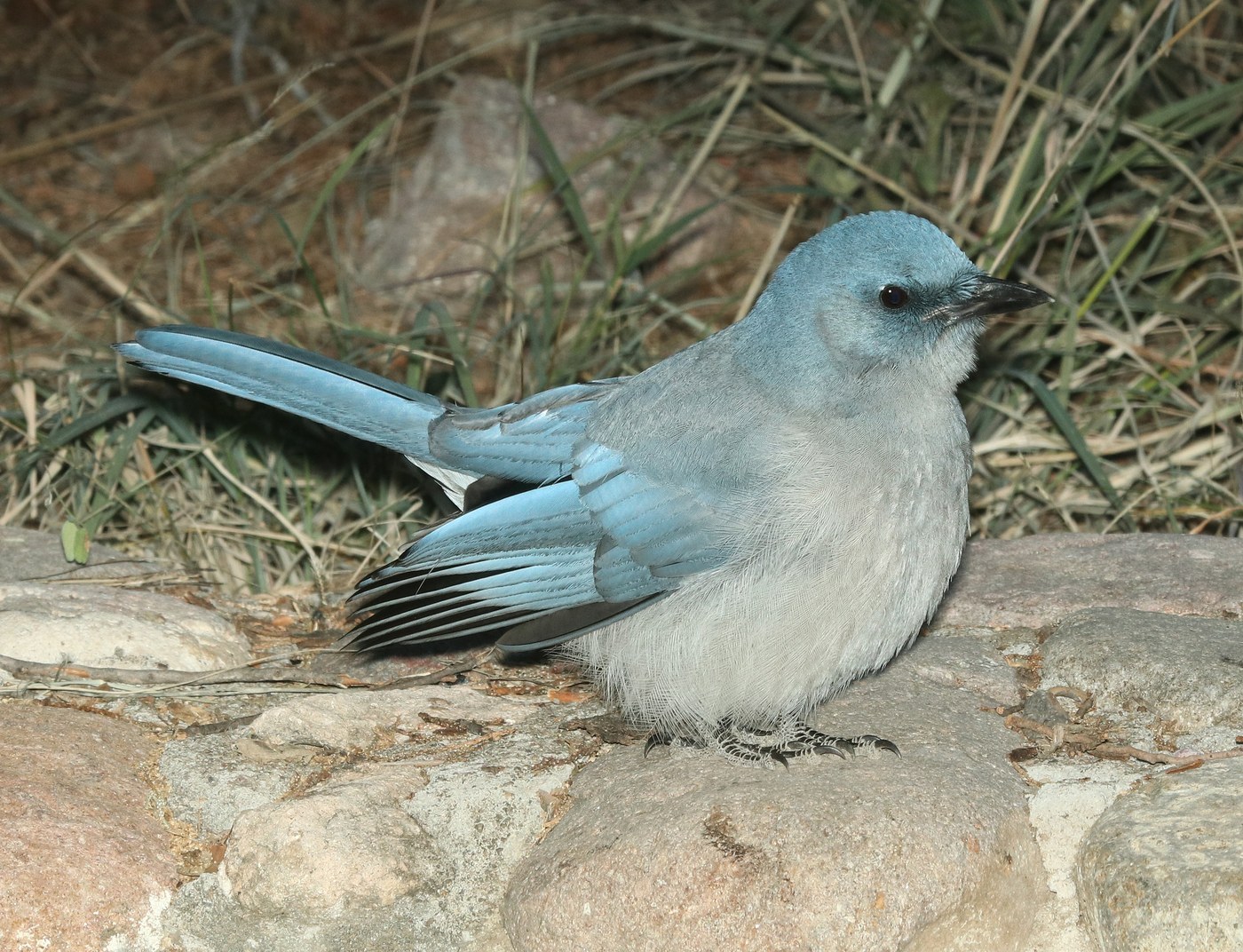
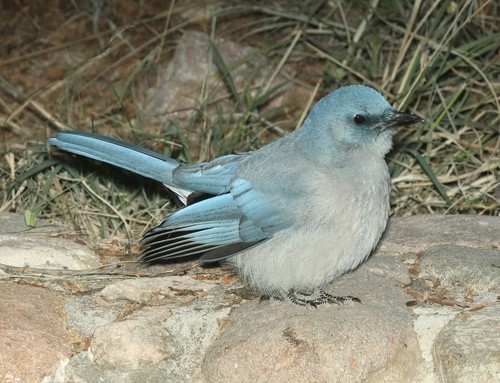
Mexican Jay
Aphelocoma wollweberi
A blue-and-grey jay of oak and pine-oak canyons in the southwestern US and Mexico, distinguished from similar scrub-jays by its plain grey underparts without a breast band.
- Feather type
- Contour, wing, and tail feathers
- Colours
- Blue head, wings, and tail with a pale grey back and underparts, no distinct breast necklace
- Bird size
- Jay-sized, ~28-31 cm
Found a feather like this?
Identify any feather from a photo, free.
Overview
The Mexican Jay ranges through oak and pine-oak woodland canyons of the southwestern United States and much of Mexico's highlands, where it lives in stable, long-term social groups. It closely resembles other Aphelocoma scrub-jays in its blue-and-grey coloring but generally lacks the distinct breast necklace band shown by species like the Woodhouse's Scrub-Jay, giving it a plainer, more uniformly pale underside.
It is well studied for its complex cooperative social system, with groups persisting across many years and generations.
Identifying the Feather
- Head, wing, and tail feathers are blue, without a crest, giving a smooth-crowned profile typical of scrub-jays
- Back feathers are pale grey, generally paler and less brown-toned than in some related scrub-jay species
- Underparts feathers are pale grey with little to no contrasting breast band, a useful distinction from species like the Woodhouse's Scrub-Jay that show a more defined necklace marking
- Throat feathers are only faintly paler than the breast, lacking sharp contrast
Plumage & Molt
Sexes look alike in plumage. Juveniles show duller, grayer-blue feathering on the head and wings that brightens with maturity through successive molts. One complete molt occurs annually in adults after breeding.
Habitat & Range
- Found in the mountains of the southwestern United States, including parts of Arizona and New Mexico, extending south through much of the Mexican highlands
- Favors oak and pine-oak woodland in canyons and foothill mountain ranges
- Non-migratory, with stable social groups occupying the same territory across many years
Behavior & Field Notes
Mexican Jays live in large, stable social groups that persist across multiple years, with related and unrelated birds cooperating to raise young and defend territory. They cache acorns extensively, an important food source in oak woodland, and forage both on the ground and in trees for insects and small animals as well. Calls include a variety of harsh, querulous notes used for group coordination, and nests are built in oak or pine trees within group territories.
Frequently asked questions
How can I tell this feather from a Woodhouse's Scrub-Jay feather?
The main clue is the underparts: Mexican Jay feathers from the breast area lack the more distinct blue-grey necklace band seen in Woodhouse's Scrub-Jay, appearing more uniformly pale grey instead.
Does this species have a crest like a Blue Jay?
No, like other scrub-jays it lacks a crest entirely, giving the blue head feathers a smooth, rounded profile.
What social behavior is this species particularly known for?
It forms large, long-lasting cooperative social groups that persist across many years, with group members jointly defending territory and helping raise young.
Where would I most likely find this species' feathers?
In oak and pine-oak woodland canyons across the mountains of the southwestern United States and much of the Mexican highlands.
Mexican Jay guides
In-depth guides for identifying and understanding Mexican Jay.
Other feathers you may enjoy

Yellow-billed Magpie
Contour, wing, and tail feathers

White-throated Magpie-Jay
Contour, wing, and tail feathers

White-necked Crow
Contour and flight feathers

Slender-billed Crow
Contour and flight feathers

Sinaloa Crow
Contour and flight feathers

Siberian Jay
Contour, wing, and tail feathers

Yellow-billed Blue Magpie
Contour, wing, and tail feathers
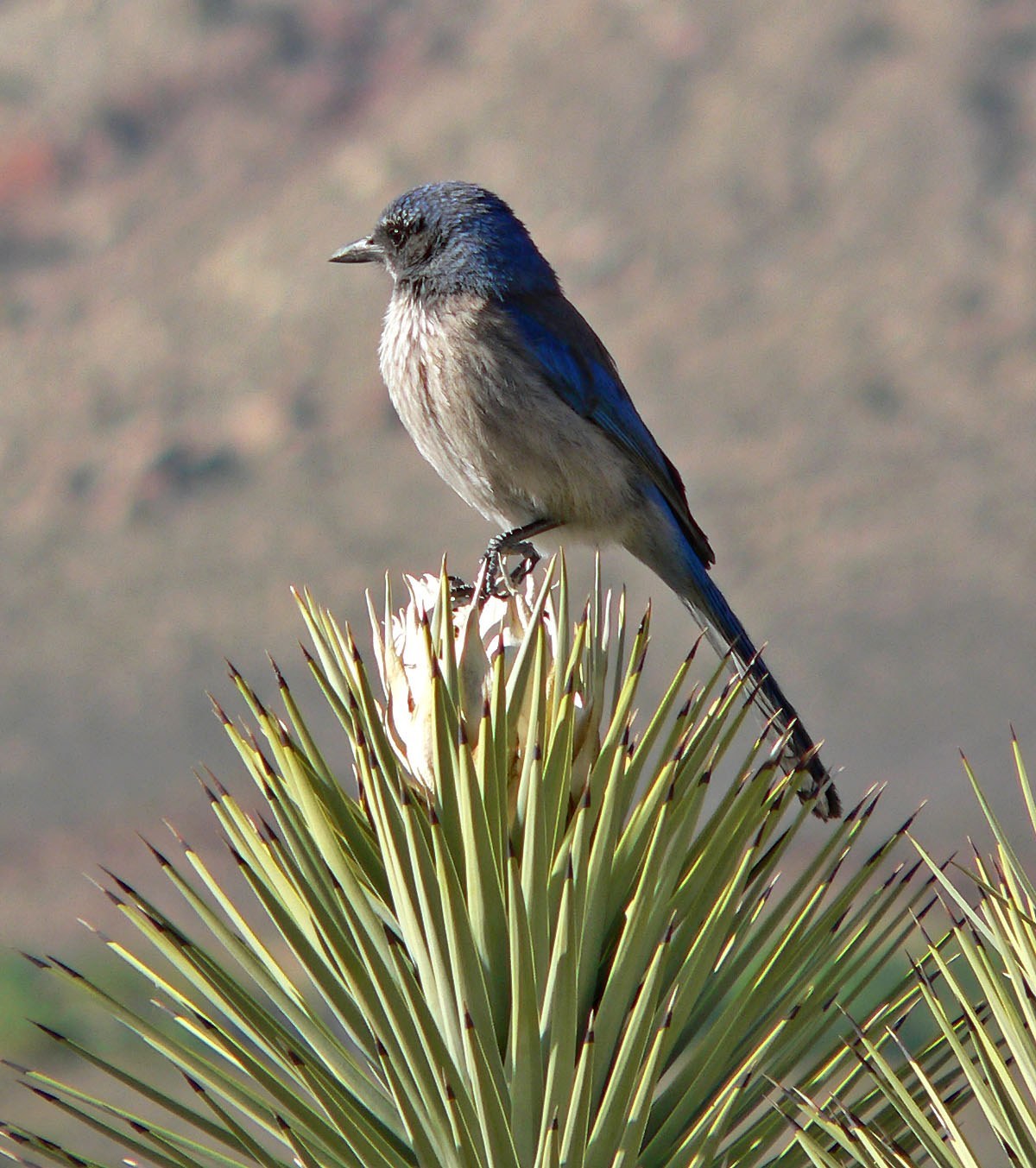
Woodhouse's Scrub-Jay
Contour and flight feathers
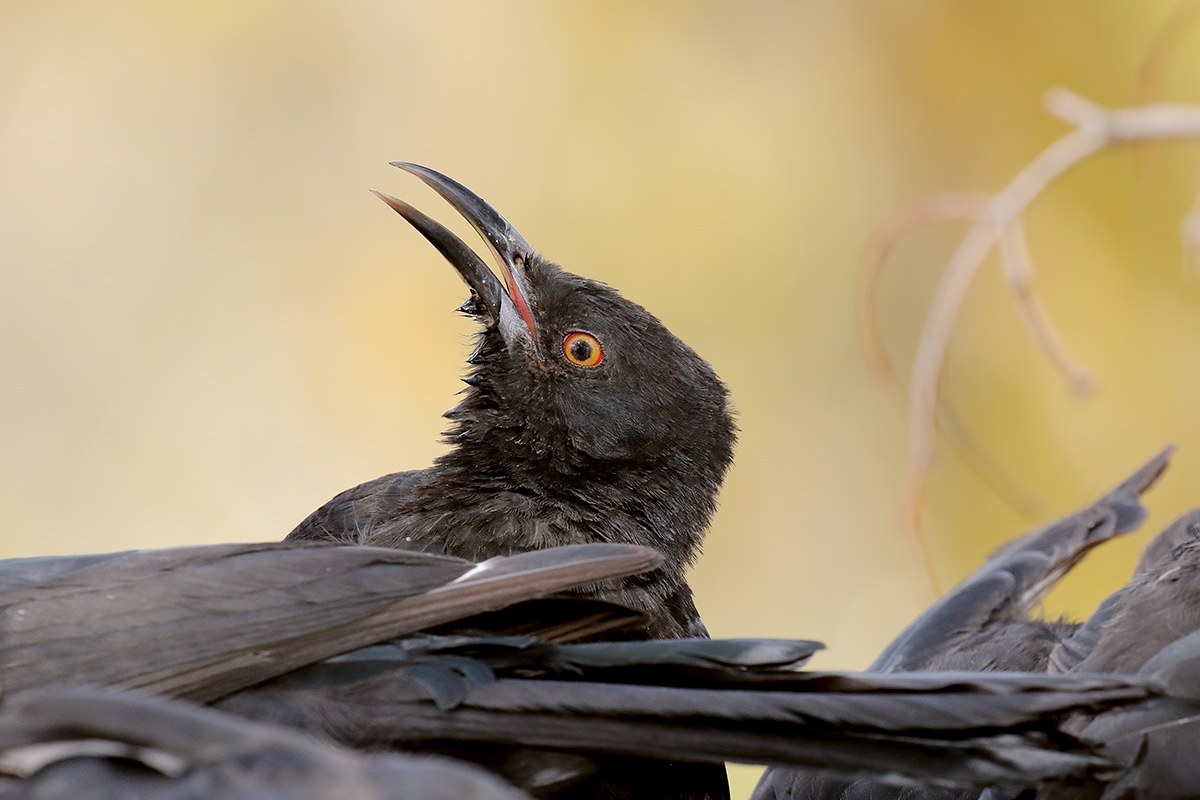
White-winged Chough
Contour and flight feathers

Rufous Treepie
Long, graduated tail feathers; loose body contour feathers

Thick-billed Raven
Contour and flight feathers
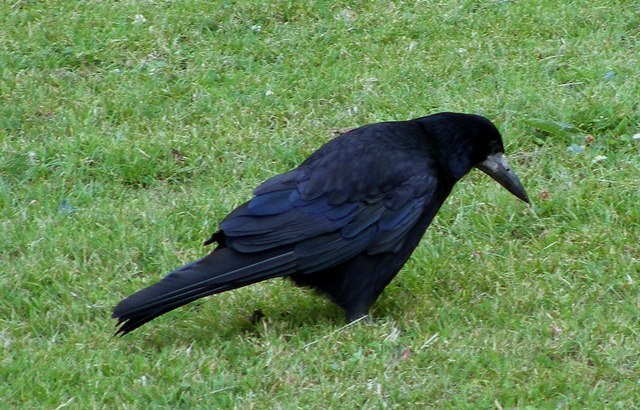
Rook
Glossy purple-black flight and body feathers; loose, shaggy thigh (leg) feathers