
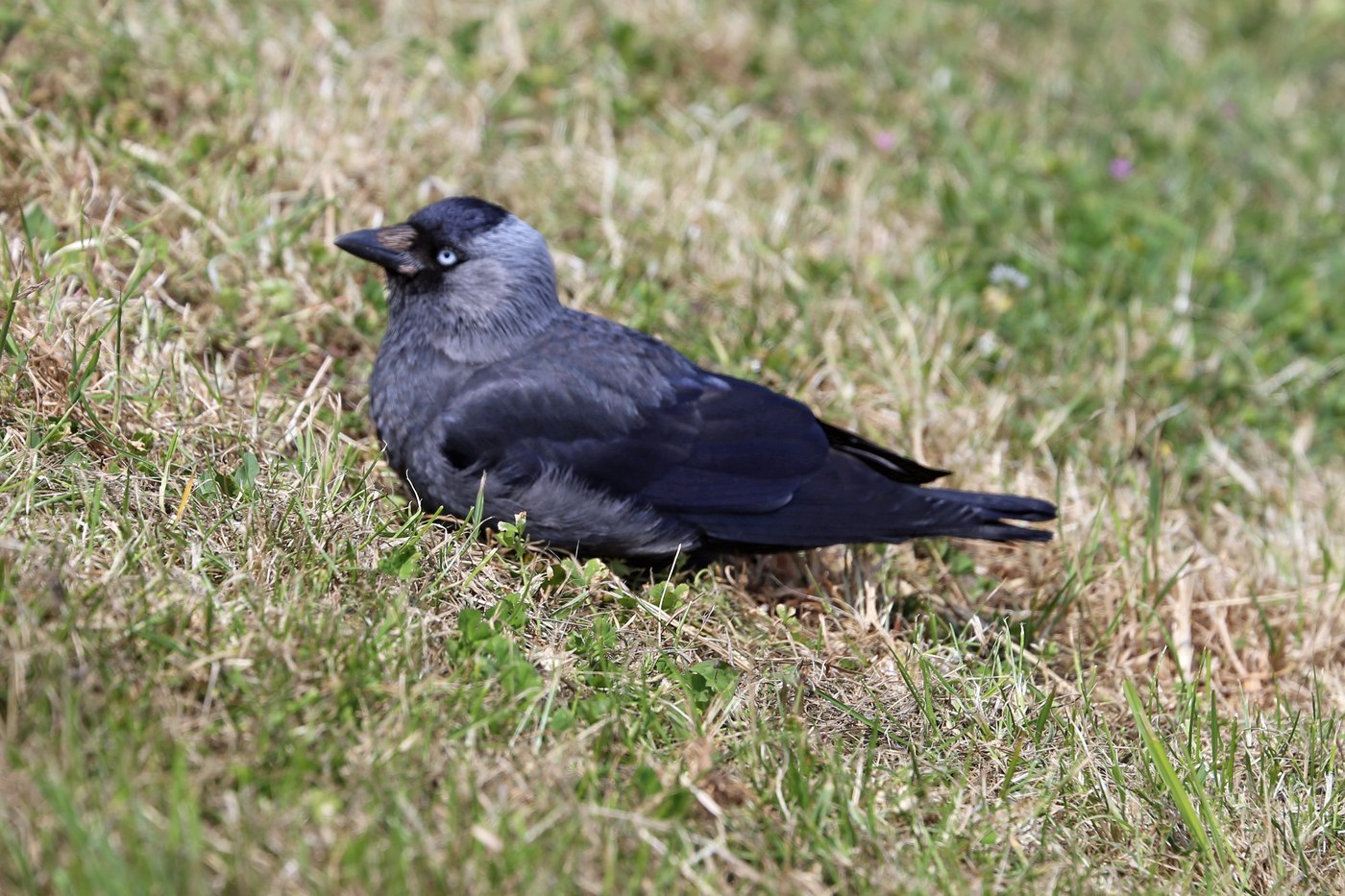
Western Jackdaw
Coloeus monedula
The smallest of the common European corvids, recognized by its glossy black plumage set off by a silvery-grey neck patch and a pale, staring eye.
- Feather type
- Small, glossy black flight and body feathers with contrasting grey nape feathers
- Colours
- Black overall with a silvery-grey nape and hindneck, pale iris
- Bird size
- Small corvid, ~34 cm
Found a feather like this?
Identify any feather from a photo, free.
Overview
The Western Jackdaw is a compact, sociable member of the crow family, often seen in noisy flocks wheeling around church towers, cliffs, and old buildings. Its comparatively small size and quick, agile flight distinguish it readily from larger crows and rooks with which it often associates.
Jackdaws are widespread residents across Europe, North Africa, and western Asia, thriving alongside humans in towns and villages as well as in more natural cliff and woodland edge habitats.
A Jackdaw feather is usually recognized by its comparatively small size for a corvid and, on head and neck feathers, the soft silvery-grey tone that contrasts with the glossy black plumage found elsewhere on the body.
Identifying the Feather
Size and shape
- Notably smaller and more compact than feathers from crows, rooks, or ravens, reflecting the Jackdaw's smaller overall size among corvids.
- Flight feathers are proportionately shorter and less broad than those of a Carrion Crow.
Color pattern
- Most body and flight feathers are solid glossy black with a slight blue-grey sheen.
- Feathers from the nape and sides of the neck show a distinctive pale silvery-grey wash, unlike any other common black corvid.
Shaft and texture
- Shafts are dark and the feathers have a fairly soft, dense texture typical of corvids, but reduced in scale compared to the larger species.
Confusion species
Compared to a Rook or Carrion Crow feather, a Jackdaw feather is noticeably smaller with a less imposing profile; the grey-washed nape feather is diagnostic and not shared by any other common black European corvid.
Plumage & Molt
Adult Jackdaws have a glossy black crown, face, throat, wings, and underparts, contrasting with a silvery-grey nape and hindneck. The eye is pale grey-white, giving a distinctive staring appearance.
Males and females look alike. Juveniles are duller and sootier overall, with a darker eye that lightens with age and less contrast on the neck.
Jackdaws undergo a complete molt after breeding in late summer, replacing flight and body feathers before the colder months.
Habitat & Range
Jackdaws nest colonially in cavities, using holes in old buildings, church towers, cliffs, quarries, and mature trees. They forage in open farmland, parks, and grasslands, often in mixed flocks with Rooks.
The species is largely resident across its wide range spanning Europe, North Africa, and western and central Asia, with some northern and eastern populations shifting south in winter.
Behavior & Field Notes
Jackdaws are highly social, gregarious birds that feed on a broad diet of invertebrates, seeds, and scraps, often foraging on open ground in flocks. They frequently associate with Rooks and other corvids at communal roosts.
They nest in cavities, laying eggs on a lining of grass and other soft material within tree holes, cliff crevices, or building cavities. Their call is a sharp, metallic 'chak' or 'jack', often repeated in flight.
A feather showing small size, glossy black color, and a grey-washed neck patch found near old buildings, cliffs, or farmland is a strong indicator of Jackdaw.
Frequently asked questions
How do I know a feather is from a Jackdaw and not a Crow?
Jackdaw feathers are noticeably smaller than Crow feathers, and neck feathers often show a silvery-grey wash absent in all-black Carrion Crow feathers.
Is grey coloring always present on Jackdaw feathers?
The grey wash is mainly limited to nape and neck feathers; flight and most body feathers are glossy black without grey.
What is the typical size range for a Jackdaw flight feather?
Generally shorter and narrower than flight feathers from Rooks, Crows, or Ravens, consistent with the Jackdaw's smaller body size.
Where are Jackdaw feathers commonly found?
Near old buildings, church towers, cliffs, and farmland where Jackdaws nest in cavities and forage in flocks.
Do juvenile Jackdaws have different colored feathers?
Juveniles appear duller and sootier with less contrast between the black plumage and grey neck patch, becoming more defined with age.
Western Jackdaw guides
In-depth guides for identifying and understanding Western Jackdaw.
Western Jackdaw identified by the community
Real feathers identified with Feather Identifier.

Other feathers you may enjoy

Yellow-billed Magpie
Contour, wing, and tail feathers

White-throated Magpie-Jay
Contour, wing, and tail feathers

White-necked Crow
Contour and flight feathers

Slender-billed Crow
Contour and flight feathers

Sinaloa Crow
Contour and flight feathers

Siberian Jay
Contour, wing, and tail feathers

Yellow-billed Blue Magpie
Contour, wing, and tail feathers
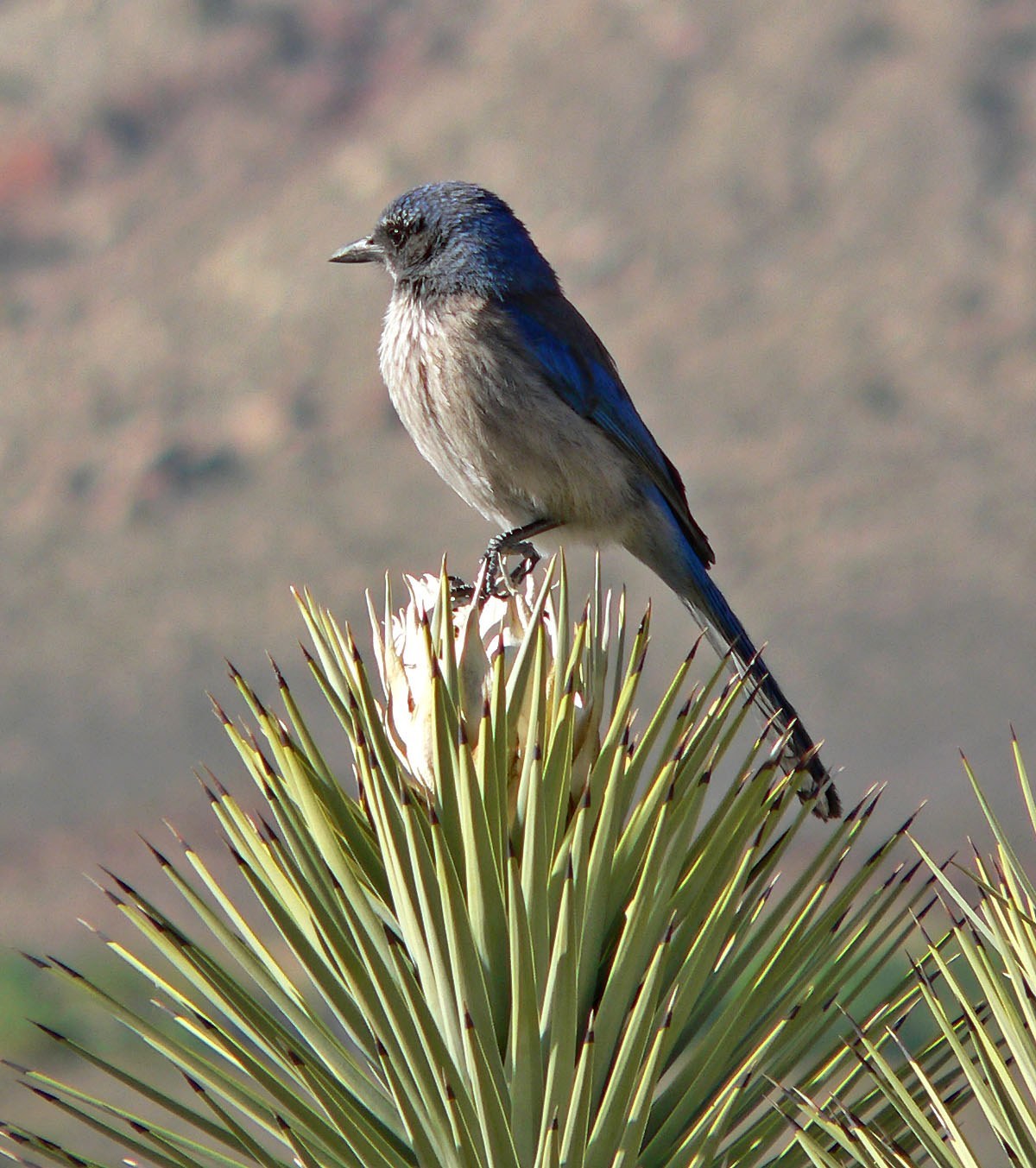
Woodhouse's Scrub-Jay
Contour and flight feathers
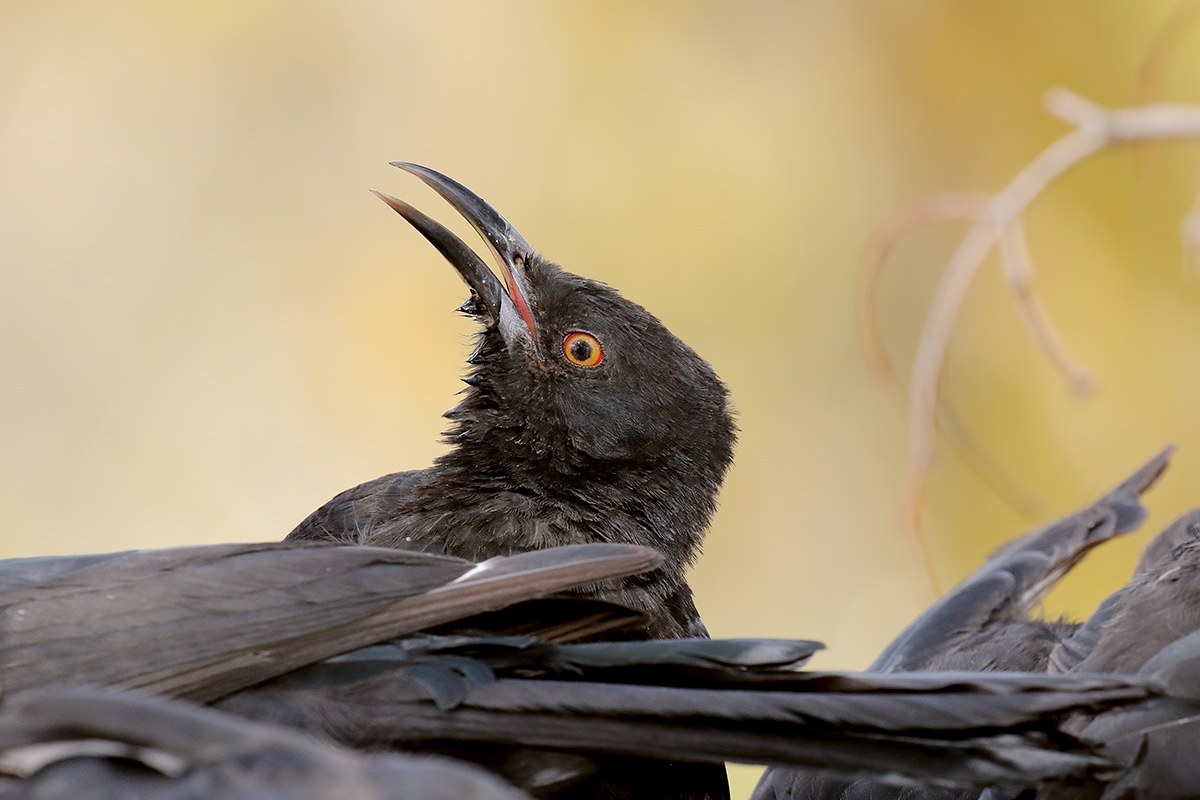
White-winged Chough
Contour and flight feathers

Rufous Treepie
Long, graduated tail feathers; loose body contour feathers

Thick-billed Raven
Contour and flight feathers
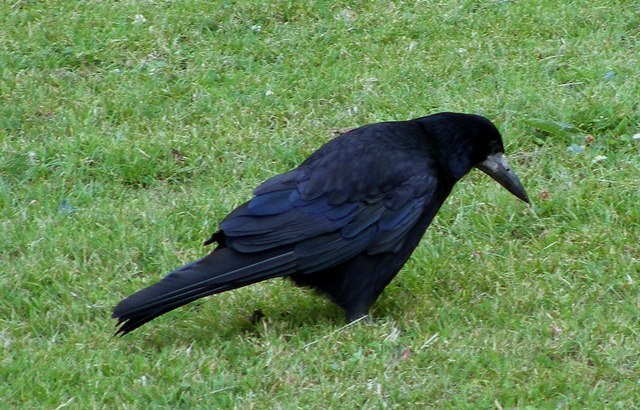
Rook
Glossy purple-black flight and body feathers; loose, shaggy thigh (leg) feathers