
How to Identify Montagu's Harrier Feathers
A field guide to the slim, banded flight feathers of Montagu's Harrier and how to separate them from Hen Harrier and Pallid Harrier feathers.
Read the full Montagu's Harrier encyclopedia entry →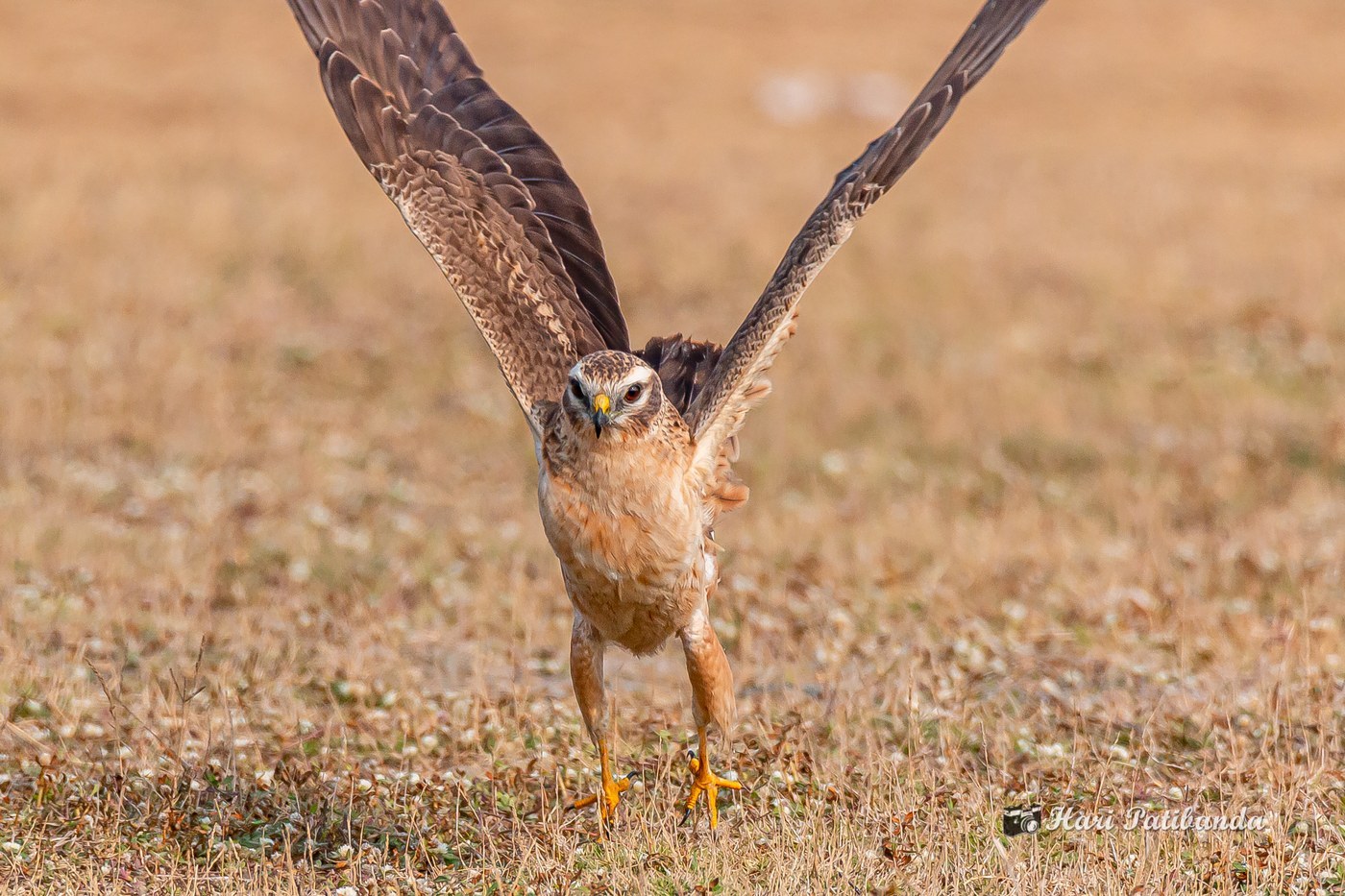
What Montagu's Harrier Feathers Look Like
Montagu's Harrier is a slim, long-winged raptor of open country, and its feathers reflect a bird built for buoyant, low-quartering flight. Adult male flight feathers are pale silvery gray with black tips on the outer primaries, and — the species' best diagnostic feature — a narrow black bar crossing the secondaries on the upperwing, visible as a dark band partway along a shed secondary feather. Females and juveniles are largely brown, with dark, evenly spaced barring across the flight feathers and a boldly banded tail. Juveniles are notably warmer, with unstreaked rufous-orange underparts (visible as a rich buff-orange wash on body feathers) contrasting with dark upperparts. The facial disc feathers, like other harriers, are somewhat owl-like — short and stiff, arranged in a ring around the face, buff to pale gray depending on age. Flight feathers are long and narrow, often 10-13 inches on this slender-winged species, with pointed tips reflecting fast, agile flight.
Step-by-Step: Is This Feather From a Montagu's Harrier?
- Look for a black bar on a gray secondary feather. A single dark band crossing an otherwise pale gray feather strongly suggests an adult male Montagu's Harrier.
- Check overall build. Long, narrow, and pointed flight feathers fit a slim harrier rather than a broader-winged buzzard or hawk.
- Examine barring pattern on brown feathers. Fine, evenly spaced dark bands on a warm brown background suggest a female or juvenile harrier.
- Note underpart color on body feathers. Rich, unstreaked rufous-orange body feathers point to a juvenile Montagu's rather than the streakier underparts of Hen Harrier juveniles.
- Consider facial disc feathers. Short, stiff feathers forming a subtle facial ring, rather than plain contour feathers, confirm a harrier rather than an unrelated raptor.
Similar Species & How to Tell Them Apart
The Hen Harrier (Northern Harrier) is the closest match — both show pale gray males and brown barred females — but Hen Harrier's wings are broader and its male upperwing shows only a single dark wingtip without the extra black secondary bar. Juvenile Hen Harriers also tend to show heavier streaking on the underparts rather than the clean unstreaked orange of young Montagu's. Pallid Harrier males are even paler gray with less black on the wingtip and lack the secondary bar entirely, while females are extremely similar and often require overall proportions rather than single feathers to separate. If a feather shows a clear double dark bar pattern on the upperwing (wingtip plus secondary bar) on an otherwise pale gray background, Montagu's Harrier is the strongest candidate.
Where & When You'll Find Them
Montagu's Harriers breed in open grassland, steppe, heathland, and increasingly cereal farmland across Europe and western Asia, nesting on the ground in tall vegetation. They are long-distance migrants, wintering in sub-Saharan Africa, so feathers are most likely to be found on European and Central Asian breeding grounds from spring through late summer. The molt is largely suspended during the long migration and completed on or near the wintering grounds in Africa, meaning heavily worn feathers are typical in late summer just before birds depart, while fresher feathers turn up after the return migration in spring.
Frequently asked questions
What is the single best clue for identifying a Montagu's Harrier feather?
A narrow black bar crossing an otherwise pale gray secondary feather is the clearest diagnostic, marking it as an adult male Montagu's Harrier and distinguishing it from Hen and Pallid Harriers.
How do I tell a juvenile Montagu's Harrier feather from a juvenile Hen Harrier feather?
Juvenile Montagu's Harrier body feathers show a clean, unstreaked rufous-orange wash, while juvenile Hen Harrier underparts tend to be more heavily streaked.
Why does my brown feather have fine, even barring?
That barring pattern is typical of female and juvenile harrier flight feathers; combined with a warm brown tone, it fits Montagu's Harrier well, especially alongside unstreaked orange body feathers.
Are Montagu's Harrier feathers found in North America?
No — this is an Old World species breeding across Europe and western Asia and wintering in sub-Saharan Africa, so feathers turn up there, not in the Americas.
When during the year are these feathers easiest to find?
On breeding grounds, look from spring through late summer; feathers are most worn just before the long migration to Africa and freshest again after birds return in spring.