
How to Identify Painted Stork Feathers
A step-by-step guide to identifying the large white, black, and pink-tinged feathers of the Painted Stork, a big South Asian wading bird, and distinguishing them from other storks.
Read the full Painted Stork encyclopedia entry →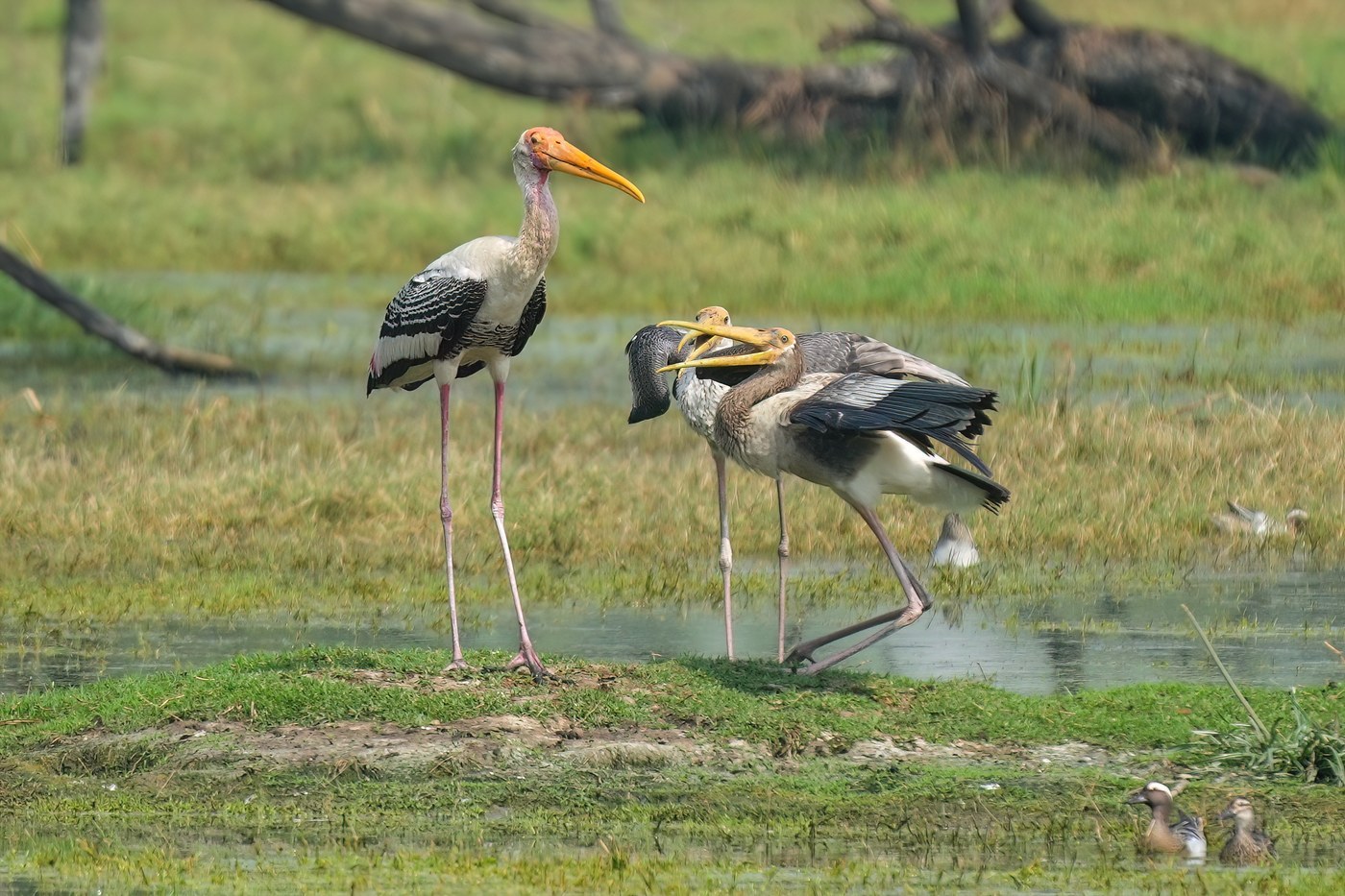
What Painted Stork's Feathers Look Like
Painted Stork feathers are large, reflecting the size of one of South Asia's biggest wading birds. Body feathers are predominantly white to creamy-white, but the wing coverts and flight feathers are strikingly glossy black with a greenish sheen, creating a bold contrast when the bird is in flight. The most distinctive feathers come from the tertials (the innermost flight feathers), which are tinged with a soft pink to salmon color, especially during the breeding season — this pink wash is the feature that gives the species its "painted" name and is a strong diagnostic clue if present. Flight feathers are large and broad, often 20–35 cm long, with a stiff, strong structure suited to soaring flight, while body feathers are softer, dense, and pure white. Shafts on the flight feathers are thick and pale, sometimes yellowish-white. There is also a band of black across the upper breast on some individuals, so a black-banded white feather from the chest region is consistent with this species too.
Step-by-Step: Is This Feather From a Painted Stork?
- Measure it. Flight feathers well over 20 cm point to a large wading bird like a stork rather than a smaller heron or egret.
- Check the color blocks. Look for a clean split between white body plumage and glossy black-green flight feathers — a hallmark of this species' pied pattern.
- Search for pink tinge. A feather with a subtle salmon-pink wash, especially on inner flight feathers, is a strong positive sign, particularly in breeding season.
- Assess feather stiffness. A large, stiff, broad flight feather fits a soaring wading bird; softer, downier feathers likely came from the body rather than the wing.
- Weigh location. Feathers found near freshwater wetlands, marshes, or large wading-bird colonies (rookeries) in South or Southeast Asia support this identification.
Similar Species & How to Tell Them Apart
The main look-alikes are other large white-and-black waterbirds sharing its range, particularly Asian Openbill, Black-headed Ibis, and various egrets. Asian Openbill feathers are smaller overall and lack the pink tertial tinge, showing a duller grayish-white body rather than crisp white. Black-headed Ibis feathers are more uniformly white with less black on the wings and no pink wash at all. Large white egrets (like Great Egret) have entirely white plumage with no black flight feathers, making the black-and-white split of the Painted Stork an easy differentiator. Other true storks such as the Woolly-necked Stork have a dark body with only the neck and belly white, a very different pattern from the mostly-white body of the Painted Stork. The pink tertial wash, when present, is essentially unique to this species among regional wading birds and is the single best confirming feature.
Where & When You'll Find Them
Painted Storks inhabit freshwater wetlands, marshes, shallow lakes, and flooded agricultural fields across the Indian subcontinent and parts of Southeast Asia, often nesting colonially in large mixed-species rookeries in tall trees near water. As a largely resident species with some local movements tied to water availability, feathers can be found year-round, but the richest source is near breeding colonies during the nesting season (roughly November–March in India), when birds are most active, densely packed, and prone to losing feathers during nest-building, courtship, and chick-rearing. Search the ground beneath large waterside nesting trees, along the shallow margins of lakes and marshes, and near heronries where painted storks breed alongside egrets, ibises, and cormorants.
Frequently asked questions
What is the most distinctive feather feature of this species?
A soft pink or salmon tinge on the innermost flight feathers (tertials), especially during the breeding season — the source of the bird's 'painted' name and a strong diagnostic clue.
How big are Painted Stork flight feathers?
Quite large, often 20–35 cm long, reflecting the bird's size as one of the larger wading birds in its range.
How do I tell it apart from an egret feather?
Egrets are entirely white with no black flight feathers, while the Painted Stork has a clear split between white body plumage and glossy black-green wings.
Where are these feathers usually found?
Near freshwater wetlands, marshes, and shallow lakes, especially beneath tall trees hosting mixed-species wading bird colonies (heronries) across South and Southeast Asia.
When is the best time to look?
During the breeding/nesting season, roughly November through March in India, when colonies are active and feather loss from nest-building and chick-rearing is highest.