
How to Identify Pine Warbler Feathers
A field guide to the unstreaked olive back and yellow underparts that separate Pine Warbler feathers from confusing fall warblers and vireos.
Read the full Pine Warbler encyclopedia entry →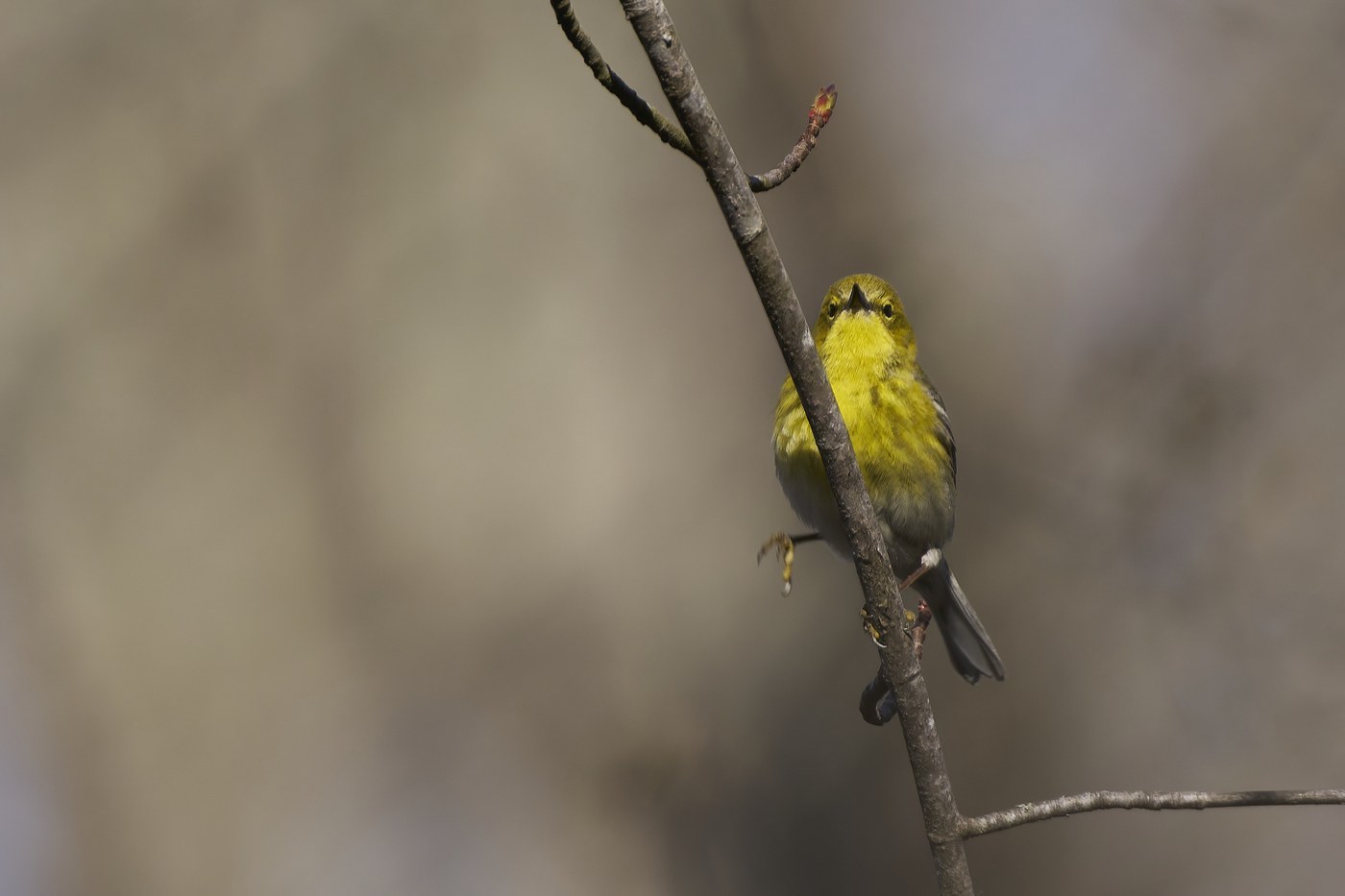
What Pine Warbler Feathers Look Like
Pine Warblers are small, olive-toned warblers, and one feature stands out immediately on their feathers: the back is solid olive-green with no streaking at all, which rules out several confusingly similar warblers right away. Wing feathers are blackish-brown edged in olive, with two fairly crisp whitish or pale-yellowish wing bars formed by the tips of the covert feathers. Throat and breast feathers are bright yellow on males, duller yellow-olive on females, fading to white on the belly, with only faint, blurry gray-olive streaking restricted to the flanks — never the back. Tail feathers are dark olive-brown with white patches near the tips of the outer pair, visible as white corners when the tail fans open. Overall feather size is small, with flight feathers under about 2.25 inches, and shafts are pale brown.
Step-by-Step: Is This Feather From a Pine Warbler?
- Check the back feathers first. A solid, unstreaked olive-green back is the fastest way to rule out several fall warblers that look superficially similar.
- Look for the wing bars. Two whitish bars on an otherwise dark wing, moderately crisp.
- Check the tail for white corners. White spots near the tips of the outer tail feathers.
- Check underside color. Yellow throat and breast fading to a white belly, with only faint streaking limited to the flanks/sides.
- Measure. Small warbler-sized flight feathers, under about 2.25 inches.
Similar Species & How to Tell Them Apart
Yellow-throated Vireo also has an olive back, yellow throat, and white wing bars, but vireo feathers are noticeably thicker and larger overall (vireos are bigger-billed, heavier-bodied birds), and the back tends to look more uniformly gray-olive without the warbler's fine wash — feather bulk is the fastest tell. Blackpoll Warbler and Bay-breasted Warbler in fall plumage both show fine streaking on the back and more washed-out underparts, so Pine Warbler's clean, unstreaked back is the giveaway. Yellow-rumped Warbler shows a bright yellow rump patch (absent here) and much bolder black streaking across the breast and sides.
Where & When You'll Find Them
Pine Warblers live nearly year-round in pine and mixed pine-hardwood forest across the eastern and southeastern United States, making them one of the few warblers that overwinters in the U.S. rather than heading to the tropics. Feathers are most likely found under mature pine stands — loblolly, longleaf, and white pine especially — at any time of year, since resident birds molt on-site in late summer and continue shedding worn feathers through the colder months while foraging on bark and cones. Backyard suet and seed feeders near pine woods are another reliable spot to check, particularly in winter when Pine Warblers join mixed foraging flocks.
Frequently asked questions
What's the fastest way to rule out other fall warblers?
Check the back feathers for streaking — Pine Warbler's back is solid olive-green, while Blackpoll, Bay-breasted, and Yellow-rumped Warblers all show streaks on the back in fall plumage.
Could this be a vireo feather instead?
Compare thickness — vireo feathers are noticeably stouter and larger than a warbler's, even when the yellow-and-olive color pattern looks similar.
Does yellow color mean the feather is from a male?
Not necessarily — females and immatures show yellow too, just duller and more olive-washed, so color alone doesn't confirm sex.
Will I find Pine Warbler feathers in winter?
Yes — unlike most warblers, Pine Warblers reside year-round through much of their range and readily visit feeders, so feathers can turn up in any season near pine woodland.