
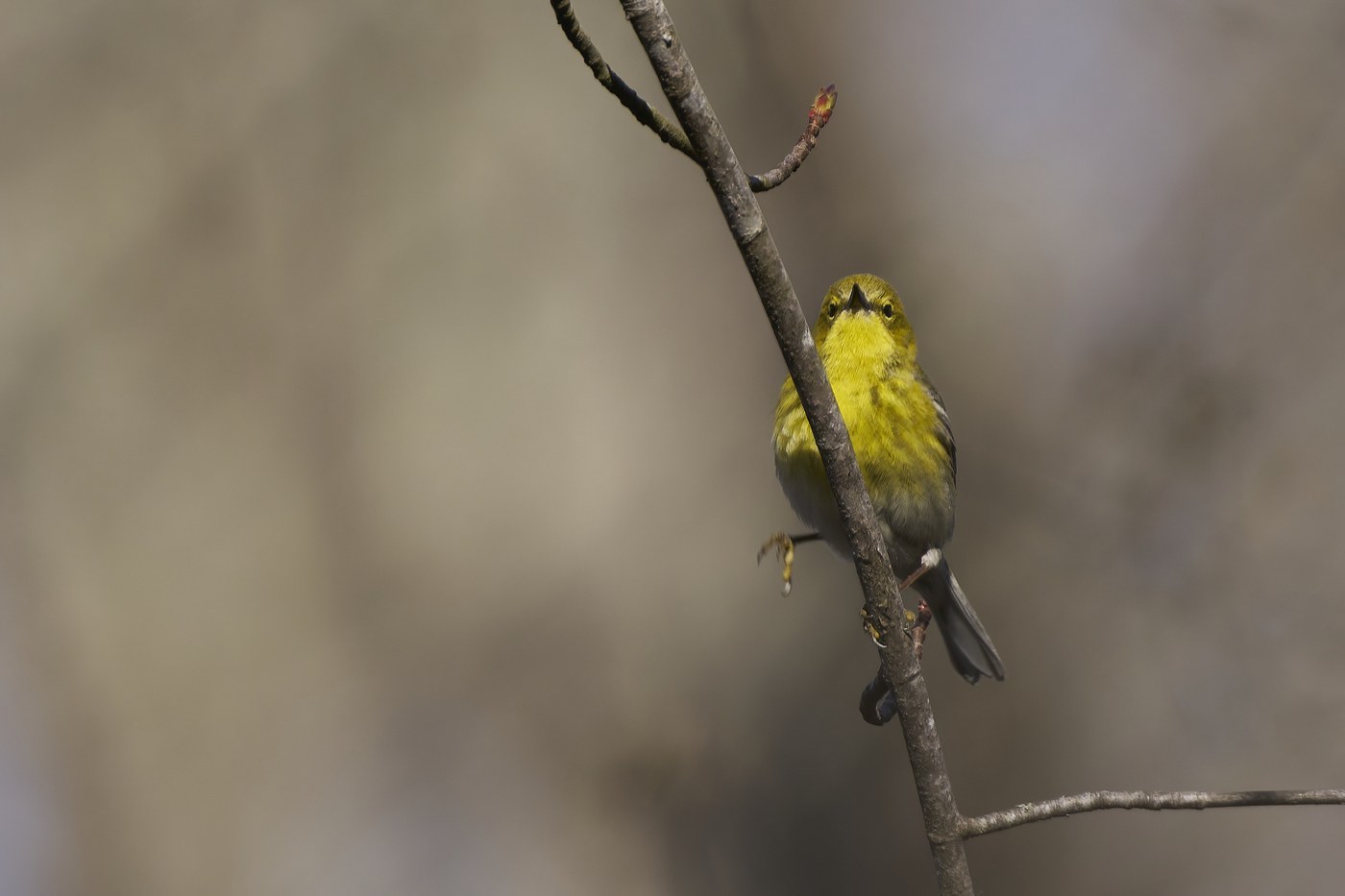
Pine Warbler
Setophaga pinus
A warbler tightly associated with pine forests, showing subdued olive-yellow upperparts, dull yellow underparts, and two whitish wing bars, less flashy than many of its warbler relatives.
- Feather type
- Small contour and flight feathers
- Colours
- Olive-yellow, gray-white wing bars, dull yellow underparts
- Bird size
- Small, ~14 cm
Found a feather like this?
Identify any feather from a photo, free.
Overview
The Pine Warbler is closely tied to pine forests across the eastern United States, one of the few warblers that remains through much of its range in winter. Its feathers show a relatively plain olive-yellow tone above and dull yellow below, without the bold patterns of many warbler species, plus two whitish wing bars that stand out against the duller body plumage. This subdued coloring, combined with its habitat preference, helps narrow down feather identification.
Identifying the Feather
Size and Shape
Feathers are typical small warbler feathers, somewhat plainer and less patterned than many congeners.
Color and Pattern
- Back and crown feathers: olive-yellow, unstreaked or only faintly streaked
- Underparts: dull yellow, fading to whitish on the belly
- Wing feathers: two conspicuous whitish wing bars
- Tail feathers: dark with white patches on the outer feathers
Distinguishing from Similar Species
Pine Warbler feathers lack the bright, saturated yellow of the Yellow Warbler and lack the bold yellow rump patch of the Yellow-rumped Warbler, appearing overall plainer and more olive-toned with the two whitish wing bars as a key feature.
Plumage & Molt
Adult males show brighter olive-yellow upperparts and richer yellow underparts; females and immatures are duller and grayer, sometimes showing very little yellow. Juveniles can be quite plain and brownish. Adults undergo a complete molt after breeding, typically in late summer.
Habitat & Range
Pine Warblers are closely associated with pine forests and pine plantations across the eastern United States, from the Southeast north into New England and the Great Lakes region. Many populations are resident year-round in the Southeast, while northern breeders migrate short distances to winter in the southeastern United States, one of the few warblers to winter regularly within the continental US.
Behavior & Field Notes
This warbler forages methodically along pine branches and trunks, gleaning insects from bark and needles, and is one of the few warblers that regularly eats seeds, including at feeders in winter. It builds a well-hidden cup nest high in pine trees, often difficult to locate. Its song is a musical trill, similar to that of a Chipping Sparrow but typically richer and more melodious, and its call is a soft chip note.
Frequently asked questions
What color are Pine Warbler feathers?
Olive-yellow above and dull yellow below, plainer than many warblers, with two whitish wing bars.
Where would I find a Pine Warbler feather?
In pine forests and pine plantations across the eastern United States, where the species forages and nests.
Does the Pine Warbler migrate?
Southern populations are largely resident, while northern breeders migrate short distances to winter in the southeastern US.
How is the Pine Warbler's song different from similar species?
It is a musical trill similar to a Chipping Sparrow's but generally richer and more melodic.
Pine Warbler guides
In-depth guides for identifying and understanding Pine Warbler.
Other feathers you may enjoy

Yellow-breasted Bunting
Contour and flight feathers, chestnut-and-yellow breeding pattern

Sedge Wren
Tiny streaked crown and back feathers

Yellow-winged Cacique
Glossy black body feathers, yellow wing patch, shaggy crest

Yellow Warbler
Small contour and flight feathers

Yellow-throated Warbler
Small contour and flight feathers

Yellow-throated Vireo
Bright yellow throat and spectacle feathers; olive-green back feathers; two white wing-bar feathers

Yellow-rumped Warbler
Small contour and flight feathers

Yellow-hooded Blackbird
Contrasting hood and body feathers

Yellow-headed Blackbird
Glossy black body plumage with a bright yellow head and breast

Yellow-eyed Junco
Contour and flight feathers

Yellow-fronted Canary
Small, smooth body plumage

Yellow-breasted Greenfinch
Compact, smooth body plumage