
How to Identify Red-backed Shrike Feathers
A guide to the chestnut back and gray head feathers of the male Red-backed Shrike, and the barred brown feathers of females, with tips for separating it from other shrikes.
Read the full Red-backed Shrike encyclopedia entry →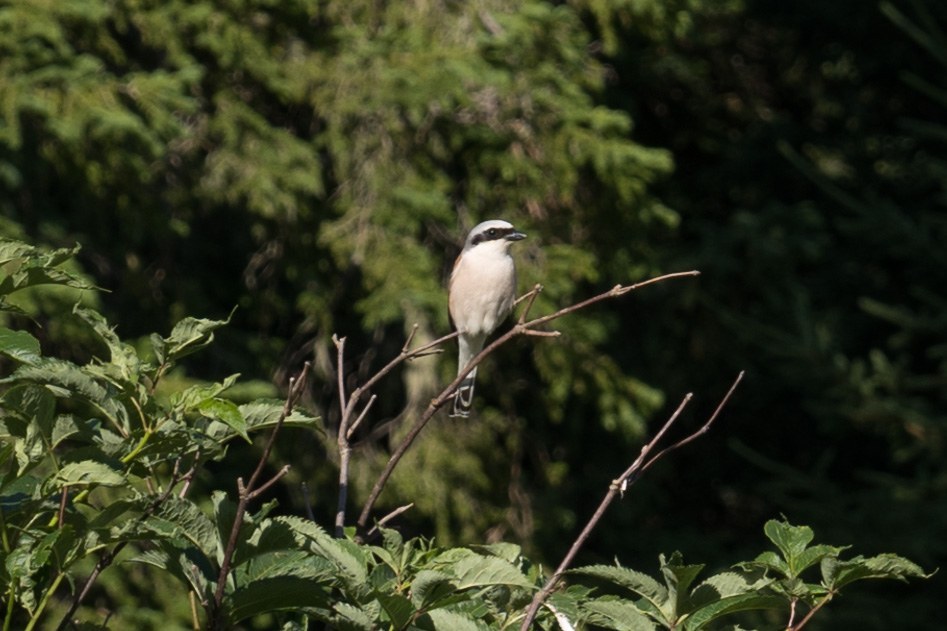
What Red-backed Shrike's Feathers Look Like
This small predatory songbird shows a strong difference between the sexes, so identification approaches differ:
- Adult male crown/nape feathers: clean blue-gray, unmarked and smooth.
- Adult male back feathers: warm chestnut-rufous, contrasting sharply with the gray head — a gray-headed, rufous-backed feather pair is highly diagnostic if both are found together.
- Adult male face feathers: bold black mask through the eye, contrasting with the gray crown.
- Adult male underparts feathers: soft pinkish-buff to white, unmarked.
- Adult male tail feathers: black with white bases visible at the sides, especially noticeable in flight or when the tail is fanned.
- Female/juvenile feathers: brown above with fine dark vermiculated (wavy) barring, and pale underparts with crescent-shaped barring, quite different from the clean male pattern.
- Size: small — primaries roughly 6–8 cm, tail feathers 6–7 cm.
Step-by-Step: Is This Feather From a Red-backed Shrike?
- Check for a two-tone gray-and-chestnut combination. A gray feather (head/nape) alongside a rufous-chestnut feather (back), found together, strongly suggests an adult male.
- Look for a black mask feather. A small black facial feather bordered by gray is consistent with the male's head pattern.
- Check tail feathers for white bases. Blackish tail feathers with pale/white at the base support this species.
- Consider barred brown feathers for likely female/juvenile. Fine wavy dark barring on a brown feather, rather than solid color, points to a female or young bird — trickier to separate from other shrikes.
- Confirm small size. Shrike feathers this size fit a "small shrike" category, distinguishing from larger shrike species by size alone.
Similar Species & How to Tell Them Apart
- Woodchat Shrike: Male shows a chestnut crown (not gray) along with a rufous back and bold white shoulder patches — the chestnut extends onto the head, unlike Red-backed Shrike's gray head.
- Great Grey Shrike: Much larger overall, predominantly pale gray with black wings and white patches, lacking the chestnut back entirely.
- Isabelline Shrike: Paler, sandier overall tones rather than a rich chestnut back, with a warmer tail rather than sharply black-and-white.
- Female shrikes in general: Barred brown females across several shrike species look quite similar; specific barring density and color warmth offer only tentative clues rather than certainty.
Where & When You'll Find Them
Red-backed Shrikes favor open scrubland, hedgerows, and bushy grassland across Europe and western Asia, often perching prominently on thorny shrubs used as lookout posts (and sometimes for impaling prey, a habit that leaves characteristic feeding sign near favored perches). As long-distance migrants that winter in Africa, feathers are most likely to be found on the breeding grounds from late spring through summer, with the main molt largely occurring on or near the African wintering grounds rather than in Europe.
Frequently asked questions
What's the clearest sign of a male versus a female Red-backed Shrike feather?
Males show clean, unbarred gray head and chestnut back feathers, while females and juveniles show brown feathers with fine wavy dark barring — the presence or absence of barring is the quickest way to separate the sexes.
How is this different from a Woodchat Shrike feather?
Woodchat Shrike males have a chestnut crown extending onto the head, while Red-backed Shrike keeps a clean gray head with chestnut confined to the back — checking whether the chestnut reaches the crown is the key test.
Why do the tail feathers show white at the base?
This white tail-base patch is part of the species' normal plumage pattern and becomes especially visible in flight or display, serving as a useful field mark beyond just the color of the back and head.
Are barred brown shrike feathers always female?
Not necessarily — juveniles of both sexes show similar barred brown plumage before their first full molt, so a barred feather could belong to a young bird of either sex, not just an adult female.