
How to Identify Red Kite Feathers
A guide to identifying Red Kite feathers by their deeply forked rufous-red tail, pale streaked head, and dark wingtips with a pale underwing window, distinguishing them from Black Kite.
Read the full Red Kite encyclopedia entry →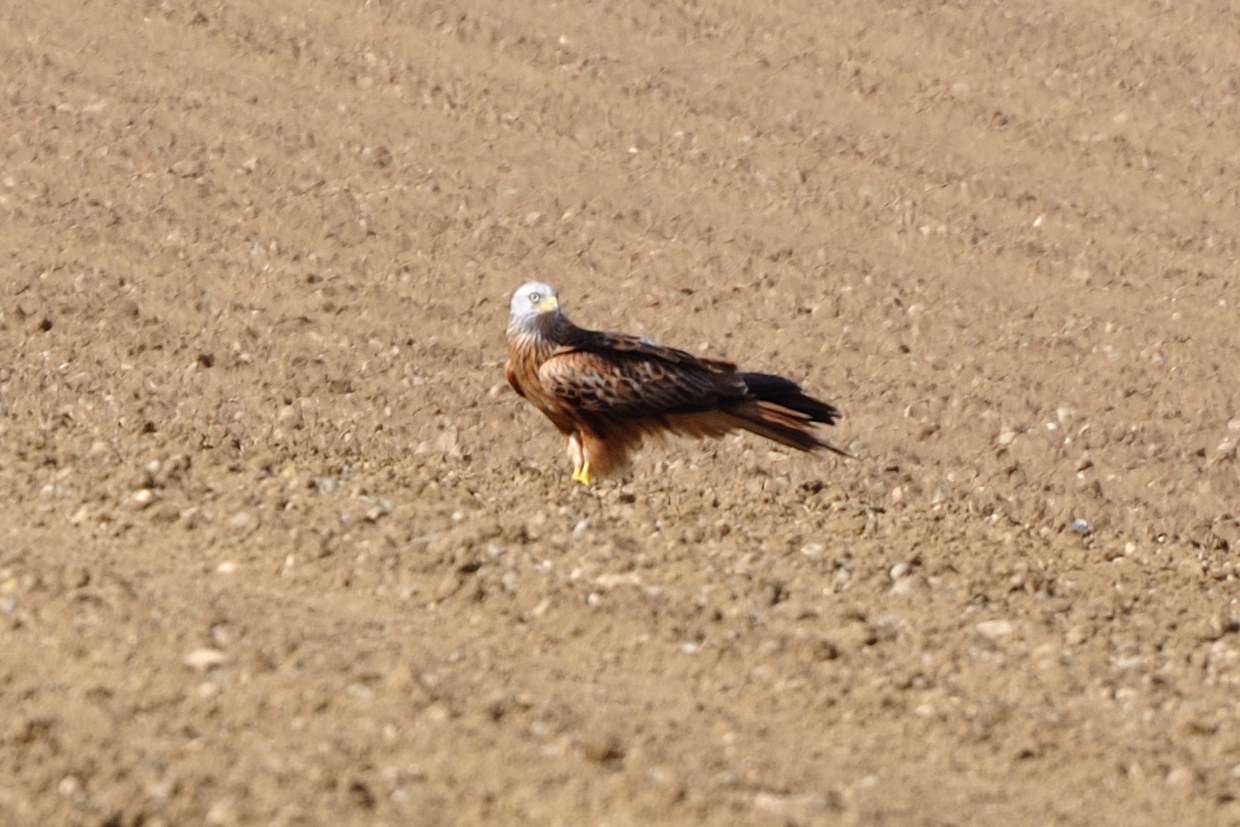
What Red Kite's Feathers Look Like
Red Kite is a graceful, long-winged raptor best known for its tail, and tail feathers are the single most useful find. Tail feathers are a warm rufous-red, deeply forked at the tip in the intact tail (individual feathers show a long, tapering shape with a darker terminal band near the tip), quite different from the shorter, only shallowly notched tails of most other raptors. Body (contour) feathers on the breast and belly are similarly rufous-chestnut, often with fine darker streaking, giving a warm overall tone to the whole underside.
Head and neck feathers are notably paler than the body — a pale grayish-white ground finely streaked with dark shaft-lines, creating a "frosty-headed" look that contrasts against the rufous body. Flight feathers (primaries) are dark, blackish-brown at the tips, but show a pale, translucent patch (window) at the base of the outer primaries — visible as a lighter panel when a wing feather is held up to the light, a genuinely useful trick for wing feathers from soaring raptors in general. Wing coverts are rufous-brown, echoing the body tone.
Step-by-Step: Is This Feather From a Red Kite?
- Check for a long, deeply forked, rufous-red tail feather. This tail shape and color combination is one of the most reliable raptor field marks translated directly to a loose feather.
- Assess head/neck feather tone. Pale grayish-white with fine dark streaking, contrasting against a rufous body, supports Red Kite.
- Look for a pale translucent patch near the base of a primary. Held to the light, this "window" pattern is characteristic of kites and several other raptors, useful alongside the tail and body color.
- Examine body feather color. Warm rufous-chestnut with fine streaking fits Red Kite's underside.
- Measure the feather. Primaries in the general range of 30-35+ cm reflect this mid-to-large raptor's long-winged build.
Similar Species & How to Tell Them Apart
- Black Kite — overall grayer-brown, less rufous, with a tail that is only shallowly forked (much less deeply than Red Kite's), and lacks the strongly reddish tone throughout.
- Common Buzzard — much shorter, less deeply forked (rounded) tail, and generally more variably patterned body feathers with heavier barring.
- Marsh Harrier — has longer, more evenly barred flight feathers and lacks the deep rufous tail fork entirely, plus a generally darker, more uniform body tone in females and immatures.
Where & When You'll Find Them
Red Kites inhabit open woodland, farmland, and river valleys across much of Europe, with reintroduced and recovering populations in Britain that have expanded substantially in recent decades, often seen soaring with a distinctive twisting tail motion. Feathers are most commonly found near nest sites in tall trees during the spring breeding season, and around communal winter roosts where birds gather in numbers during late autumn and winter, making both nesting woodland and traditional roost sites reliable places to search across the year.
Frequently asked questions
What's the single best feather clue for Red Kite?
A long, deeply forked, rufous-red tail feather with a darker terminal band — this tail shape and color combination is one of the most reliable indicators translated from the living bird to a loose feather.
How do I tell Red Kite from Black Kite by feather?
Check the tail fork depth and color — Red Kite's tail is deeply forked and rufous-red, while Black Kite's tail is only shallowly forked and the bird is generally grayer-brown overall.
What does the pale patch near the base of a wing feather indicate?
That's the translucent 'window' near the base of the outer primaries, a feature shared by several soaring raptors including Red Kite, useful as supporting evidence alongside tail and body color.
Does head feather color help with identification?
Yes, a pale, finely streaked grayish-white head feather contrasting against a rufous body is characteristic of Red Kite.
When and where are Red Kite feathers most likely to be found?
Near nest sites in tall trees during spring, and around communal winter roosts in late autumn and winter, across open woodland and farmland in Europe.
Red Kite identified by the community
Recent Red Kite feathers identified with Feather Identifier.

