

Ring-necked Pheasant
Phasianus colchicus
A large, long-tailed gamebird whose males carry some of the most vividly iridescent body feathers and dramatically elongated tail feathers of any bird found in open countryside.
- Feather type
- Body (contour), tail, and wing feathers
- Colours
- Male: iridescent copper, gold, and green with a white neck ring; female: mottled buff-brown
- Bird size
- Large gamebird, male ~75-90 cm including tail, female ~55-65 cm
Found a feather like this?
Identify any feather from a photo, free.
Overview
The Ring-necked Pheasant, native to Asia, has been introduced so widely across Europe and North America for hunting and ornament that it is now a familiar countryside bird in many regions. The male's spectacular plumage stands in sharp contrast to the camouflaged female.
Identifying the Feather
Male Ring-necked Pheasant body feathers show a striking iridescent sheen ranging from copper and gold to green and purple, each feather often edged with a fine black scalloped border that creates a scaled appearance; a bold white neck ring is present in many populations though absent in some subspecies. The tail feathers are extremely elongated, narrow, and pointed, barred with dark bands along their length - by far the longest tail feathers of any commonly encountered gamebird. Female feathers are cryptically mottled buff, brown, and black, providing camouflage on the ground, with a shorter, more subtly barred tail.
Plumage & Molt
The species shows strong sexual dimorphism, with males far more ornate than the cryptically colored females. Juveniles resemble females initially, with young males gradually acquiring adult coloration over their first months. Adults undergo a complete molt after the breeding season.
Habitat & Range
Ring-necked Pheasants favor a mix of farmland, hedgerows, woodland edge, and rough grassland offering both cover and open feeding areas. Native range spans temperate Asia, but the species has been introduced and now breeds as a naturalized resident across much of Europe and North America, largely non-migratory.
Behavior & Field Notes
Pheasants forage on the ground for seeds, grain, and invertebrates, and typically prefer to run from danger before flushing explosively into fast, whirring flight when pressed. Males establish territories and give a loud, crowing call accompanied by wing-whirring displays to attract females. Nests are simple ground scrapes concealed in vegetation.
Frequently asked questions
Why are male pheasant feathers so colorful compared to females?
Males rely on bright iridescent plumage to attract mates and establish dominance, while females retain camouflaged brown feathers for concealment while incubating eggs on the ground.
How long can a pheasant tail feather be?
Male tail feathers can be exceptionally long and pointed, often making up more than half the bird's total length, far exceeding those of any similarly sized gamebird.
Do all Ring-necked Pheasants have a white neck ring?
No, some subspecies and individuals lack the white ring, since many introduced populations are a mix of different Asian subspecies.
Where might I find shed pheasant feathers?
Farmland edges, hedgerows, and woodland margins where the birds forage and roost are the most likely locations.
Ring-necked Pheasant guides
In-depth guides for identifying and understanding Ring-necked Pheasant.

Ring-necked Pheasant identified by the community
Real feathers identified with Feather Identifier.


Other feathers you may enjoy

Bornean Peacock-pheasant
Contour and tail feathers with iridescent ocelli

Crested Argus
Extremely elongated, ocellated (eyespot-patterned) tail feathers among the longest of any bird; tall, erectile crest

Grey Partridge
Body and flank feathers

Willow Ptarmigan
Larger, stockier body feathers with warmer rufous tones in summer; tail feathers black year-round

Wild Turkey
Broad, iridescent body feathers and large flight and tail feathers

Bulwer's Pheasant
Contour feathers and elongated white tail feathers
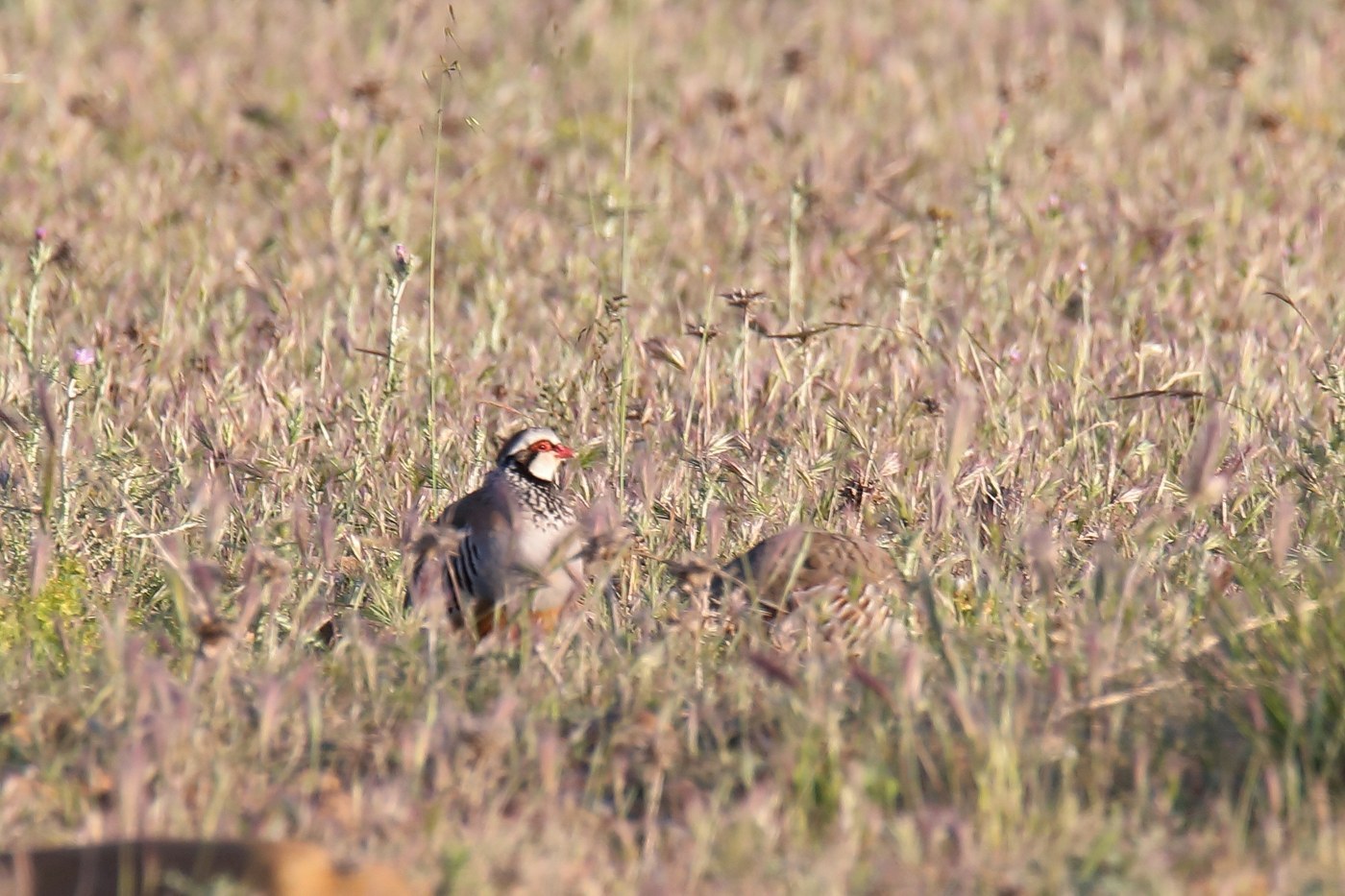
Red-legged Partridge
Flank, body, and flight feathers

White-tailed Ptarmigan
Small body feathers with a tail that stays pure white year-round, unlike other ptarmigan

Edwards's Pheasant
Contour and tail feathers

Sooty Grouse
Dense, plain contour feathers with a pale-tipped, fanned tail

Snow Partridge
Finely vermiculated barred contour feathers

Silver Pheasant
Finely vermiculated white upperpart feathers over glossy blue-black underparts