
How to Identify Royal Spoonbill Feathers
How long, wispy white nape plume feathers and a black-and-yellow bill blaze mark a Royal Spoonbill feather across Australasian wetlands.
Read the full Royal Spoonbill encyclopedia entry →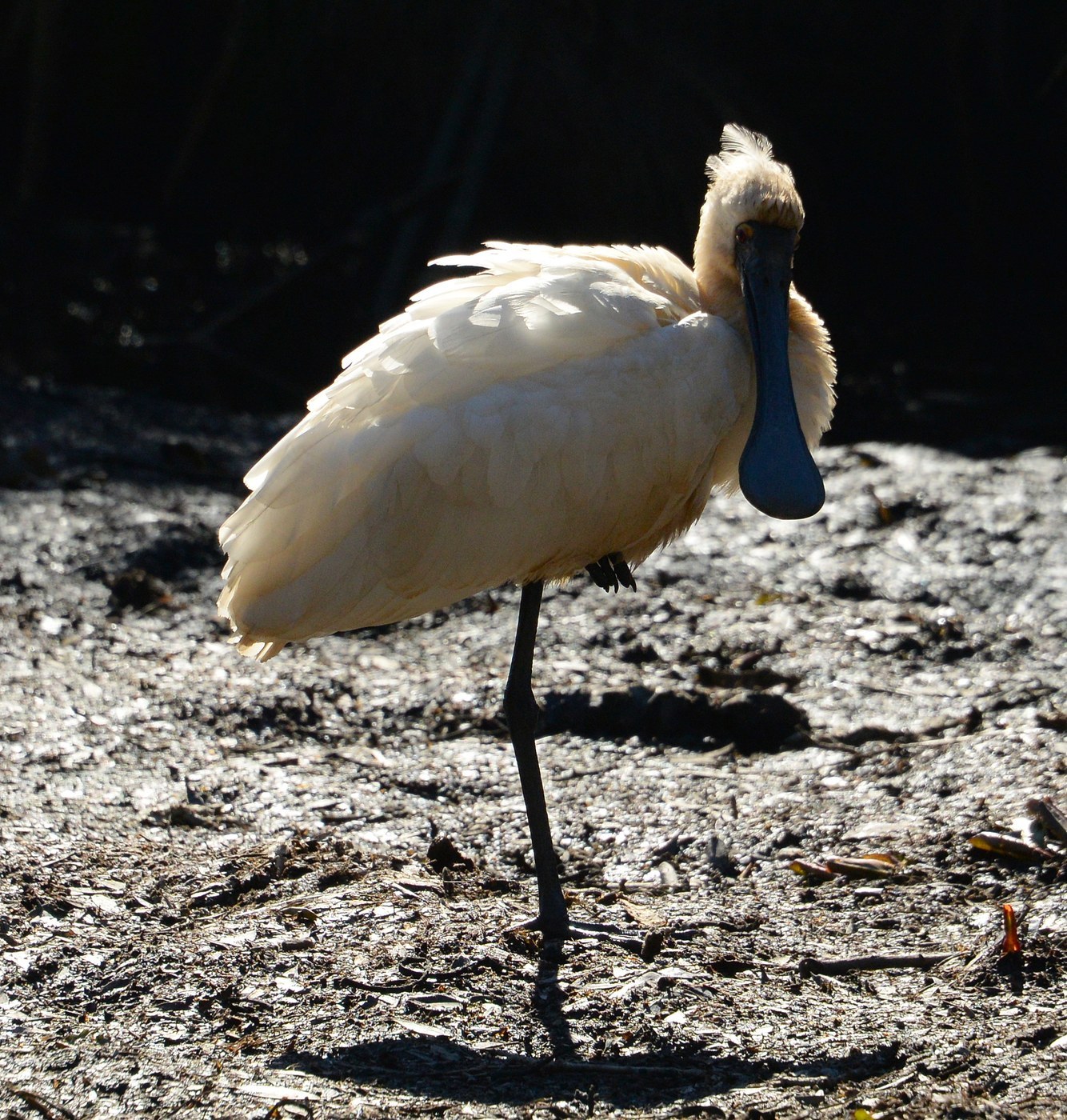
What Royal Spoonbill Feathers Look Like
Adult Royal Spoonbills are entirely white-plumaged, with broad, rounded wading-bird flight feathers typical of the spoonbill group. What sets a Royal Spoonbill feather apart during breeding season is the elongated, wispy nape plume — fine, cascading white feathers that grow from the back of the head and hang down the neck, longer and finer than the plumes of most other white wading birds in the region. Breeding adults also develop a buffy-yellow tuft on the breast, giving a small cluster of feathers a warm cream tone against the otherwise pure white body. Bare facial skin includes a red blaze at the base of the bill and a yellow patch above the eye, though these are skin, not feather, features.
Outside the breeding season, plume and breast-tuft feathers are shed, leaving plain white body and flight feathers that are harder to distinguish from other white wading birds by color alone.
Step-by-Step: Is This Feather From a Royal Spoonbill?
- Look for long, fine, wispy plume feathers from the nape — their length and delicacy are more pronounced than in similar white wading birds.
- Check for a buffy-cream tuft feather from the breast area during breeding season.
- Confirm overall pure white color with no grey, black, or colored patches on body feathers.
- Assess feather shape. Broad, rounded flight feathers fit the spoonbill body plan rather than the narrower feathers of herons.
- Factor in region — Australia, New Zealand, and New Guinea wetlands are the expected range.
Similar Species & How to Tell Them Apart
Great Egret and Little Egret are also all-white with breeding plumes, but their ornamental aigrette plumes grow from the back and scapulars, not the nape, and their flight feathers come from a more slender, heron-shaped wing. A feather with nape-plume characteristics (fine, cascading, growing from the head/neck junction) points to spoonbill, while back-sourced plumes point to egret. The Black-faced Spoonbill, a vagrant to the region from East Asia, is very similar in plumage but shows more extensive black facial skin — a feature not detectable from feathers alone, so overlap zones require caution.
Where & When You'll Find Them
Royal Spoonbills inhabit shallow wetlands, estuaries, and mudflats across Australia, New Zealand, and New Guinea, feeding by sweeping their spoon-shaped bills side to side through the water. Breeding follows the Australian spring and summer, and the ornamental nape plumes and breast tufts are grown and later molted around this period, making feathers with plume characteristics most findable near breeding colonies in spring through early summer. Plain white body and flight feathers can be found near estuaries and wetlands throughout the year as birds go through routine feather replacement.
Frequently asked questions
What makes the nape plume feather diagnostic for Royal Spoonbill?
Its fine, wispy, cascading structure growing specifically from the back of the head is more delicate and longer than similar ornamental feathers on egrets, which grow from the back and scapulars instead.
Do non-breeding Royal Spoonbills have any distinctive feathers?
Not really — outside the breeding season the plumes and breast tuft are absent, leaving plain white feathers that are harder to distinguish from other white wading birds by color alone.
How is this different from an egret feather?
Check where an ornamental plume feather originates: nape-based plumes suggest spoonbill, while back or scapular-based aigrette plumes suggest egret.
When is breeding season for Royal Spoonbills?
Australian spring into summer, which is when plume and breast-tuft feathers are grown and later shed near colonies.
Are Royal Spoonbill feathers found far from wetlands?
Rarely — they're strongly tied to shallow wetlands, estuaries, and mudflats where the birds feed, so feathers are most concentrated in those habitats.