

Sage Grouse
Centrocercus urophasianus
The largest North American grouse, tied closely to sagebrush habitat, with mottled grey-brown plumage, a black belly patch, and long, spiky pointed tail feathers fanned during elaborate lek displays.
- Feather type
- Mottled contour feathers with long, spiky pointed tail feathers
- Colours
- Mottled grey-brown upperparts, black belly patch, white breast, spiky dark tail
- Bird size
- Very large, ~53-76 cm
Found a feather like this?
Identify any feather from a photo, free.
Overview
Overview
The Sage Grouse, also called the Greater Sage-Grouse, is the largest grouse species in North America and is closely tied to sagebrush steppe habitat across the western United States and southern Canada. Males are famous for their elaborate lek courtship displays, in which they fan long, spiky tail feathers and inflate bright yellow-green air sacs on the chest while making unusual popping sounds.
- Family: Phasianidae (grouse)
- Diet: sagebrush leaves, other plant material, and invertebrates
- Range: sagebrush steppe of the western United States and southern Canada
Identifying the Feather
Feather Identification
- Body feathers: mottled grey-brown across the back and wings, providing camouflage in sagebrush habitat.
- Underparts: a bold black belly patch contrasts with a white breast band in males.
- Tail: long, narrow, spiky-pointed tail feathers are fanned into a spiky display during courtship, unlike the rounded or wedge tails of other grouse.
- Neck: males show specialized filoplume feathers and bare yellow skin on the chest that inflates during display.
- Vs. similar species: the combination of very large size, a black belly patch, and spiky pointed tail feathers readily distinguishes it from Sharp-tailed Grouse and prairie-chickens found in overlapping regions.
Plumage & Molt
Plumage Notes
Adult males show the most elaborate plumage features, including specialized chest filoplumes and the longest tail feathers, most prominent during spring lek displays. Females are smaller and more uniformly mottled brown, lacking the black belly patch's sharp contrast and specialized display feathers. Juveniles resemble females until their first full molt into adult plumage.
Habitat & Range
Habitat & Range
Sage Grouse are obligate residents of sagebrush steppe and sagebrush-dominated shrubland across the western United States, including the Great Basin and northern Rockies, extending into southern Alberta and Saskatchewan in Canada. They are largely non-migratory within suitable habitat, though some populations move seasonally between breeding and wintering areas.
Behavior & Field Notes
Behavior
Sage Grouse feed heavily on sagebrush leaves, especially in winter, supplemented by other plant material and invertebrates during the breeding season. Males gather on traditional lek grounds each spring to perform an elaborate display, fanning their spiky tail, inflating chest air sacs, and producing distinctive popping and swishing sounds. Nests are ground scrapes typically placed under sagebrush cover for concealment.
Frequently asked questions
What is the largest grouse species in North America?
The Sage Grouse (Greater Sage-Grouse) is the largest grouse species on the continent.
What tail shape distinguishes the Sage Grouse from other grouse?
It has long, narrow, spiky-pointed tail feathers, unlike the rounded or wedge-shaped tails of related grouse species.
Why is sagebrush habitat so important to this species?
Sage Grouse rely on sagebrush for both food, especially in winter, and cover, making them closely tied to sagebrush steppe habitat.
What do male Sage Grouse do during lek displays?
They fan their spiky tail feathers, inflate bright chest air sacs, and produce distinctive popping and swishing sounds to attract females.
Sage Grouse guides
In-depth guides for identifying and understanding Sage Grouse.

Other feathers you may enjoy

Ring-necked Pheasant
Body (contour), tail, and wing feathers

Bornean Peacock-pheasant
Contour and tail feathers with iridescent ocelli

Crested Argus
Extremely elongated, ocellated (eyespot-patterned) tail feathers among the longest of any bird; tall, erectile crest

Grey Partridge
Body and flank feathers

Willow Ptarmigan
Larger, stockier body feathers with warmer rufous tones in summer; tail feathers black year-round

Wild Turkey
Broad, iridescent body feathers and large flight and tail feathers

Bulwer's Pheasant
Contour feathers and elongated white tail feathers
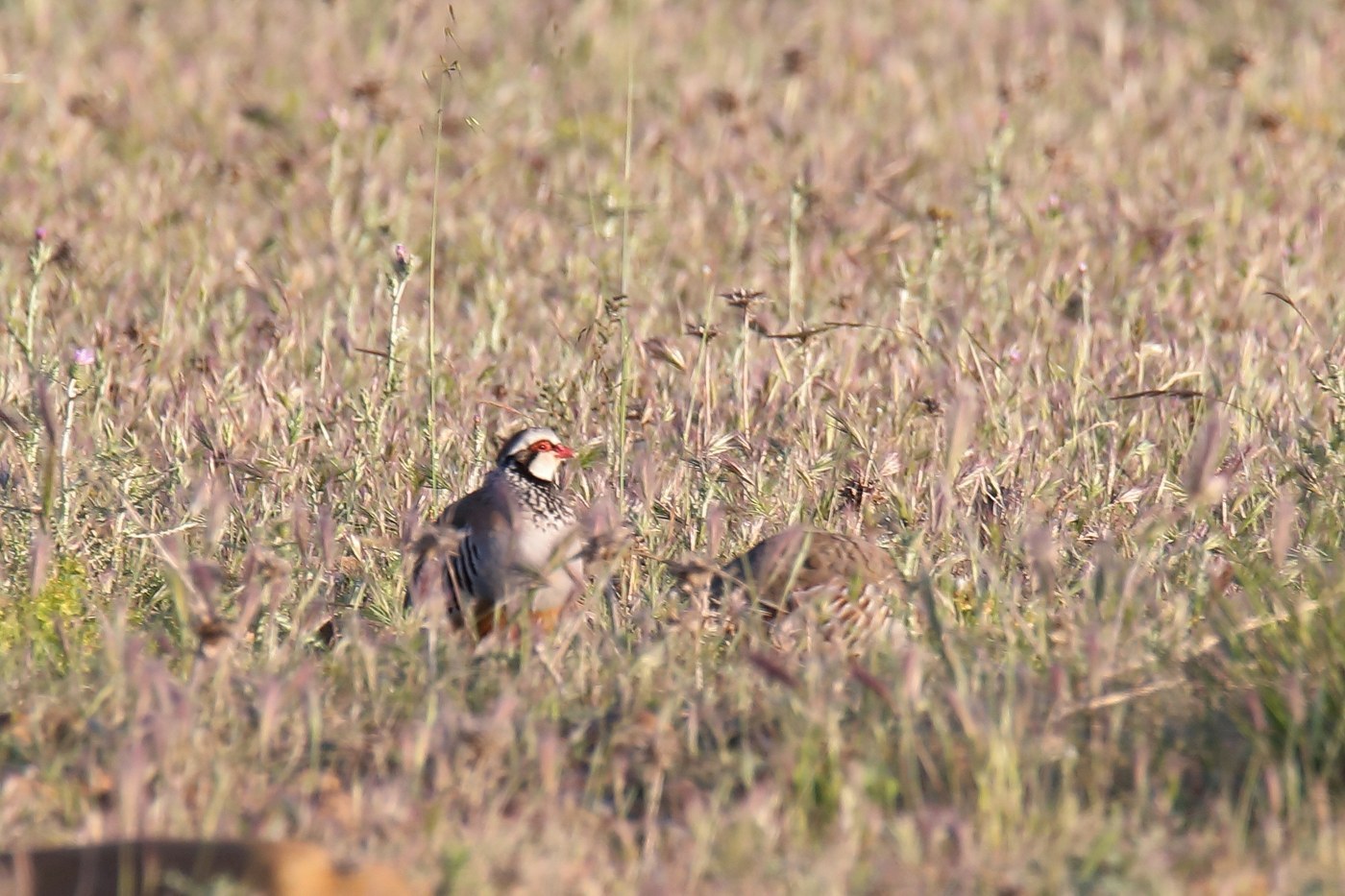
Red-legged Partridge
Flank, body, and flight feathers

White-tailed Ptarmigan
Small body feathers with a tail that stays pure white year-round, unlike other ptarmigan

Edwards's Pheasant
Contour and tail feathers

Sooty Grouse
Dense, plain contour feathers with a pale-tipped, fanned tail

Snow Partridge
Finely vermiculated barred contour feathers