
How to Identify Sagebrush Sparrow Feathers
How the gray head, white eyering, and distinct central breast spot help confirm a Sagebrush Sparrow feather.
Read the full Sagebrush Sparrow encyclopedia entry →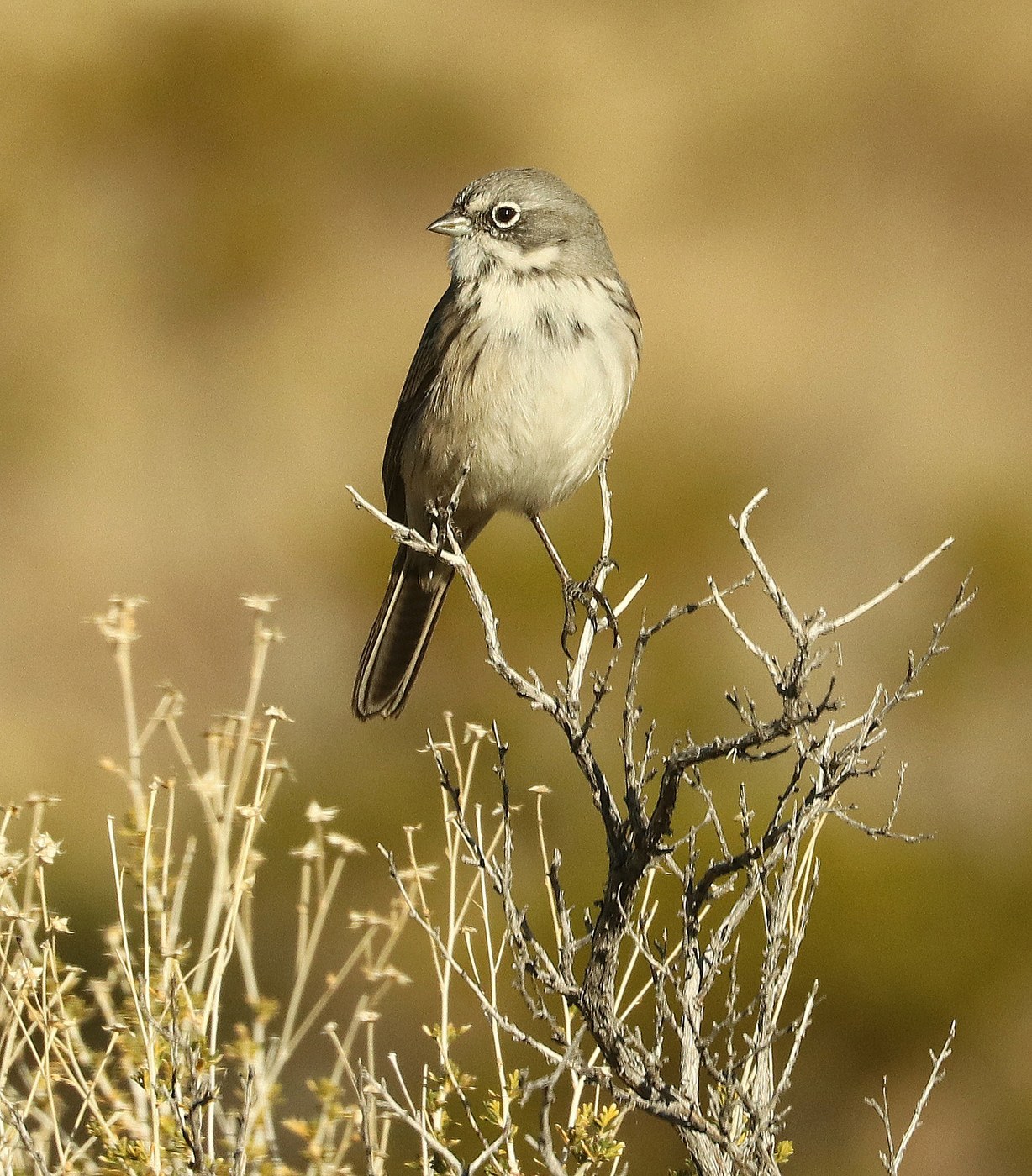
What Sagebrush Sparrow Feathers Look Like
The Sagebrush Sparrow is a pale, ground-dwelling sparrow of the Great Basin's sagebrush flats, split relatively recently from the closely related Bell's Sparrow, and its feathers show a fairly subdued but distinctive pattern. Crown and nape feathers are plain gray, unstreaked, contrasting with a white eyering (a soft-tissue/feather-base feature best seen on the whole bird but reflected in pale feather bases around the eye). A bold dark malar (whisker) stripe borders a white throat, so an isolated cheek feather showing this contrast is a useful clue. Back feathers are brown, moderately streaked. The most distinctive single feather is from the breast: a discrete dark spot at the center of an otherwise plain white breast, quite different from the diffuse streaking of many sparrows. The tail is fairly dark blackish-brown with white outer edges.
Step-by-Step: Is This Feather From a Sagebrush Sparrow?
- Check for a discrete central breast spot on an otherwise clean white breast feather — a strong, specific clue for this species.
- Look at crown feathers. Plain gray, unstreaked, supports the ID.
- Examine cheek/throat feathers for a bold dark malar stripe bordering white.
- Check back feathers for moderate brown streaking, not too bold or too faint.
- Look at tail feathers. Dark blackish-brown with white outer edges fits this species.
- Match habitat. Feathers found on open sagebrush flats in the interior western United States, especially the Great Basin, strongly support this species over coastal relatives.
Similar Species & How to Tell Them Apart
Bell's Sparrow, the closest relative (until recently considered the same species), is generally darker overall with less back streaking and is found mainly in California chaparral and coastal sage scrub rather than interior sagebrush flats — habitat is often the best first clue separating the two. Brewer's Sparrow, sharing similar sagebrush habitat, is smaller, shows fine streaking across the crown (unlike Sagebrush Sparrow's plain gray crown), and lacks the distinct central breast spot.
Where & When You'll Find Them
Sagebrush Sparrows breed across sagebrush flats and shrub-steppe of the Great Basin and surrounding interior western United States, and are migratory, wintering in the desert Southwest and northern Mexico. Feathers are most likely to be found on breeding territories in sagebrush habitat during spring and summer, with the post-breeding molt occurring in late summer before southbound migration, and a second opportunity for feather drop on wintering grounds in desert scrub further south.
Because this species relies heavily on large, unbroken stands of sagebrush for both nesting cover and foraging, feathers tend to concentrate near the base of larger shrubs where birds shelter from the desert sun and forage on the ground for insects and seeds. Fence lines, shrub islands, and washes running through sagebrush flats are also worth checking, since sparrows often perch briefly on low structures between bouts of ground foraging, leaving behind loose contour feathers caught in nearby vegetation.
Frequently asked questions
What is the single best diagnostic feather for this species?
A breast feather showing a discrete dark spot at the center of an otherwise plain white breast.
What does the crown look like?
Plain gray and unstreaked, distinct from sparrows with streaked or striped crowns.
How can I tell this apart from a Bell's Sparrow feather?
Bell's Sparrow is generally darker with less back streaking and comes from coastal California chaparral rather than interior sagebrush flats, so habitat is often the fastest clue.
How does this differ from a Brewer's Sparrow feather?
Brewer's Sparrow is smaller with a finely streaked crown and lacks the distinct central breast spot found on Sagebrush Sparrow.
When would I find feathers from this species?
Spring and summer on sagebrush breeding territory, plus late summer during the post-breeding molt before migration to desert wintering grounds.