

Sharp-tailed Grouse
Tympanuchus phasianellus
A prairie grouse recognized by its mottled brown plumage, V-shaped chevron markings on the underside, and a short, pointed central tail used in a distinctive courtship dance.
- Feather type
- Mottled contour feathers with a short, pointed central tail
- Colours
- Mottled brown, buff, and white with a pale, pointed central tail
- Bird size
- Medium, ~43-48 cm
Found a feather like this?
Identify any feather from a photo, free.
Overview
Overview
The Sharp-tailed Grouse is a prairie and brushland gamebird found across the northern Great Plains, parts of the Rocky Mountain foothills, and boreal transition zones of Canada and Alaska. It is named for its short, wedge-shaped tail with elongated central feathers that come to a point. Males gather at communal display grounds called leks, where they perform an elaborate stamping and cooing courtship dance.
- Family: Phasianidae (grouse)
- Diet: seeds, buds, berries, and invertebrates
- Range: northern Great Plains, parts of the Rockies, and boreal Canada and Alaska
Identifying the Feather
Feather Identification
- Body feathers: mottled brown, buff, and white, with V-shaped chevron markings on the breast and flanks distinct from barred patterns seen in other prairie grouse.
- Tail: short, wedge-shaped tail with a pointed profile; central feathers are longer than outer feathers, and the underside of the tail is largely white.
- Neck: males have inflatable purple-violet neck sacs and yellow eye combs used during lek display.
- Wing: in flight, white markings on the wing and outer tail feathers are visible, useful for identification.
- Vs. similar species: the pointed tail and chevron-marked underparts distinguish it from the Greater and Lesser Prairie-Chickens, which show barred underparts and a rounded, dark tail.
Plumage & Molt
Plumage Notes
Both sexes show similar mottled plumage, though males have slightly more developed neck sacs and eye combs, most visible during lek displays in spring. Females are marginally duller and lack the inflatable neck sacs. Juveniles resemble adults but with softer patterning until their first full molt.
Habitat & Range
Habitat & Range
Sharp-tailed Grouse inhabit native prairie, brushland, open woodland, and boreal forest transition zones across the northern Great Plains of the United States and Canada, extending into parts of Alaska. They are generally non-migratory, though flocks may shift locally in response to food and cover availability.
Behavior & Field Notes
Behavior
Sharp-tailed Grouse forage on the ground for seeds, buds, berries, and invertebrates, gathering in flocks outside the breeding season. Males perform an elaborate communal courtship display on traditional lek grounds, involving rapid foot-stamping, tail rattling, and cooing calls while inflating purple neck sacs. Nests are ground scrapes concealed in grass or shrub cover.
Frequently asked questions
What gives the Sharp-tailed Grouse its name?
Its short, wedge-shaped tail has elongated central feathers that come to a point, distinguishing it from other prairie grouse.
How can you tell Sharp-tailed Grouse feathers from Prairie-Chicken feathers?
Sharp-tailed Grouse show V-shaped chevron markings and a pointed white-edged tail, while Prairie-Chickens show barred underparts and a rounded, dark tail.
What is a lek in Sharp-tailed Grouse behavior?
A lek is a communal display ground where males gather to perform stamping, tail-rattling, and cooing displays to attract females.
Where does the Sharp-tailed Grouse live?
It occupies prairie, brushland, and open woodland across the northern Great Plains, parts of the Rockies, and boreal Canada and Alaska.
Sharp-tailed Grouse guides
In-depth guides for identifying and understanding Sharp-tailed Grouse.

Other feathers you may enjoy

Ring-necked Pheasant
Body (contour), tail, and wing feathers

Bornean Peacock-pheasant
Contour and tail feathers with iridescent ocelli

Crested Argus
Extremely elongated, ocellated (eyespot-patterned) tail feathers among the longest of any bird; tall, erectile crest

Grey Partridge
Body and flank feathers

Willow Ptarmigan
Larger, stockier body feathers with warmer rufous tones in summer; tail feathers black year-round

Wild Turkey
Broad, iridescent body feathers and large flight and tail feathers

Bulwer's Pheasant
Contour feathers and elongated white tail feathers
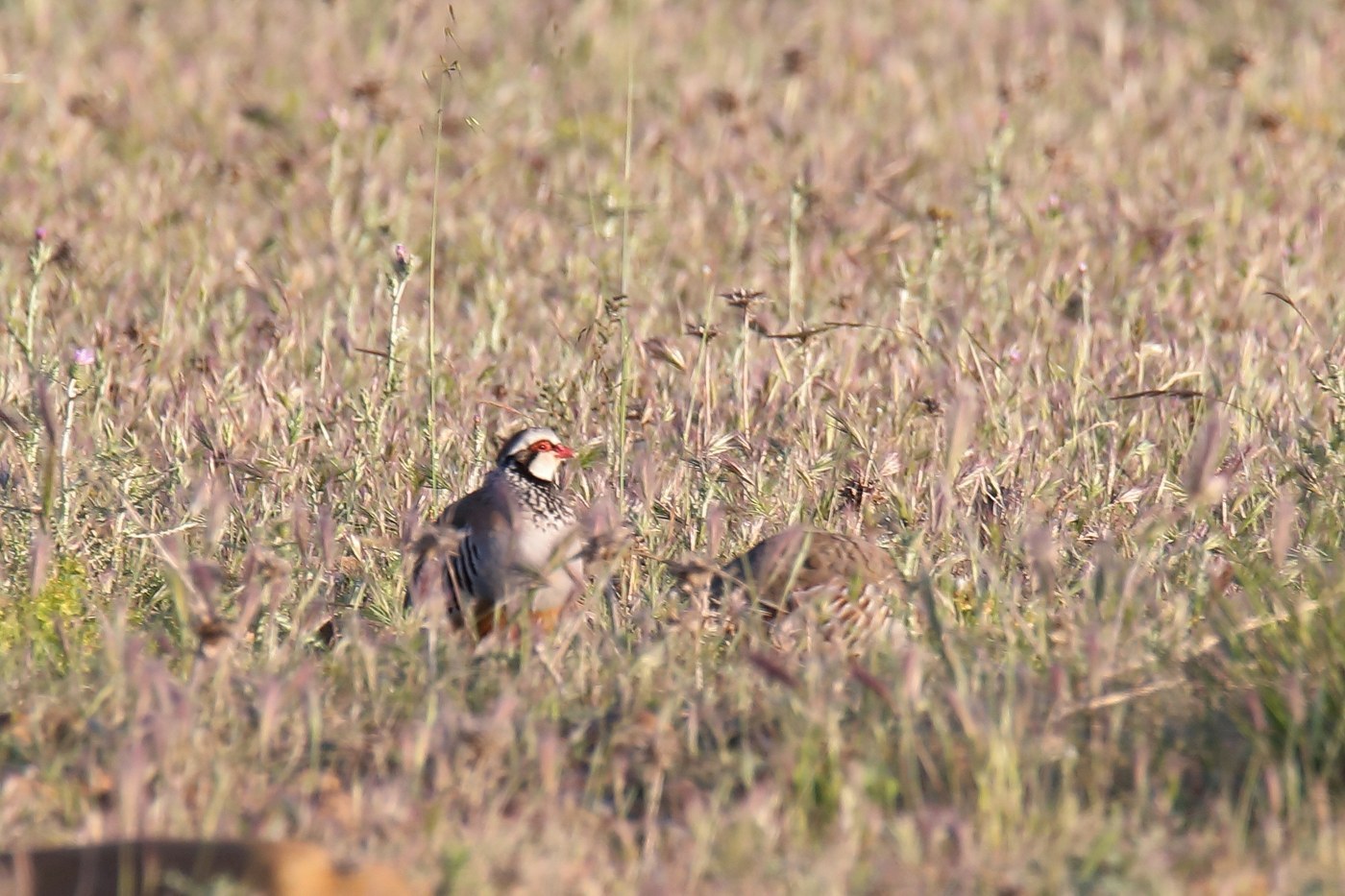
Red-legged Partridge
Flank, body, and flight feathers

White-tailed Ptarmigan
Small body feathers with a tail that stays pure white year-round, unlike other ptarmigan

Edwards's Pheasant
Contour and tail feathers

Sooty Grouse
Dense, plain contour feathers with a pale-tipped, fanned tail

Snow Partridge
Finely vermiculated barred contour feathers