
How to Identify Song Thrush Feathers
A guide to the warm brown feathers, arrowhead-shaped spots, and orange-buff underwing of the Song Thrush, a common European garden and woodland bird.
Read the full Song Thrush encyclopedia entry →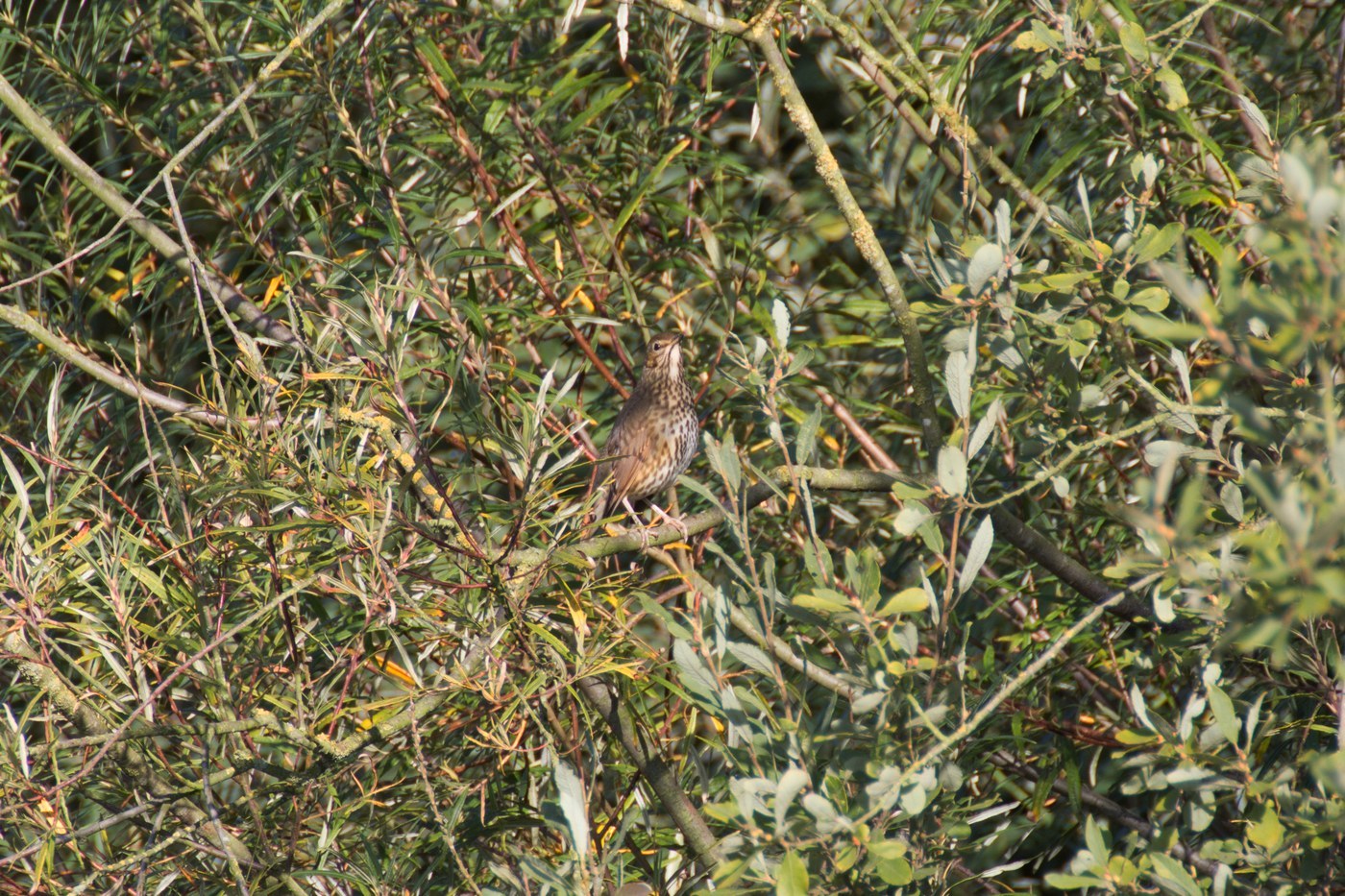
What Song Thrush Feathers Look Like
Song Thrush is a common European woodland and garden bird whose feathers combine a warm brown back with a distinctively spotted breast. Back and wing feathers are a uniform warm olive-brown, without streaking or barring. Breast and belly feathers are pale buff to cream, marked with bold dark brown spots shaped like inverted teardrops or arrowheads — larger, rounder, and more evenly spaced than the fine streaking seen in many sparrows, and a genuinely useful shape to check under magnification. The most diagnostic feather of all comes from under the wing: underwing covert feathers are a distinct orange-buff color, a feature that shows clearly if the bird is seen in flight and is equally useful when examining a shed underwing feather directly. Tail feathers are plain brown with no strong pattern.
Step-by-Step: Is This Feather From a Song Thrush?
- Check underwing color first. A distinctly orange-buff underwing covert feather is one of the most reliable single clues for this species among European thrushes.
- Look at spot shape on breast feathers. Bold, rounded, inverted-teardrop or arrowhead-shaped dark brown spots on a pale buff background match Song Thrush.
- Assess back color. A uniform warm olive-brown back feather, without gray or heavily contrasting tones, fits this species.
- Rule out streaking. The underparts show spots, not narrow streaks, which helps separate this species from streak-breasted songbirds entirely outside the thrush family.
- Confirm tail is plain. A brown tail feather with no white corners or strong pattern supports Song Thrush over some larger thrush relatives.
Similar Species & How to Tell Them Apart
Mistle Thrush is larger, grayer-brown above, and shows rounder, bolder spots than Song Thrush, plus a white, not orange-buff, underwing and white corners on the outer tail feathers — all useful points of separation. Redwing is smaller and shows a bold cream supercilium along with orange-red flanks and underwing rather than the more orange-buff, less reddish tone of Song Thrush's underwing, plus finer overall streaking rather than rounded spots. Juvenile or female Common Blackbird lacks the organized spotting pattern altogether, showing a much darker, more uniformly dusky-brown plumage without Song Thrush's crisp arrowhead spots.
Where & When You'll Find Them
Song Thrushes live in woodlands, hedgerows, parks, and gardens across Europe and western Asia, and many northern and eastern populations are migratory, moving to milder areas around the Mediterranean and western Europe for winter — meaning feathers can be found well outside the breeding range during the colder months. The complete post-breeding molt happens from around July through September, timed before or during the start of migration, making late summer the best window to find fresh feathers in and around garden and woodland breeding territories, while wintering-ground feathers may be encountered later in the season farther south.
Frequently asked questions
What's the single best feather clue for Song Thrush?
An underwing covert feather with a distinct orange-buff color — this is one of the most reliable field marks for the species and holds up well on a shed feather.
How do the breast spots differ from a sparrow's streaking?
Song Thrush breast feathers show bold, rounded, inverted-teardrop or arrowhead-shaped spots, quite different from the narrow streaks found on many sparrows.
How is this different from Mistle Thrush?
Mistle Thrush is larger and grayer above with rounder, bolder spots, a white (not orange-buff) underwing, and white corners on the outer tail feathers.
How do I rule out Redwing?
Redwing shows orange-red, more reddish flanks and underwing along with a bold cream eyebrow stripe, while Song Thrush's underwing runs more orange-buff and its spotting is less extensively colored.
When is molt most active?
From roughly July through September, after breeding and before or during the start of migration for many populations.