
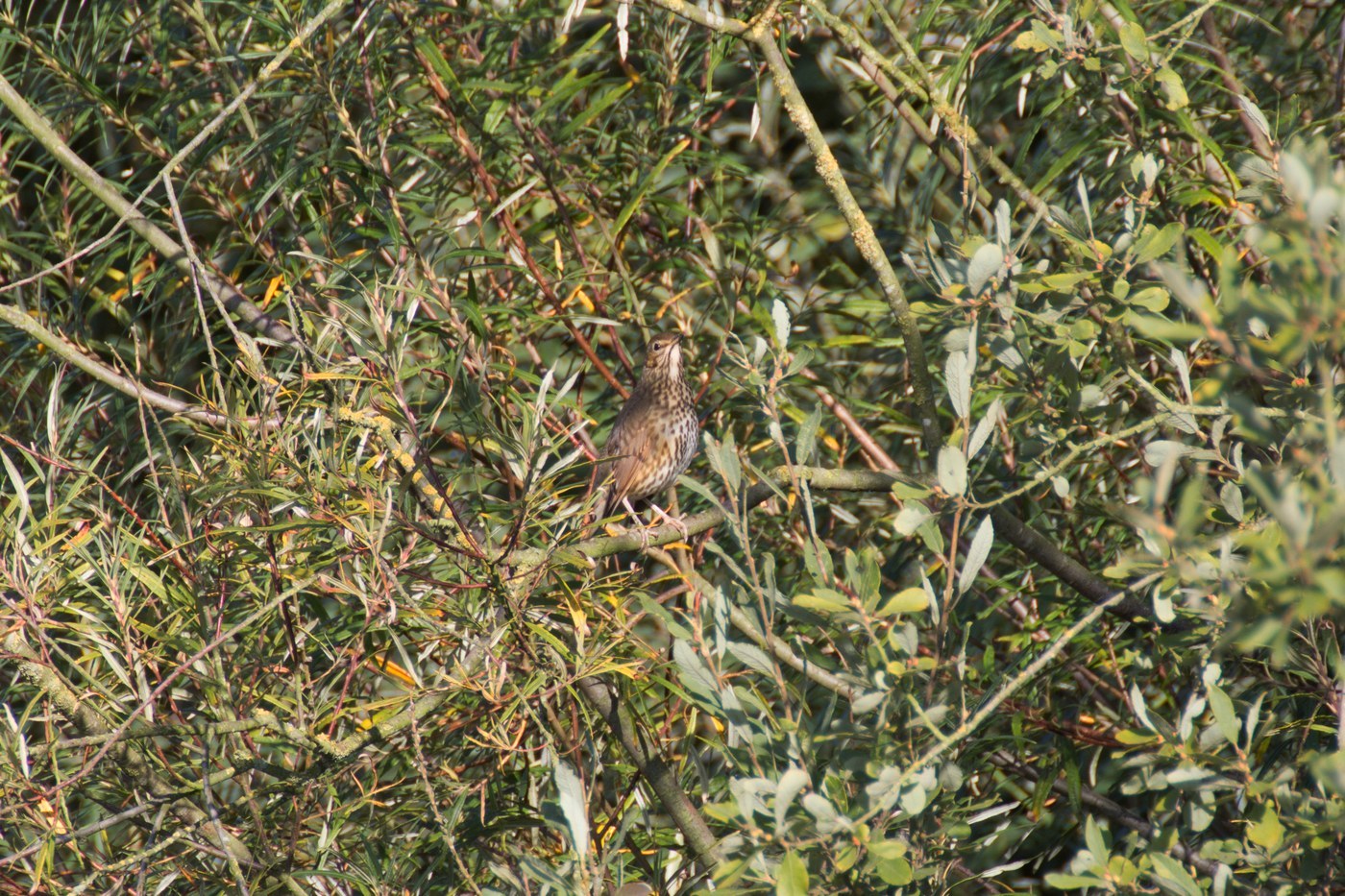
Song Thrush
Turdus philomelos
A warm brown thrush with cream, finely spotted underparts and a distinctive buff-orange wash under the wing, smaller and more delicately marked than its larger thrush relatives.
- Feather type
- Brown upperpart feathers; cream underparts with small arrow-shaped dark spots; warm buff underwing feathers
- Colours
- Warm brown above, cream to buff below with small dark spear-shaped spots
- Bird size
- Medium songbird, ~23 cm
Found a feather like this?
Identify any feather from a photo, free.
Overview
The Song Thrush is a familiar garden and woodland bird across much of Europe, known for its rich, repetitive song as much as its neatly spotted plumage. It is smaller and more delicately marked than the related Mistle Thrush, with which it sometimes overlaps in habitat.
It favors woodland, hedgerows, and gardens with good cover, and is a valuable indicator species of feather condition since its underparts show a very specific spotting pattern.
A Song Thrush feather is recognized by cream to buff underparts marked with small, neat, arrow- or spear-shaped dark spots, along with a warm orange-buff wash visible on the underwing coverts — features that together separate it from the larger, bolder-spotted Mistle Thrush.
Identifying the Feather
Underpart feathers
- Cream to pale buff background with small, neatly shaped dark spots, each spot often described as spear- or arrow-shaped rather than round.
- Spots are smaller and more numerous than those of a Mistle Thrush.
Underwing feathers
- Underwing covert feathers show a warm buff-orange wash, a useful clue when a wing or underwing feather is found.
Upperpart feathers
- Back and wing feathers are a warm, uniform brown without strong markings.
Confusion species
Mistle Thrush underparts are larger, more rounded, and more sparsely spotted with whitish (not buff) underwing feathers; Redwing shows an orange-red flank/underwing rather than buff, plus a pale eyebrow stripe feather pattern not found in Song Thrush.
Plumage & Molt
Adults are warm brown above, with cream to pale buff underparts marked by small, spear-shaped dark spots, and a warm buff-orange wash on the underwing. Males and females look alike.
Juveniles show pale streaking on the back in addition to the spotted underparts, a feature that fades after their first molt.
Song Thrushes undergo a complete post-breeding molt in late summer.
Habitat & Range
Song Thrushes occupy woodland, hedgerows, parks, and gardens with sufficient shrub and tree cover, foraging often on lawns and leaf litter. They are widespread across much of Europe.
The species is resident in milder parts of its range, while northern and eastern populations are migratory, moving to milder areas for winter.
Behavior & Field Notes
Song Thrushes feed on invertebrates including earthworms and snails, using a distinctive habit of smashing snail shells against a favored stone ('anvil') to extract the animal. They also take berries and fruit seasonally.
Their song is loud, musical, and characteristically repetitive, with phrases often repeated two or three times. They build a neat mud-lined cup nest in shrubs or trees.
A cream, spear-spotted feather with a buff-orange underwing wash, found in gardens or woodland, is characteristic of Song Thrush.
Frequently asked questions
How can I tell a Song Thrush feather from a Mistle Thrush feather?
Song Thrush spots are smaller and more spear-shaped with a buff-orange underwing wash, while Mistle Thrush spots are larger and rounder with a whitish underwing.
What color is the underside of a Song Thrush wing?
The underwing coverts show a warm buff-orange wash, a useful identification clue distinct from other European thrushes.
Are Song Thrush feathers spotted or streaked?
The underparts are spotted with small, neatly shaped dark marks rather than streaked.
Could a Song Thrush feather be confused with a Redwing feather?
Redwing shows orange-red flank and underwing feathers along with a pale eyebrow stripe pattern, differing from the buff (not red) underwing tone of Song Thrush.
Where are Song Thrush feathers commonly found?
In gardens, hedgerows, parks, and woodland across much of Europe, especially near favored feeding spots on lawns or leaf litter.
Song Thrush guides
In-depth guides for identifying and understanding Song Thrush.
Other feathers you may enjoy

Yellow-breasted Bunting
Contour and flight feathers, chestnut-and-yellow breeding pattern
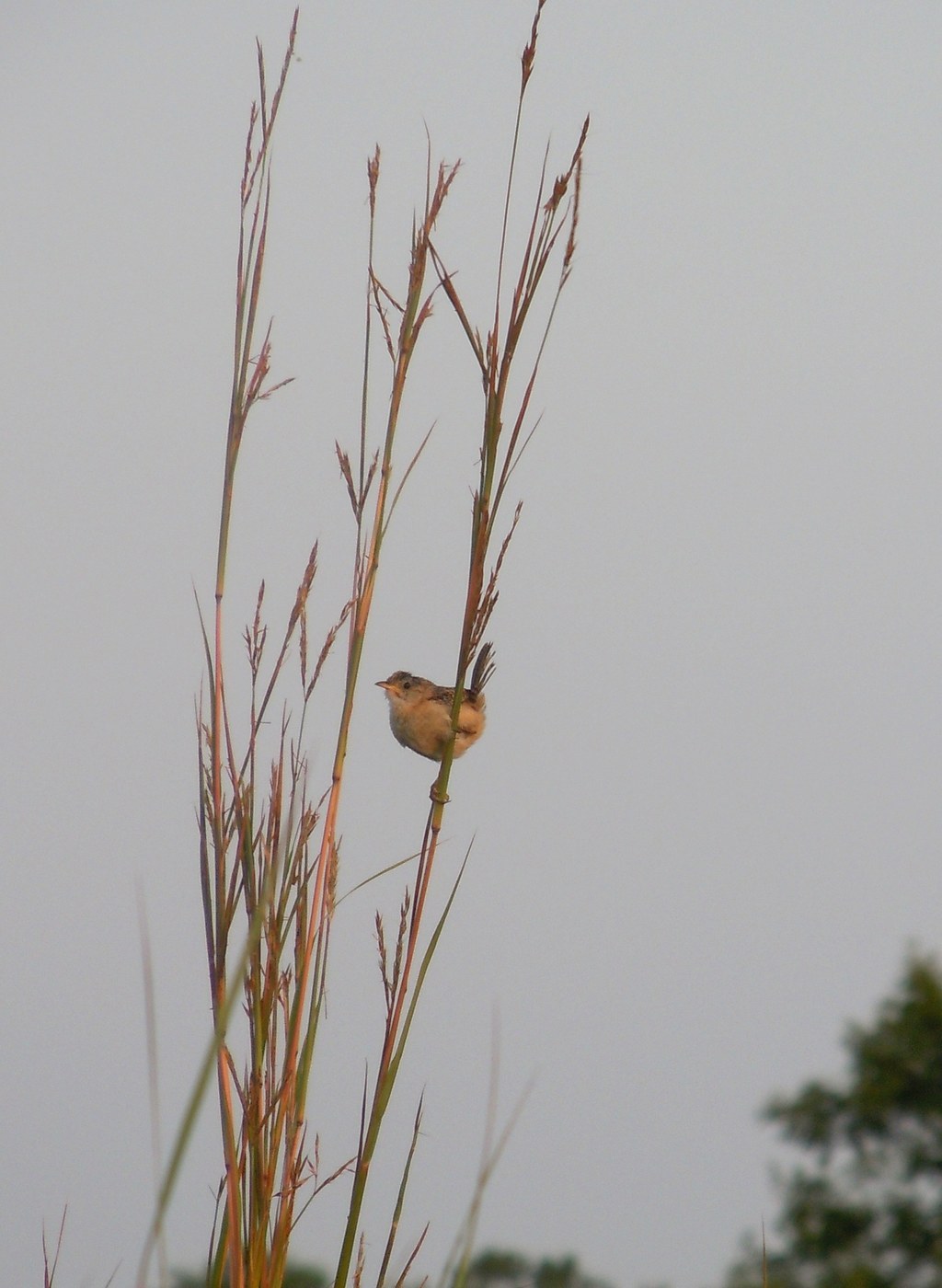
Sedge Wren
Tiny streaked crown and back feathers

Yellow-winged Cacique
Glossy black body feathers, yellow wing patch, shaggy crest

Yellow Warbler
Small contour and flight feathers
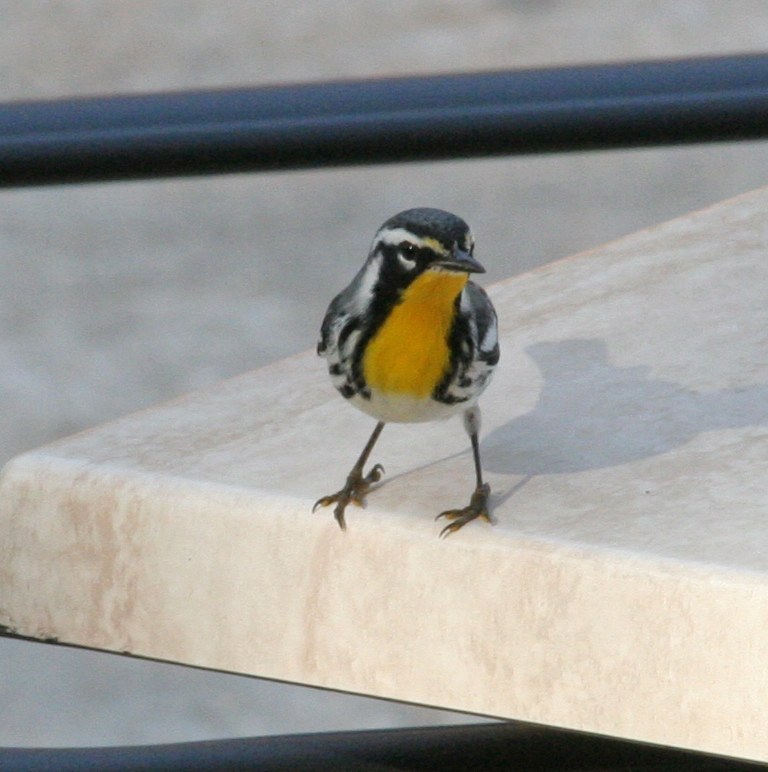
Yellow-throated Warbler
Small contour and flight feathers
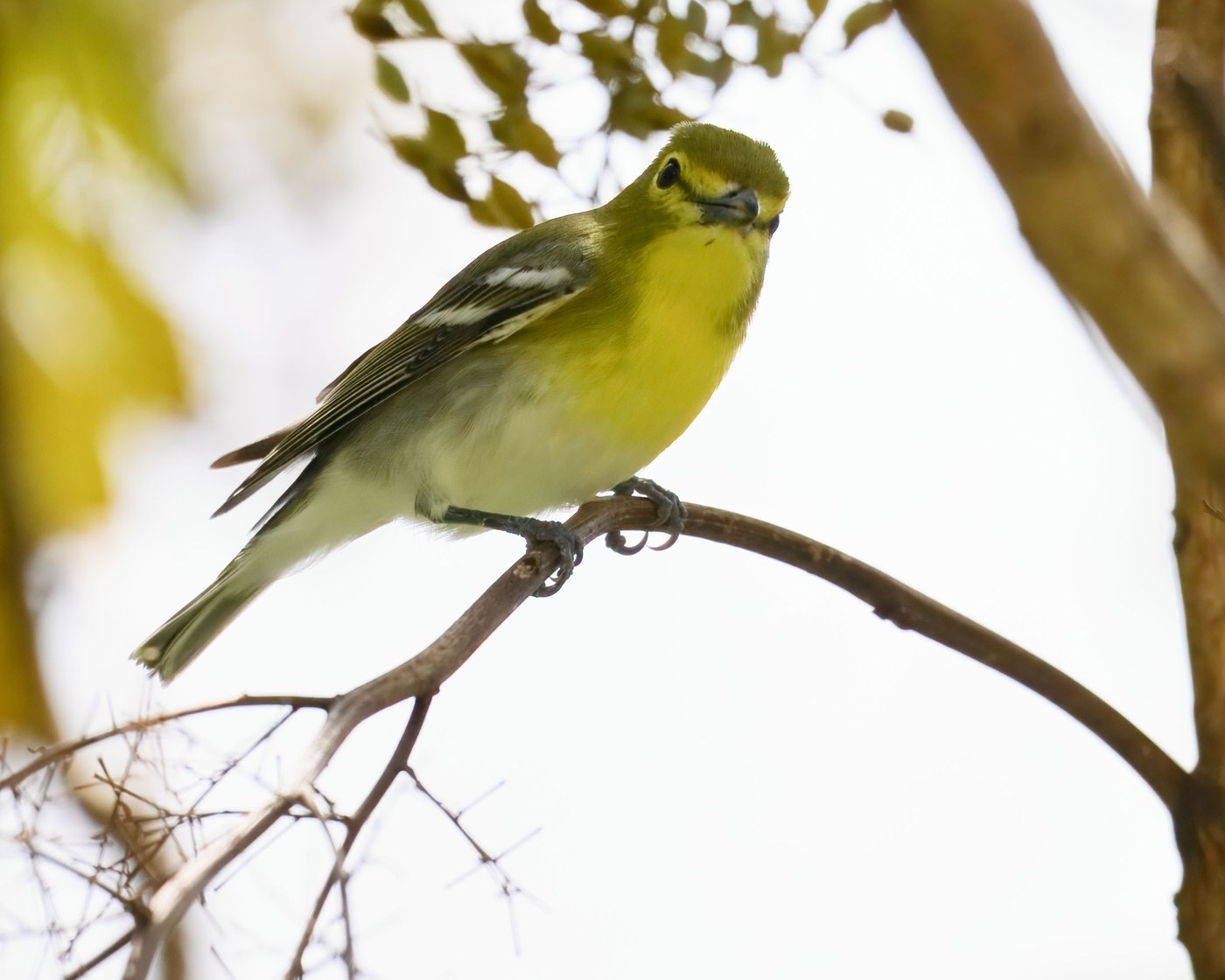
Yellow-throated Vireo
Bright yellow throat and spectacle feathers; olive-green back feathers; two white wing-bar feathers

Yellow-rumped Warbler
Small contour and flight feathers
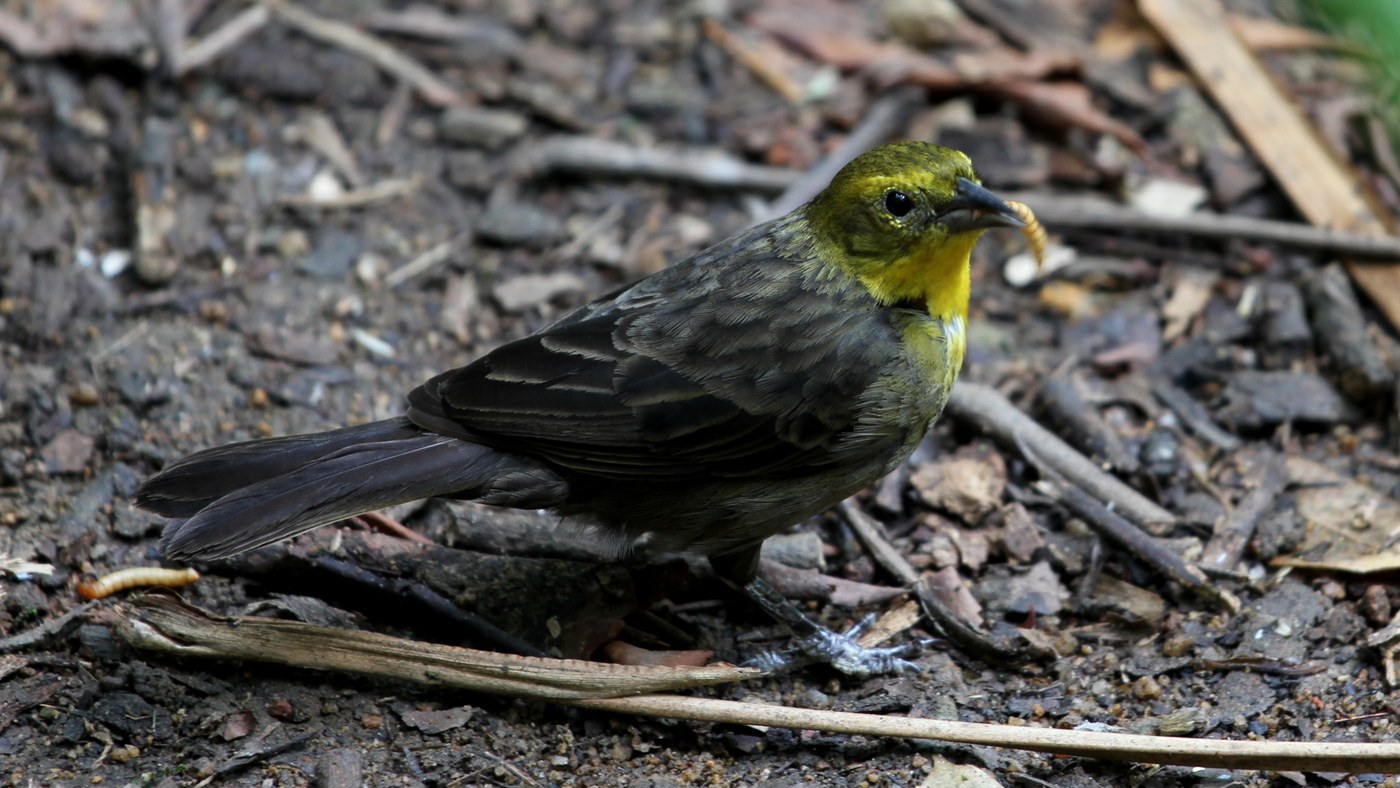
Yellow-hooded Blackbird
Contrasting hood and body feathers
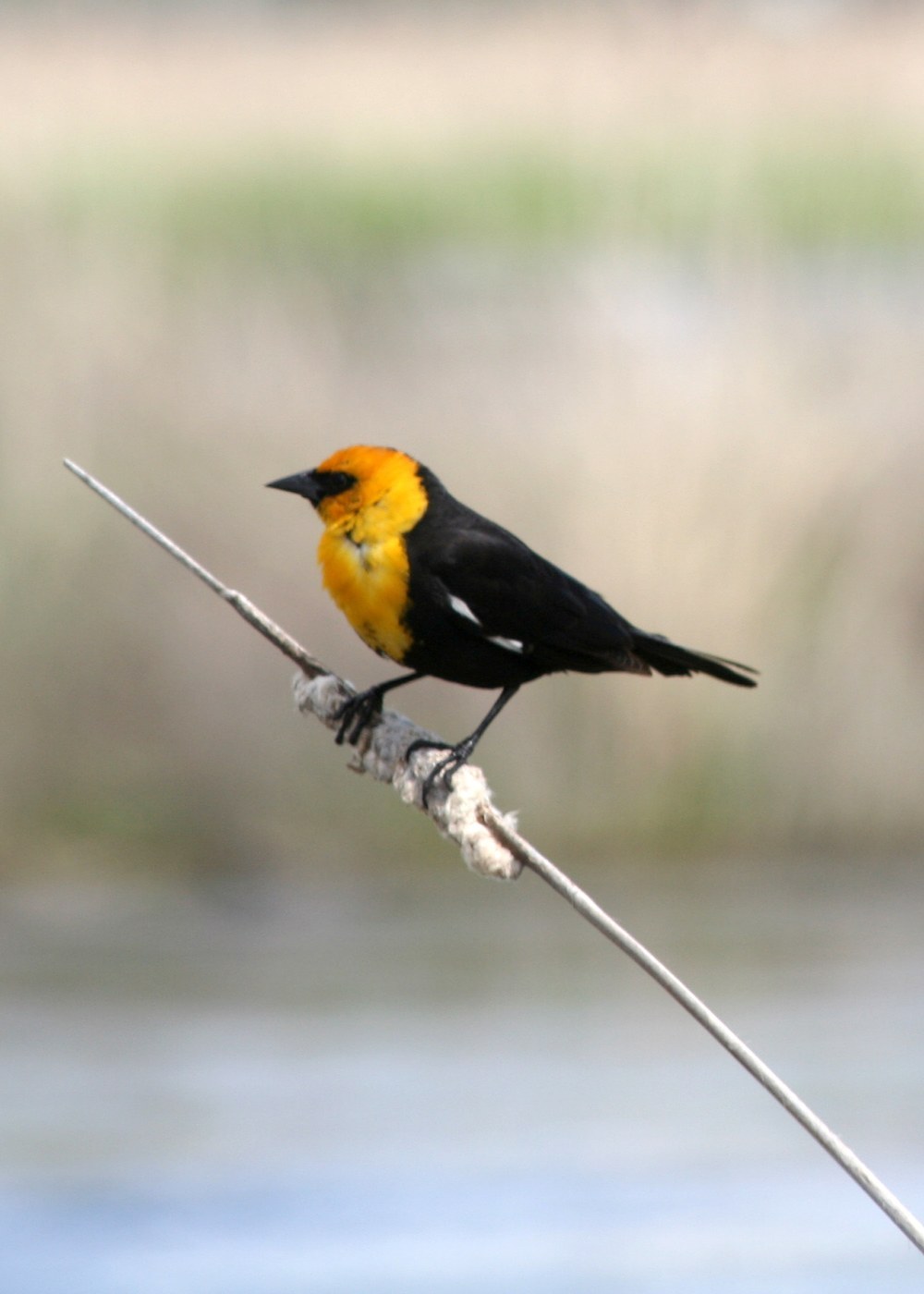
Yellow-headed Blackbird
Glossy black body plumage with a bright yellow head and breast

Yellow-eyed Junco
Contour and flight feathers

Yellow-fronted Canary
Small, smooth body plumage

Yellow-breasted Greenfinch
Compact, smooth body plumage