
How to Identify Spur-winged Goose Feathers
A guide to identifying Spur-winged Goose feathers by their large size, glossy black-green body plumage, white belly and wing patch, and bare red facial skin, distinguishing them from Egyptian Goose and other African waterfowl.
Read the full Spur-winged Goose encyclopedia entry →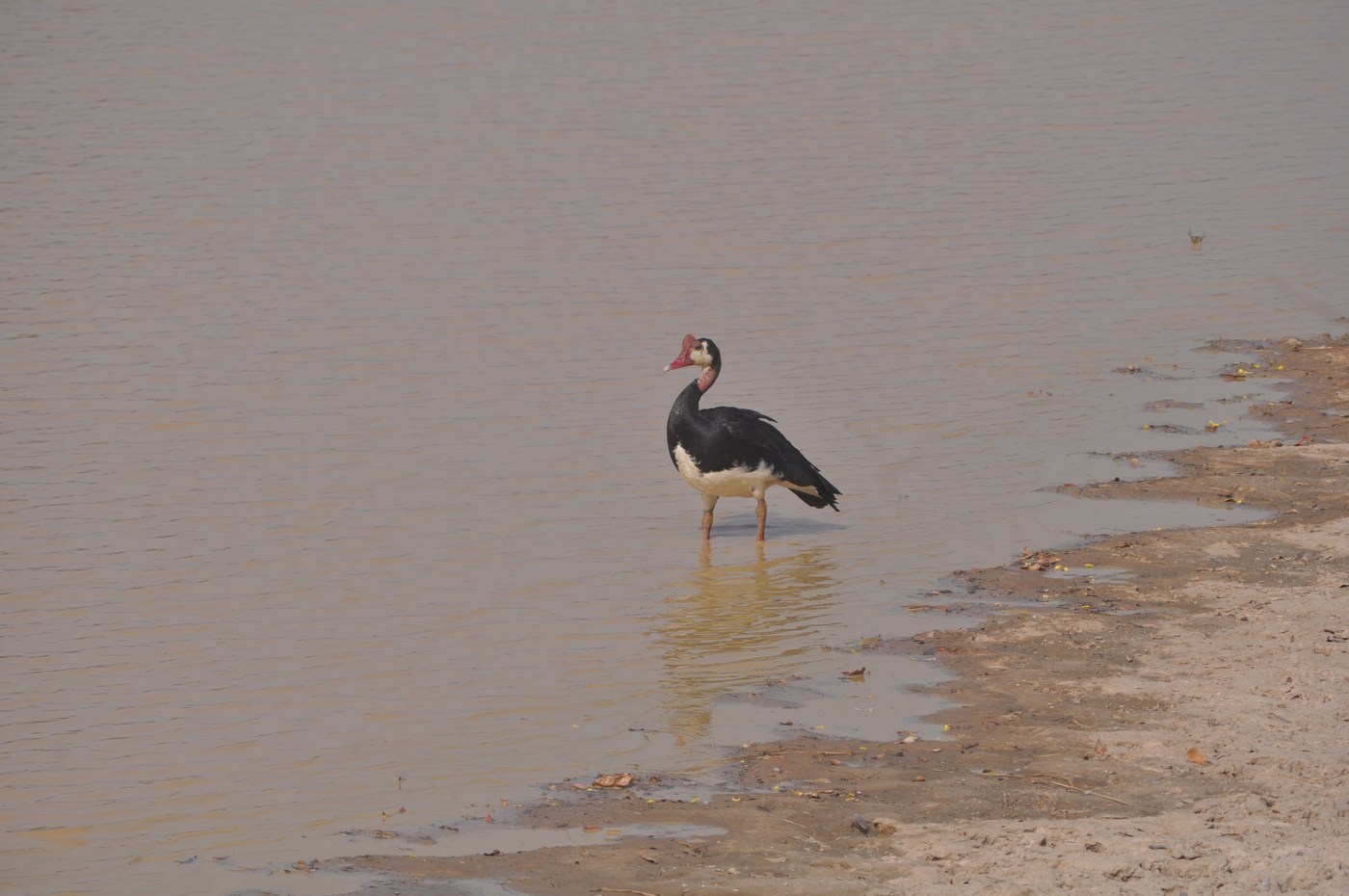
What Spur-winged Goose's Feathers Look Like
Spur-winged Goose is Africa's largest waterfowl species by wingspan, and its feathers reflect an unusually big-bodied, heavily built goose. Body feathers are predominantly glossy black with a strong green and purple iridescent sheen, especially vivid on the back, neck, and wing coverts in good light — a genuinely striking gloss for a goose-sized bird. Depending on subspecies and individual variation, the belly and lower breast are white, creating a sharp contrast against the glossy black upperparts and neck in many birds, though some populations show more extensively dark underparts.
The wing carries a bold, clean white patch across the greater coverts, visible as a bright panel on the closed wing and flashing prominently in flight against otherwise blackish flight feathers. The face and forehead are covered in bare, warty red skin rather than feathers (more extensive in males), so intact head specimens will show this unfeathered patch bordering otherwise dark head plumage. The species is also named for sharp bony spurs at the bend of the wing, a skeletal weapon used in fights rather than a feather feature, but their presence on an intact wing further confirms this identification.
Step-by-Step: Is This Feather From a Spur-winged Goose?
- Check for strong green-purple iridescent gloss on black body feathers. This vivid sheen, unusual for a goose, is a strong first clue.
- Look for a clean white belly, contrasting against dark upperparts. This pattern supports the species, though check regional variation since some birds show darker underparts.
- Confirm a white patch on the wing coverts. A bold white panel on otherwise dark wing feathers matches this species well.
- Assess overall feather size. Given the species' status as Africa's largest waterfowl by wingspan, feathers should be notably large and robust.
- Look for bare red facial skin or wing spurs if intact material is available. Either feature, while not feathers themselves, strongly confirms Spur-winged Goose alongside the plumage clues.
Similar Species & How to Tell Them Apart
- Egyptian Goose — much smaller, with buffy-brown body plumage overall, a dark eye patch, and a green speculum rather than glossy all-over black-green iridescence.
- Knob-billed (Comb) Duck — smaller, with contrasting white head speckled with black spots and a glossy dark green-black back, but lacking the extensive bare red facial skin and overall much larger size of Spur-winged Goose.
- African Openbill (a stork, unrelated) — dark glossy plumage can superficially resemble Spur-winged Goose feathers, but lacks any white belly or wing patch and has a distinctive gapped bill unrelated to waterfowl structure.
Where & When You'll Find Them
Spur-winged Geese inhabit wetlands, floodplains, rivers, and lakes across much of sub-Saharan Africa, often gathering in large flocks on grassy floodplains and shallow wetlands to graze and forage. Because the species doesn't follow a fixed temperate molt calendar, feathers can be found across much of the year near these wetland habitats, with an uptick during the flightless wing molt period that follows breeding, when large numbers of birds become temporarily unable to fly and shed flight feathers together near favored waters.
Frequently asked questions
What is the standout feature of Spur-winged Goose feathers?
A strong green-and-purple iridescent gloss on otherwise glossy black body feathers, combined with a clean white belly and a bold white patch on the wing coverts — an unusually vivid combination for a goose.
How large should I expect the feathers to be?
Quite large and robust, since Spur-winged Goose is Africa's largest waterfowl species by wingspan, so feathers should feel substantial compared to typical duck or smaller goose feathers.
What are the wing spurs mentioned in the name?
Sharp bony spurs at the bend of the wing used as weapons in fights — not feathers themselves, but their presence on an intact wing specimen strongly confirms this species alongside the plumage pattern.
How do I tell this apart from Egyptian Goose?
Egyptian Goose is considerably smaller with buffy-brown body plumage, a dark eye patch, and a green speculum, lacking the extensive glossy black-green iridescence and white belly/wing patch of Spur-winged Goose.
Is there a specific season for finding its feathers?
Feathers can turn up across much of the year near African wetlands, but look especially during the flightless wing molt period following breeding, when large numbers of birds shed flight feathers together.