
How to Identify Willow Tit Feathers
How to identify the matte black cap, pale wing panel, and buffy flanks that separate a Willow Tit's feathers from the very similar Marsh Tit.
Read the full Willow Tit encyclopedia entry →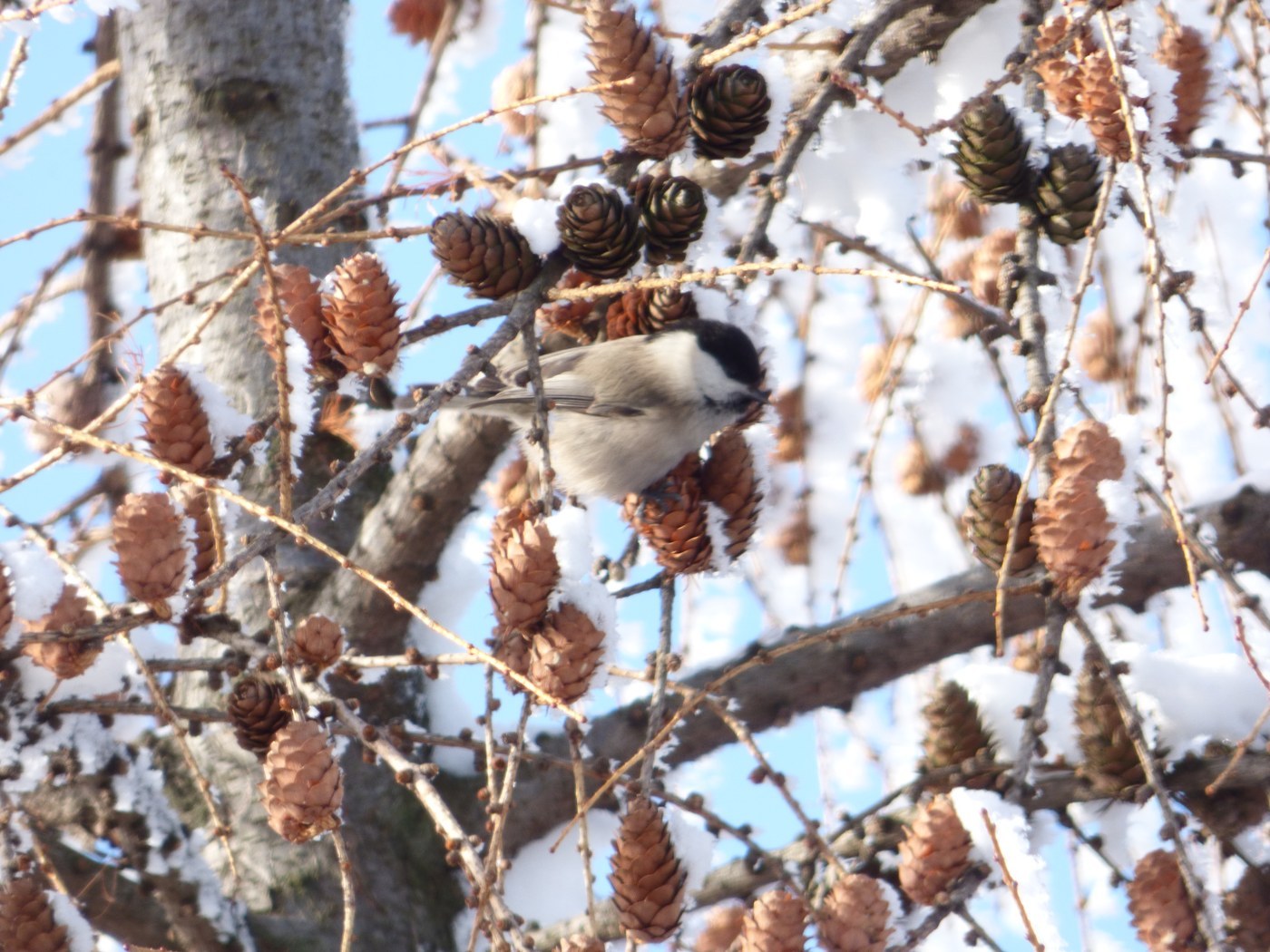
What Willow Tit's Feathers Look Like
Willow Tit is a small Eurasian woodland bird notorious for being nearly identical to Marsh Tit in the field, but a few feather-level details can help narrow things down.
- Cap feathers: a matte, sooty black crown and nape, distinctly duller and less glossy than the crisp, shiny black cap of Marsh Tit — this difference in sheen is one of the most useful clues available.
- Cheek/face feathers: pale off-white to buffy-white, forming a large plain cheek patch that wraps around behind the eye.
- Back feathers: warm grayish-brown, unstreaked, similar in tone to several other small tits.
- Wing feathers: a pale panel is visible on the folded secondary feathers, formed by pale fringes on those feathers — a feature Marsh Tit generally lacks or shows only faintly, making this one of the better distinguishing marks between the two species.
- Underparts feathers: whitish on the breast grading to warmer buffy-brown on the flanks, generally a bit richer/buffier than Marsh Tit's underparts.
- Throat feathers: a small black bib, similar in extent to Marsh Tit's, so not very useful alone for separating the two.
- Size: contour feathers 1.5-2 cm, flight feathers 4.5-5.5 cm, consistent with a very small woodland songbird.
Step-by-Step: Is This Feather From a Willow Tit?
- Check the cap's sheen. A dull, matte black crown/nape feather (not shiny) favors Willow Tit; a glossy, shiny black feather favors Marsh Tit.
- Look for a pale wing panel. A secondary feather with a distinctly pale fringe, creating a visible panel on the closed wing, supports Willow Tit over Marsh Tit, which usually looks more uniformly plain-winged.
- Assess flank color. Warmer, buffier tones on flank feathers lean toward Willow Tit; paler, grayer flanks lean toward Marsh Tit.
- Don't rely on the black bib size alone. Both species show a small black throat patch of similar extent, so this feature by itself won't separate them.
- Weigh habitat as a tiebreaker. Feathers found in damp, boggy woodland, willow carr, or conifer-dominated forest lean toward Willow Tit, which favors wetter, often coniferous habitat more than the drier deciduous woodland Marsh Tit typically prefers.
Similar Species & How to Tell Them Apart
- Marsh Tit: the primary look-alike; distinguished by a glossier black cap, a less obvious (or absent) pale wing panel, and generally paler, less buffy flanks compared to Willow Tit.
- Coal Tit: shows a distinct white patch on the nape, a feature entirely absent in both Willow Tit and Marsh Tit.
- Sombre Tit: larger and duller overall with a browner cap rather than true black, found in a more southeastern range with limited overlap.
- Black-capped Chickadee (non-overlapping range): very similar-looking North American relative, but ranges don't overlap with Willow Tit's Eurasian distribution, so geography settles the question.
Where & When You'll Find Them
Willow Tit is found across a broad swath of temperate and boreal Eurasia, favoring damp woodland, willow and alder carr, birch scrub, and coniferous forest, often in wetter or boggier sites than Marsh Tit. It is largely non-migratory, excavating its own nest holes in soft, rotten wood, so feathers can be found year-round within its habitat, with a modest increase during the late spring and summer breeding and post-fledging molt period.
Frequently asked questions
What's the single best clue to separate this from Marsh Tit?
Cap sheen — Willow Tit's crown feathers are dull, matte black, while Marsh Tit's are noticeably glossier and shinier.
Does the wing pattern help too?
Yes — a secondary feather with a distinct pale panel/fringe supports Willow Tit, since Marsh Tit usually shows a more uniformly plain wing.
Is the black throat patch useful for telling them apart?
Not really on its own — both species show a similarly sized small black bib, so it isn't a reliable distinguishing feature by itself.
What habitat should I consider as a tiebreaker?
Damp, boggy woodland, willow carr, or conifer forest favors Willow Tit, while drier deciduous woodland is more typical of Marsh Tit.