
Willow Tit
Poecile montanus
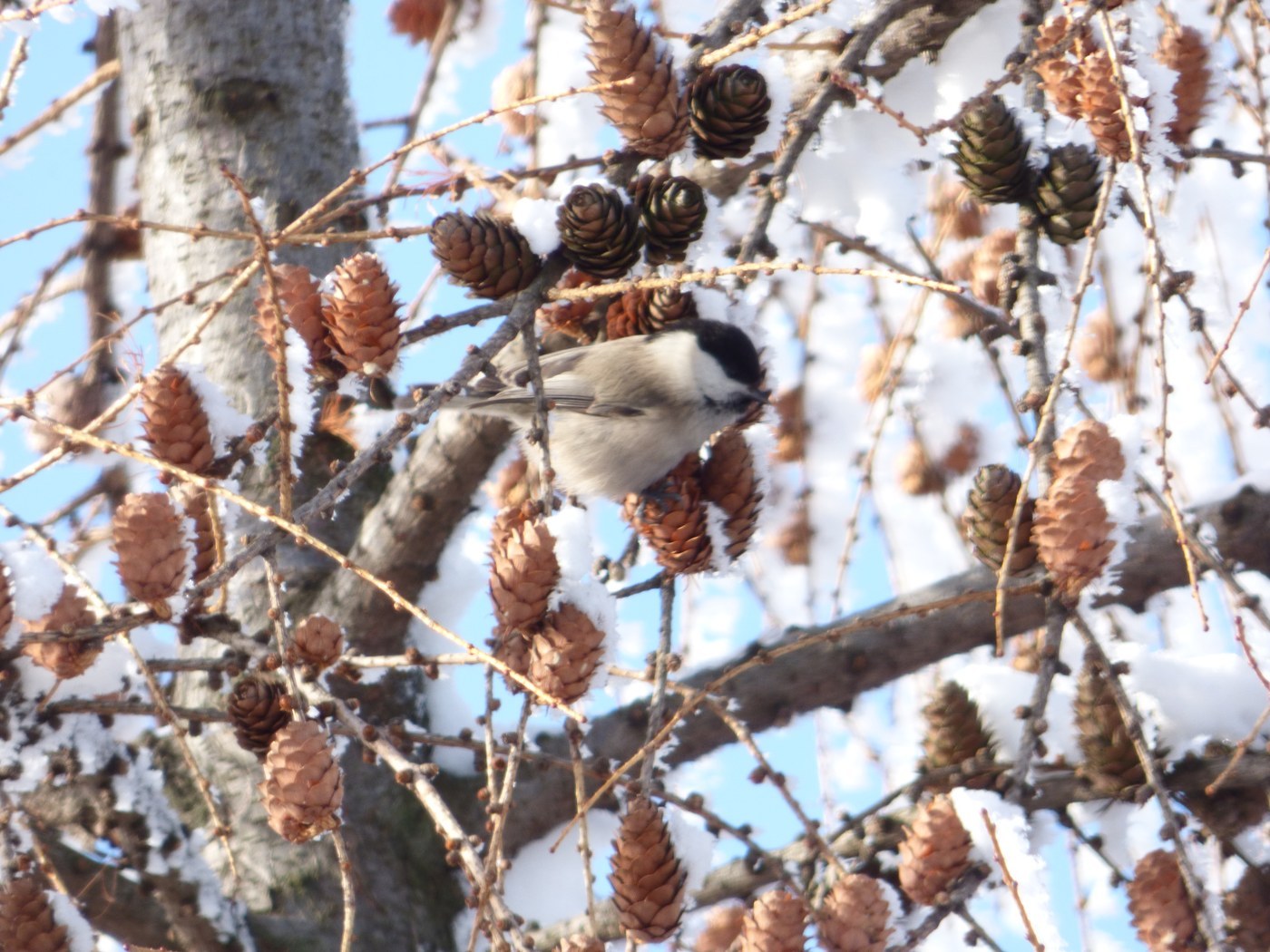
A plain woodland tit closely resembling the Marsh Tit, distinguished by a duller matte-black cap, a larger bib, and a pale panel across the folded wing formed by pale-edged secondary feathers.
- Feather type
- Small, plain contour feathers; flight feathers with a pale secondary panel
- Colours
- Matte sooty-black cap, larger black bib, pale brownish-buff body with a pale wing panel
- Bird size
- Small, ~11.5-12 cm
Found a feather like this?
Identify any feather from a photo, free.
Overview
The Willow Tit is a subtly plumaged tit favoring damp woodland, willow and birch scrub, and is notoriously one of the most difficult common tits to distinguish from its close relative, the Marsh Tit, both visually and acoustically.
Unlike most tits, it excavates its own nest cavity in soft, rotten wood rather than relying on existing holes, a distinctive behavioral trait tied to its habitat preference for damp, decaying timber.
Its feathers require careful comparison with Marsh Tit, focusing on cap gloss, bib size, and the presence of a pale wing panel to confirm identification.
Identifying the Feather
Identifying Willow Tit feathers
- Crown feathers: Matte, sooty black rather than glossy — duller in appearance than the shiny cap of Marsh Tit.
- Bib feathers: Larger and often more diffuse-edged black bib compared to the neat, small bib of Marsh Tit.
- Wing feathers: Show a pale panel formed by light edging on the secondary feathers, visible on the folded wing — a feature Marsh Tit lacks.
- Body feathers: Plain pale brownish-buff, similar overall tone to Marsh Tit.
- Compared to similar species: The matte cap, larger bib, and pale secondary wing panel together distinguish Willow Tit feathers from the glossier, smaller-bibbed, plain-winged Marsh Tit.
Plumage & Molt
Plumage overview
Adults show a matte black cap, a fairly large black bib, plain grey-brown upperparts with a pale panel on the secondary feathers, and pale buff-white underparts. Sexes look alike.
Juveniles closely resemble adults, with only subtle differences in feather freshness before the first molt.
Habitat & Range
Habitat and range
Willow Tits are found across northern and central Europe and temperate Asia, favoring damp woodland, willow and alder carr, birch woods, and boggy conifer edges with decaying timber suitable for nest excavation. Most populations are resident, with limited seasonal movement.
Its reliance on soft, rotten wood for nest excavation ties its distribution closely to damp or wet woodland types, distinguishing its habitat preference from the drier woodland favored by Marsh Tit.
Behavior & Field Notes
Behavior and field notes
Willow Tits forage in low shrubs and trees for insects and seeds, and notably excavate their own nest cavities in soft, decaying wood rather than using pre-existing holes, unusual among tits. They cache food in bark crevices, similar to related species.
Its call is a nasal, drawn-out "dzee-dzee-dzee," distinct from the sneezy call of Marsh Tit once learned. A useful field note: Willow Tit feathers found near damp woodland, willow scrub, or areas with rotting timber should be checked for the matte cap and pale wing panel to distinguish from Marsh Tit.
Frequently asked questions
What is the clearest feather difference between Willow Tit and Marsh Tit?
Willow Tit shows a duller matte black cap, a larger bib, and a pale panel on the secondary wing feathers, all of which Marsh Tit lacks.
Why does the Willow Tit favor damp woodland specifically?
It excavates its own nest cavities in soft, decaying wood, which is more available in damp or wet woodland habitats.
Are Willow Tit feathers brightly colored?
No, like Marsh Tit, its plumage is plain buff-brown apart from the black cap and bib.
Can voice help confirm a Willow Tit versus Marsh Tit identification alongside feathers?
Yes, the nasal drawn-out call of Willow Tit differs from the sneezy note of Marsh Tit, offering an additional confirmation if the bird is heard nearby.
Willow Tit guides
In-depth guides for identifying and understanding Willow Tit.
Other feathers you may enjoy

Yellow-breasted Bunting
Contour and flight feathers, chestnut-and-yellow breeding pattern

Sedge Wren
Tiny streaked crown and back feathers

Yellow-winged Cacique
Glossy black body feathers, yellow wing patch, shaggy crest

Yellow Warbler
Small contour and flight feathers

Yellow-throated Warbler
Small contour and flight feathers

Yellow-throated Vireo
Bright yellow throat and spectacle feathers; olive-green back feathers; two white wing-bar feathers

Yellow-rumped Warbler
Small contour and flight feathers

Yellow-hooded Blackbird
Contrasting hood and body feathers

Yellow-headed Blackbird
Glossy black body plumage with a bright yellow head and breast

Yellow-eyed Junco
Contour and flight feathers

Yellow-fronted Canary
Small, smooth body plumage

Yellow-breasted Greenfinch
Compact, smooth body plumage